Singapore athletes met 'internal medal projections' at Asian Games, will look to close gap to golds: Officials
Singapore's athletes ended the Asian Games with two gold, nine silver and seven bronze medals.
New: You can now listen to articles.

This audio is generated by an AI tool.

04 Oct 2026 04:34PM
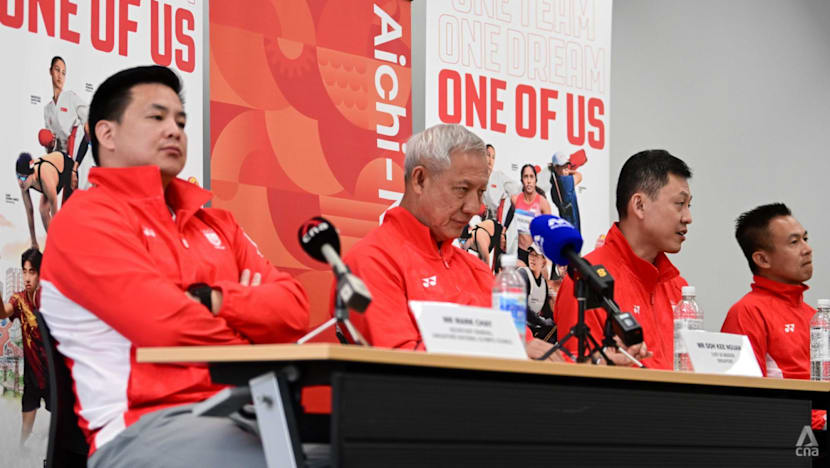
NAGOYA: Singapore's young contingent of Asian Games athletes has met "internal medal projections" for the meet and will look to close the gap to win more golds, said top sports officials on Sunday (Oct 4).
"We do know what athletes are expected to do well, and I would say most of them have met their targets," High Performance Sports Institute (HPSI) chief Low Jia Ren said at a wrap-up press conference for the Games.
"The main target, though, is not about the medal per se. At the end of the day, why do we invest in high-performance sport? It is to allow athletes to do well, so that they can inspire the nation.
"And it is stories of the athletes, the journeys that they took, and the performance that they deliver when the crunch comes ... that's what we are gunning for."
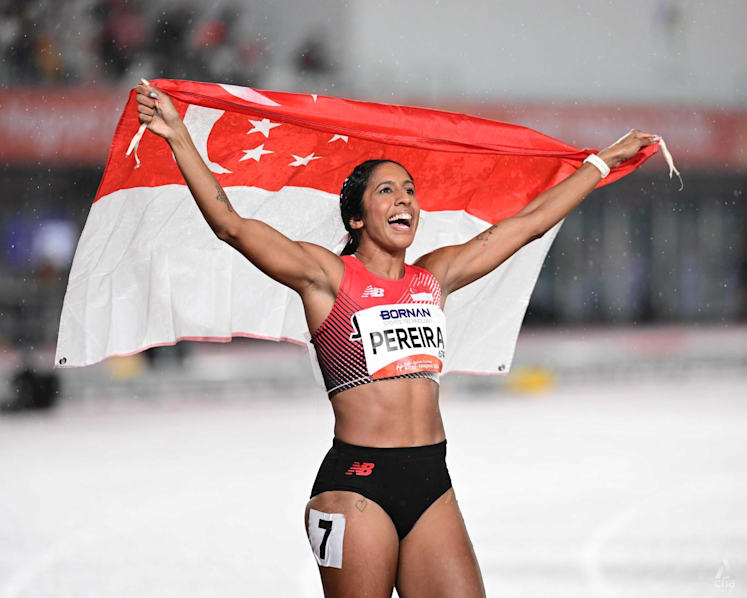
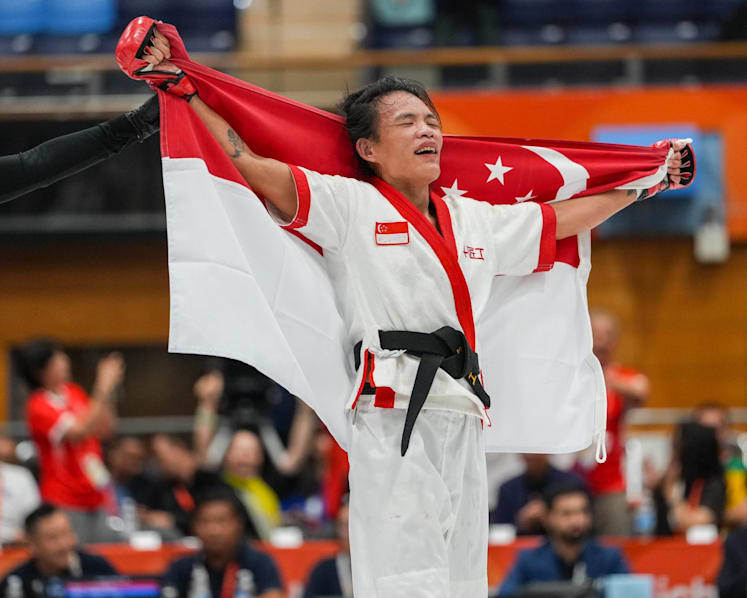
Singapore's athletes ended the Games with two golds, courtesy of sprinter Shanti Pereira and MMA fighter Tiffany Teo, along with nine silver and seven bronze medals.
This year's Games also saw a number of historic feats, including Pereira becoming the first woman to win the 200m twice, Loh Kean Yew clinching a first badminton singles medal for Singapore, and golfer Shannon Tan securing the country's first golf medal with a bronze.
At the same time, it is the joint-lowest number of gold medals since 1998, when the contingent took home two golds, three silvers and nine bronzes.
The nine silvers this year are the most that Singapore athletes have clinched at the meet.
Mr Low described the Games as a "tremendous" one for the athletes.
"So many historic breakthroughs, and so many good stories that we've had. Now, on the medal front, it is true that there are (fewer) medals than maybe some previous Games," he added.
"But we also have to put this into context, because every Games there are different events, different sports that are competing in it."
For one, Singapore's Olympic medallist and world champion Max Maeder did not feature at the Asian Games as kitefoiling was not included, while sports that have traditionally reaped medals, such as bowling, were not part of this year's programme, said Mr Low.
At the last Games, Singapore's athletes earned three golds, six silvers and seven bronzes.
Dr Su Chun Wei, who is Sport Development Group chief, added that competitors are also "progressing very fast" and that the competition level has "changed significantly".
"Converting the colour (of medals) from silver to gold is what we continue to want to (do), to have that winning touch. So we'll work on that," he added.
MAKING TARGETS PUBLIC?
Singapore fielded 300 athletes across 26 sports at the Games. About two-thirds of these athletes were making their Games debut, with an average age of 23.
"We are proud of what Team Singapore has achieved in these Asian Games," said chef de mission Goh Kee Nguan.
"More importantly, we can be proud of the way our athletes competed and fought, with ambition, with discipline, with resilience, and more importantly, the determination to fight to win."
Unlike neighbouring countries such as Malaysia and Indonesia, which set medal targets prior to the Games, Singapore did not do so.
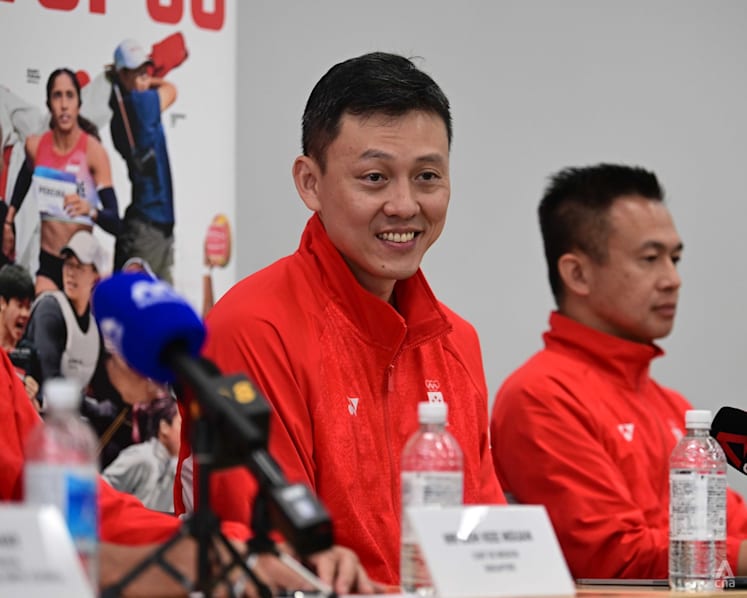
When asked why projections were not revealed to the public, Mr Low said there was a "trade-off".
"Now the question is, if we come forth publicly with the medal targets, does it help to serve our cause?" he said.
"I think this is a question that has trade-offs - pros and cons ... The trade-off is that for some athletes and coaches and even sports, the pressure they already face will be multiplied when the targets are public."
However, he added that it is not out of the question that these targets would be made public in the future.
"Never say never. We don't want to say that we are very sure that we won't, or very sure that we will," said Mr Low.
This edition of the Games has seen a number of issues, including a shortage of rooms for some contingents, as well as issues with transport for athletes.
Some countries have criticised the organisation of the Games.
Unlike past Games, there is no athletes' village in a bid to save money, with participants instead sleeping in temporary wooden units, on a cruise ship and in hotels.
While a few sports were well attended, many events - including the opening ceremony - took place in front of thousands of empty seats.
"I think the Asian Games are actually a very complex and major Games, not easy when you have so many countries coming to the Games, different expectations," said Mr Goh.
"I find that the organising committee really tried their best."
KioskNews shows a cleaned-up reading view extracted from the publisher’s page — the original always lives on their site, not ours.