Singapore’s affluent hold up to 74pc of assets in cash despite rising wealth
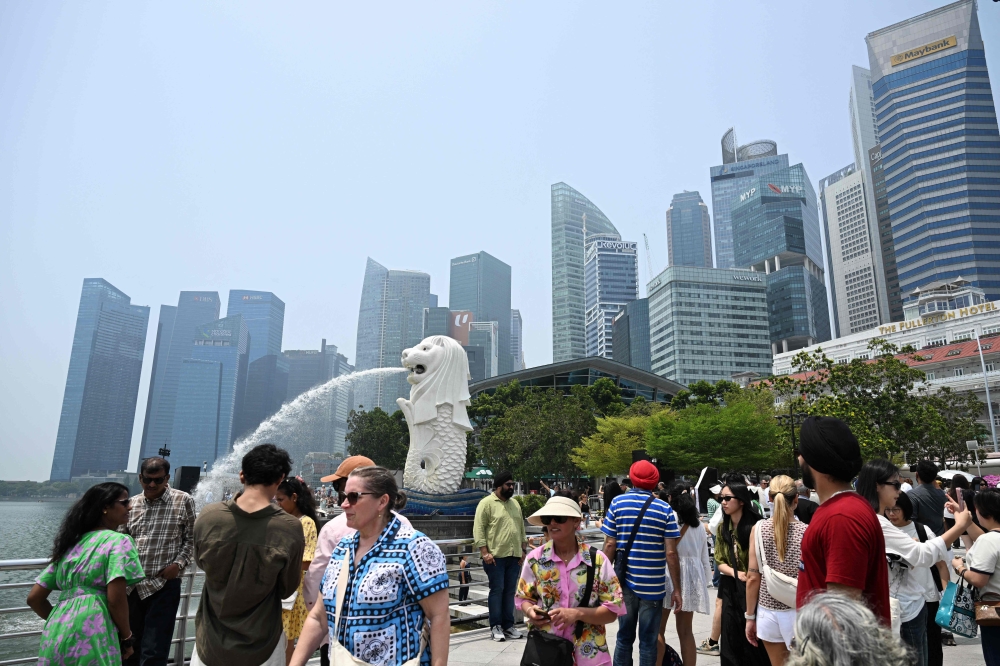

People gather at Marina Bay waterfront in Merlion park in Singapore on September 29, 2026. Singapore’s wealthy are showing greater interest in artificial intelligence and mutual funds, but cash remains their dominant holding, highlighting the challenge of getting clients to put more of their money into investments. — AFP pic
By Malay Mail
First Published: Tuesday, 27 Oct 2026 1:38 PM MYT
SINGAPORE, Oct 27 — Singapore’s wealthy are showing greater interest in artificial intelligence and mutual funds, but cash remains their dominant holding, highlighting the challenge of getting clients to put more of their money into investments.
A report by Citi Wealth and research firm RFI Global, released on October 22 and reported by The Straits Times, found that cash and liquid deposits accounted for 72 per cent of affluent clients’ assets held in Singapore and 74 per cent of those booked offshore.
The study found that average assets under management among high-net-worth clients in Singapore rose 6 per cent to US$1.5 million (RM6.1 million) in the first half of 2026, from US$1.41 million in the corresponding period last year. The average among affluent clients increased 5 per cent to more than US$565,000, from US$537,710.
High-net-worth clients are defined as those with at least US$1 million in assets under management, including liquid investible assets, while affluent clients have between US$100,000 and US$1 million.
The preference for cash stands out against the investment habits of wealthy Americans, who allocate 58 per cent of their assets to long-term investments and 42 per cent to deposits, according to the report. Comparable cash-holding figures for Singapore’s high-net-worth segment were not provided.
There has nevertheless been a marked increase in mutual fund ownership among Singapore’s high-net-worth investors, rising from 11 per cent in 2022 to 31 per cent in 2026. This was the highest adoption rate in Asia, the report said.
Mutual funds let investors spread their money across a range of assets, including shares and bonds, with professional fund managers handling the portfolio. Their growing use, however, has not displaced cash as the main store of wealth among Singapore’s affluent clients.
The country’s appeal to international clients is also reflected in cross-border banking figures. Indonesia accounted for 41 per cent of such customers in Singapore, followed by Malaysia at 36 per cent.
Citibank Singapore chief executive Yeo Wenxian attributed the city-state’s appeal as a wealth management centre to its stable operating environment and strong connections to global markets.
“As wealth becomes increasingly international, clients are looking for opportunities that extend beyond their home markets, while seeking trusted advice to help them navigate an increasingly complex investment landscape,” said Yeo, who also heads wealth for Asia South, comprising the UAE and Singapore.
Technology is emerging as another part of the wealth management picture. The survey found that 58 per cent of high-net-worth clients and 51 per cent of affluent clients were comfortable exploring artificial intelligence for personalised financial insights, particularly when comparing products and screening investment portfolios.
Their interest in AI did not translate into a willingness to give up decision-making authority. Retaining full control was the leading consideration for adopting the technology, cited by 31 per cent of respondents, while 22 per cent wanted the option of consulting a human adviser.
The results point to continued demand for personal guidance alongside digital services. Citi’s relationship manager Net Promoter Score, which measures how likely customers are to recommend their relationship manager, improved from +19 in 2022 to +31 in 2026.
Yeo said trust remained central to financial decisions, including assessing investment opportunities and preparing to transfer wealth across generations.
Planning for that transfer is already common among older affluent clients in Singapore. The report found that 76 per cent of the group aged 55 and above had established wills or wealth succession plans, compared with 41 per cent in Hong Kong. Across Singapore’s broader affluent population, about three in four had made such arrangements or intended to do so.
Financial adviser recommendations and health concerns were each cited by 41 per cent of respondents as reasons for starting succession planning. Retirement, marriage or divorce, and the birth of a child were other triggers.
Protecting family assets was the leading estate-planning priority, cited by 51 per cent of respondents. Avoiding family disputes and ensuring fair distribution among heirs each ranked next, at 45 per cent.
Yeo said wealth management increasingly needed to account for clients’ family circumstances, personal ambitions and desired legacy, as well as the assets they held.
KioskNews shows a cleaned-up reading view extracted from the publisher’s page — the original always lives on their site, not ours.