Amid Drug Price Cuts, A Look At India's Cancer Burden Against Asian Peers

The National Pharmaceutical Pricing Authority (NPPA) has reduced the prices of several anti-cancer medicines, a move aimed at making cancer treatment more affordable. The revised prices will come into effect from November 9, potentially offering relief to patients who often face high out-of-pocket costs during cancer treatment.
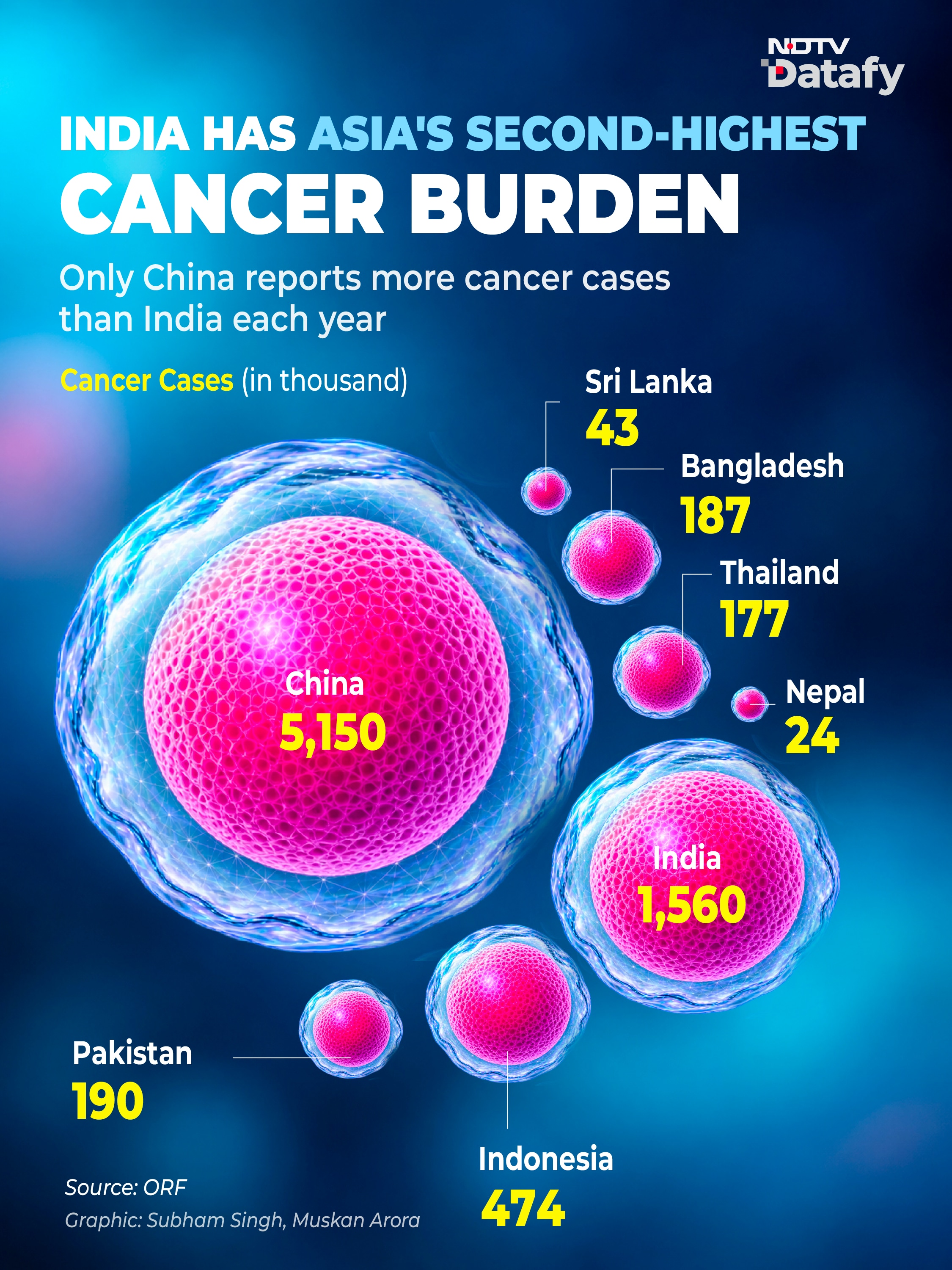
The decision comes as cancer remains one of India's biggest health challenges. Figures from Observer Research Foundation (ORF) show the country records around 1.56 million cancer cases and 9,02,000 deaths in 2025, making it the second-most affected country among selected Asian nations, behind only China.
The scale of the disease becomes clearer when compared with India's neighbours. Indonesia reported 4,74,000 cancer cases and 2,83,000 deaths, while Pakistan recorded 1,90,000 cases and 1,20,000 deaths. Bangladesh, Thailand, Sri Lanka and Nepal reported significantly lower numbers in the same period of time.
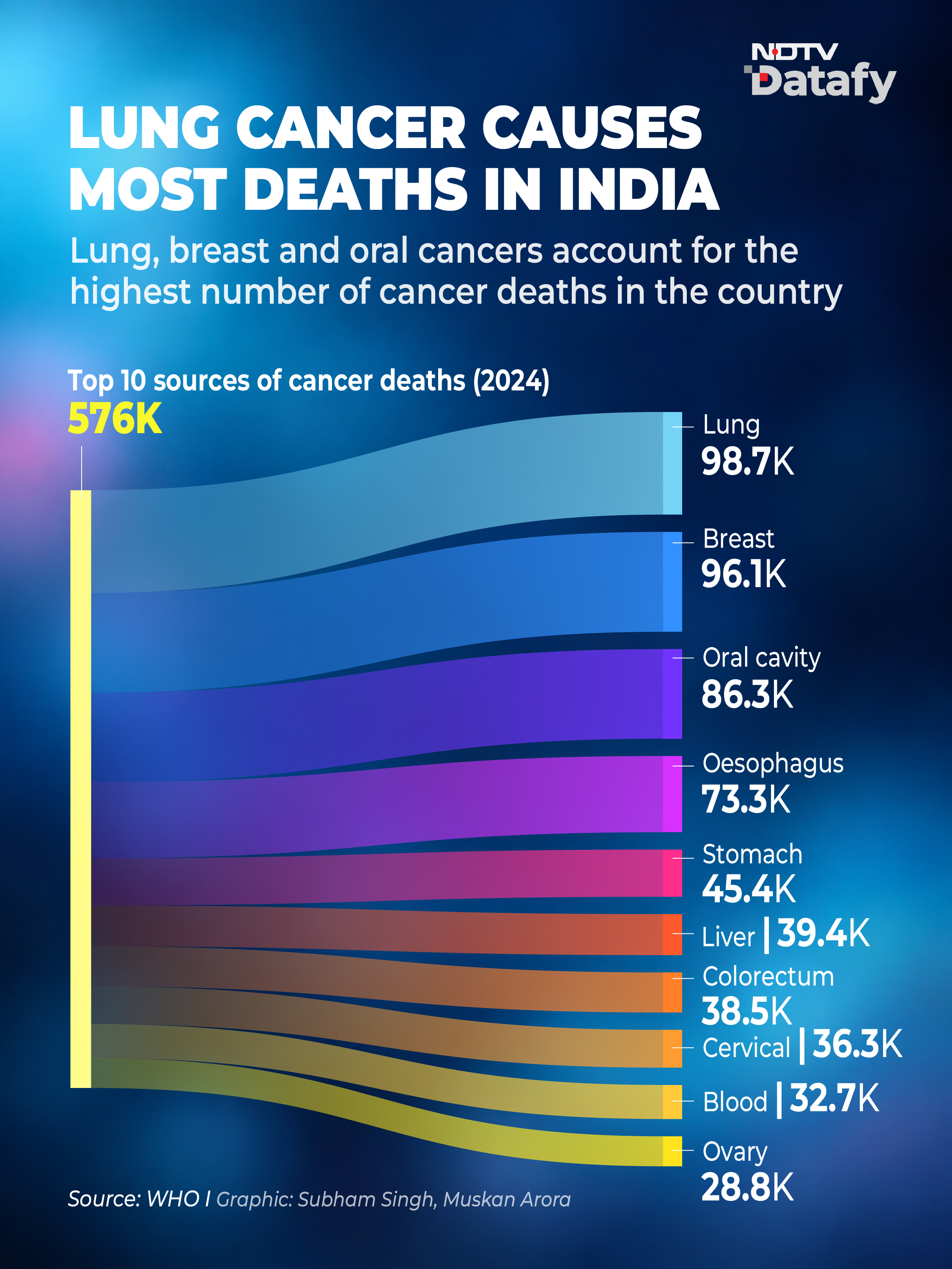
Data from the World Health Organisation (WHO) on cancer mortality further shows that lung cancer is the deadliest cancer in India, accounting for 98,687 deaths. Breast cancer follows closely, with 96,100 deaths, while cancers of the lip and oral cavity claimed 86,307 lives. Oesophageal cancer caused 73,260 deaths, and stomach cancer 45,392 deaths.
Other major contributors to cancer mortality include liver cancer, colorectal cancer, cervical cancer, blood cancer and ovarian cancer.
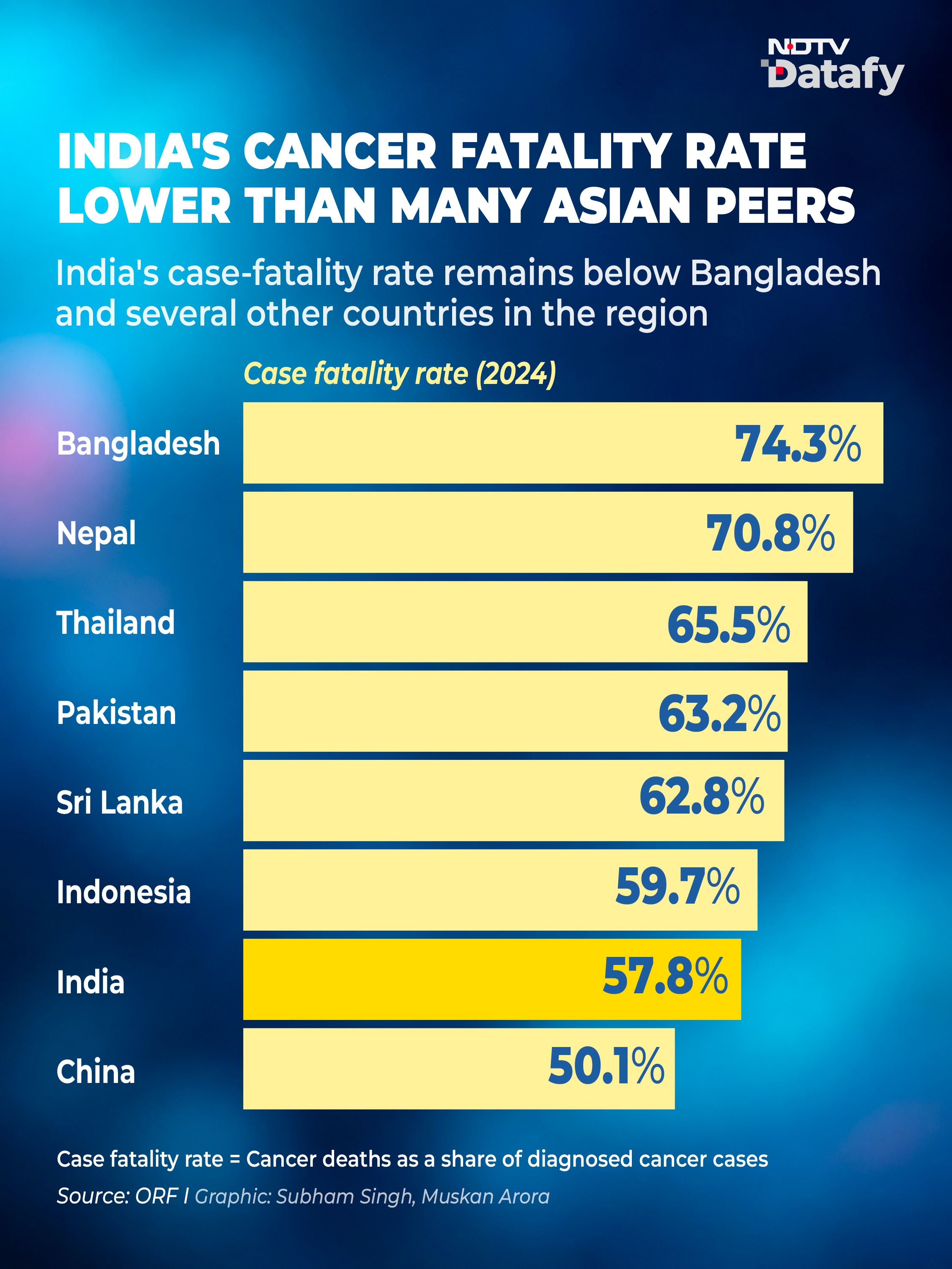
Despite having the second-highest number of cancer cases among the countries compared, India fares relatively better on the cancer case fatality rate. Data show India's cancer fatality rate stood at 57.8 per cent, lower than those of Bangladesh (74.3 per cent), Nepal (70.8 per cent), Thailand (65.5 per cent), Pakistan (63.2 per cent), Sri Lanka (62.8 per cent) and Indonesia (59.7 per cent). Among the countries analysed, only China (50.1 per cent) recorded a lower case fatality rate than India.
For thousands of cancer patients and their families, treatment costs remain one of the biggest challenges after diagnosis. However, the lower case fatality rate than most of its regional peers indicates relatively better outcomes for many patients. With several anti-cancer medicines set to become cheaper, the NPPA's move could further ease the financial burden of treatment and potentially improve access to care for millions affected by the disease.
KioskNews shows a cleaned-up reading view extracted from the publisher’s page — the original always lives on their site, not ours.