Herzog urges avoiding another election, calls for ‘open mind’ in coalition talks
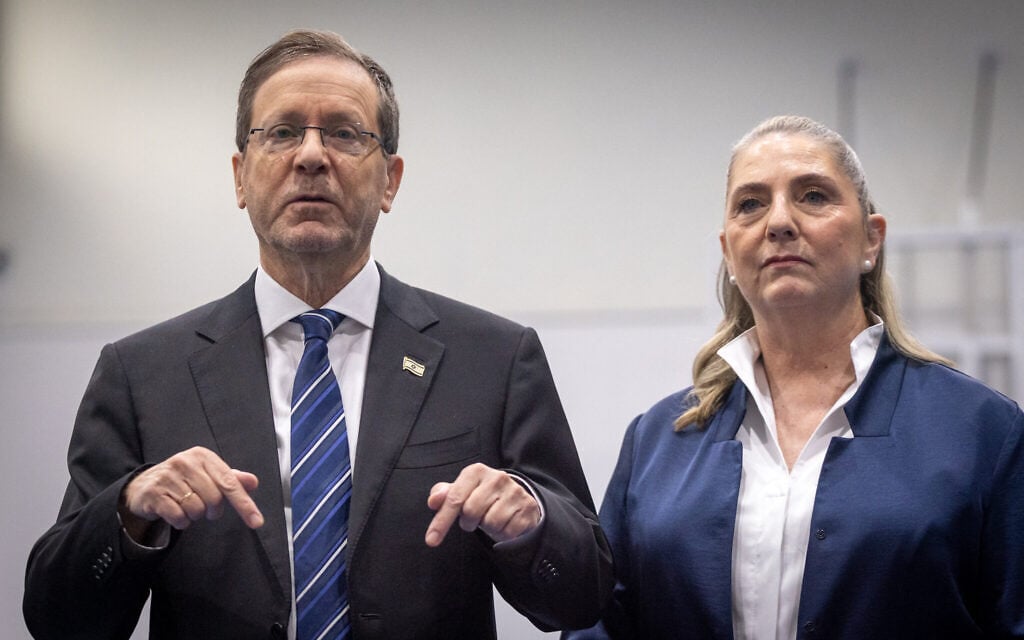
President Isaac Herzog urged Israel’s political parties on Wednesday to do everything possible to avoid another round of elections, in his first public comments since the election the day before, which left no clear path for either of the main blocs to form a government.
“We must do everything we can, certainly after yesterday, to avoid another round of elections. So I expect everyone who comes here to come with an open mind,” Herzog said during a gathering at the President’s Residence in Jerusalem.
In the run-up to the elections, as polls largely predicted the eventual inconclusive outcome, the president had stressed that he would do everything he can to form a stable government.
0:00 / 0:00
Promoted: Z3 2026

Herzog said he was expecting to receive the official election results next week from Central Elections Committee Chairman Supreme Court Justice Noam Sohlberg, after which he would start consultations with each Knesset faction over the formation of a new government.
The president also hailed the election’s exceptionally high turnout as a “badge of honor for Israeli society,” saying it demonstrated the depth of Israelis’ “desire for democracy.”
Get The Times of Israel's Daily Edition by email and never miss our top stories
By signing up, you agree to the terms
Voter turnout stood at 77.7 percent as of 10 p.m., when ballot stations closed, according to the Central Elections Committee, up from 70.6% in the 2022 election. It was the highest turnout since 1999.
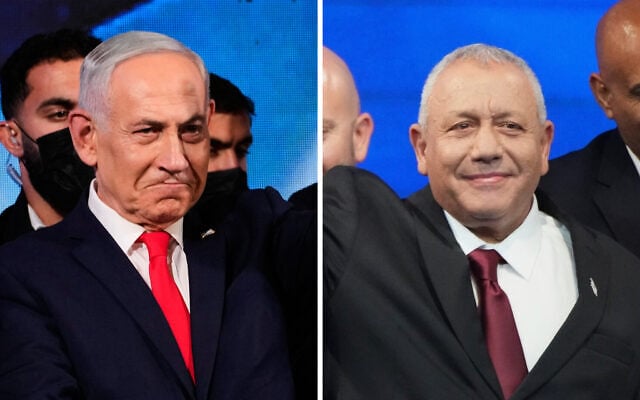
The results by late Wednesday, with 85% of ballots counted, gave the coalition bloc led by Prime Minister Benjamin Netanyahu’s Likud Party 53 seats, and an opposition bloc led by Gadi Eisenkot’s Yashar party 48 seats, leaving both sides short of the 61 lawmakers needed for a majority in the 120-seat Knesset. The remaining 19 seats are held by Arab parties who face challenges to join either bloc in a coalition.
Both Netanyahu and Eisenkot have each vowed that they will be the one to form the next government.
Though Sohlberg is only expected to formally hand over the final results next week, the actual outcome will likely already be known in the coming days. Unnamed sources in the president’s orbit have told the Ynet news site that Herzog may already start contacting party leaders by Friday, based on the near-final results.
As president, Herzog is empowered to choose who gets the first chance to form a government.
Though by law he must consult with the heads of all Knesset parties before deciding, historically, presidents have often chosen the head of the largest faction to go first, likely in this case the Likud party. However, the most important test is which lawmaker secures the most recommendations as premier from fellow MKs.
Whomever the president chooses, that party leader would have 28 days to cobble together a government, and could request another 14 days if he said he needed more time to finalize a coalition.
If those efforts failed, Herzog could give the mandate to form a coalition to another candidate, and that person would then have 28 days to form a government, with no potential extension.
Failing that, there is one last opportunity for a government to be formed: A 61-MK majority could recommend to the president yet another candidate to try to form a government, with a maximum of 14 days for such an effort. If that didn’t work, new elections would be called.
The election on Tuesday happened four years after the end of a three-year period in which Israel repeatedly went to the polls five times, with the first four failing to produce stable governments.
Is our live election coverage important to you?
Are you relying on The Times of Israel for accurate and timely coverage of the 2026 Israeli election? If so, please join The Times of Israel Community. For as little as $6/month, you will:
- Support our independent journalists who are working around the clock to report political developments as they unfold;
- Read ToI with a clear, ads-free experience on our site, apps and podcasts; and
- Gain access to exclusive content shared only with the ToI Community, including our DocuNation streaming film series and weekly letters from founding editor David Horovitz.
Join The Times of Israel Community JOIN NOW Already a member? Sign in to stop seeing this
KioskNews shows a cleaned-up reading view extracted from the publisher’s page — the original always lives on their site, not ours.