Seaweed key to sustainable industrialization: Bappenas
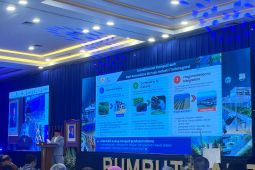
Jakarta (ANTARA) - National Development Planning Agency (Bappenas) Head Rachmat Pambudy stated that seaweed serves as the foundation for inclusive and sustainable industrialization.
"The launch of the Integrated Seaweed Development Action Plan reinforces the direction that seaweed is not only a raw export commodity, but also the basis for our inclusive and sustainable industrialization," Pambudy said at the National Seaweed Forum 2026 in Jakarta on Tuesday.
He noted that Indonesia possesses an unrivaled comparative advantage, ranging from its 17,504 islands and 108,000 kilometers of coastline to a marine area of 6.4 million square kilometers.
However, Indonesia's exports currently account for only 11.4 percent of the global seaweed trade, with more than half consisting of dried seaweed.
To transform the sector, Pambudy said orientation must shift from production volume to productivity, quality, and value creation through post-harvest handling, quality standardization, and primary processing.
The second shift involves moving from selling raw materials toward downstream processing, product diversification, technology adoption, and innovation in food, hydrocolloids, nutraceuticals, cosmetics, biorefineries, and biomaterials.
Integrated interventions are also required to build an upstream-downstream ecosystem through value chain partnerships, policy synchronization, and cross-sector coordination.
"This transformation aligns with the mandate of the 2025–2029 National Medium-Term Development Plan (RPJMN), which designates seaweed as a priority commodity with a production growth target of up to 21 percent and a projected surge in export value of nearly 51 percent," Pambudy said.
"This is where the Integrated Seaweed Development Action Plan becomes crucial, as it will serve to translate these targets into action," he added.
Related news: BRIN maps Indonesia's seaweed value chain for added value
Related news: UNDP highlights seaweed processing to strengthen Indonesia economy
Translator: M Baqir Idrus Alatas, Cindy Frishanti Octavia
Editor: Arie Novarina
Copyright © ANTARA 2026
KioskNews shows a cleaned-up reading view extracted from the publisher’s page — the original always lives on their site, not ours.