Euro at 17-month low, dollar near pre-Liberation Day highs
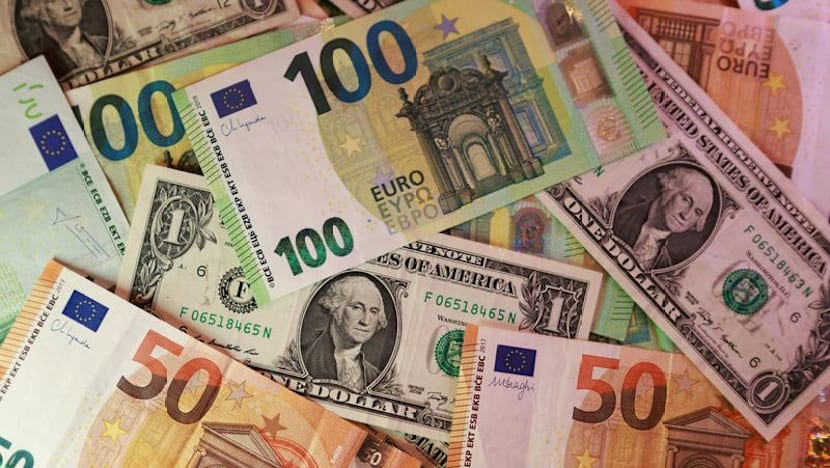
Oct 5 : The euro slid to a 17-month low against the dollar on Monday as concerns about France's ability to rein in its budget deficit and a sharp bond market sell-off last week stirred fears of a return of sovereign debt crisis dynamics in the euro zone.
French government bonds have come under pressure as expectations of higher policy rates and rising political uncertainty ahead of the 2027 election cast doubt on the ability of the euro area's second-largest economy to put its public finances on a more sustainable footing.
The yield gap between French bonds and safe-haven Bunds – a market gauge of the risk premium that investors demand to hold French debt – widened to about 150 basis points on Friday, the highest since the euro area's sovereign debt crisis in 2011, before pulling back to 140 bps. It was last up 5 bps to 145.50.
“Latest bond market dynamics are increasingly concerning and somewhat reminiscent of a sovereign debt crisis. Friday's acceleration of the sell-off in OAT spreads and flight-to-quality patterns in Bunds are a case in point,” Hauke Siemssen, strategist at Commerzbank, said.
“The (French) spread sell-off seems to increasingly feed on itself, creating a dangerous market backdrop,” he said, adding there is a fundamental justification for wider OAT spreads.
The euro sank to as low as $1.1161 in Asian hours, its weakest since May 2025, and was last down 0.62 per cent at $1.1118. The single currency recorded on Friday its fourth straight weekly fall against the dollar, its steepest in around four months.
Analysts argued that France's fiscal problems were daunting enough on their own, but an upcoming presidential election and a hung parliament where compromise has often proved impossible make them even harder to address.
Planned budget cuts, which have deepened an already acute funding crunch in the education sector, have fuelled discontent and sparked protests across the country.
US DOLLAR CLOSE TO LIBERATION DAY'S HIGHS
The euro's appeal as the market's primary alternative to the greenback was already fading after the Federal Reserve's September rate hike, but last week's sharp widening in French bond spreads dealt a further blow, analysts argued.
Traders are now pricing in a 78 per cent chance of the US central bank holding rates steady in October, compared with 36 per cent a week earlier, the CME FedWatch tool showed. They still expect a hike in December and another two in the first half of 2027.
The US dollar index, which measures its value against a basket of six major currencies, rose 0.39 per cent to 102.33, after reaching 102.53, its highest level since April 10, 2025.
'Liberation Day' is the name given by President Donald Trump to the sweeping tariff package he unveiled in early April 2025, which triggered a broad sell-off in US assets. The dollar index was around 104 before the announcement.
YEN SUPPORTED BY TIGHTER POLICY
The Japanese currency was up 0.10 per cent at 157.67, supported by recent verbal warnings from the government and authorities against the yen depreciation and its safe-haven status.
Concerns about Japan's fiscal outlook eased as Prime Minister Sanae Takaichi has reiterated her commitment to fiscal sustainability, reassuring investors worried about rising bond yields and deteriorating public finances.
Data showed on Friday annual core inflation in Japan's capital accelerated in September at its fastest pace in 10 months, bolstering the case for further interest rate hikes.
KioskNews shows a cleaned-up reading view extracted from the publisher’s page — the original always lives on their site, not ours.