Caltech robot builds space structure in orbit without astronauts for first time
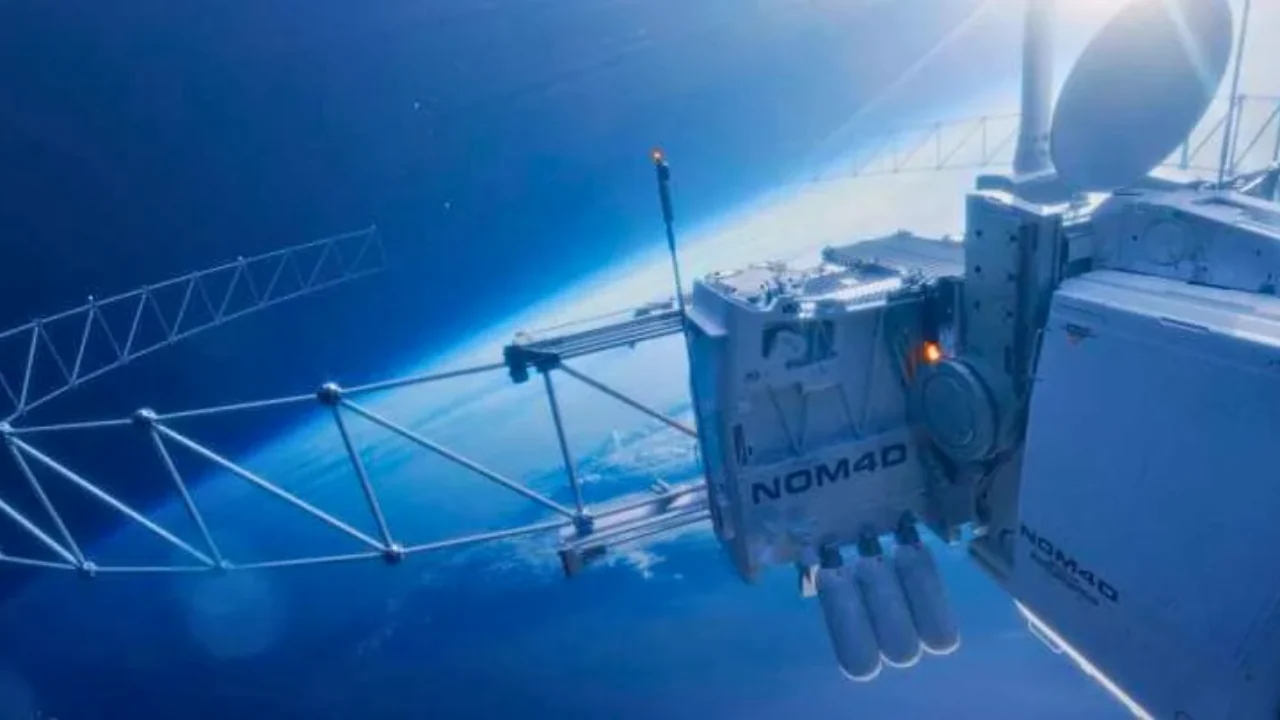
NOM4D device Credit: DARPA | Colie Wertz
A robot developed by researchers at the California Institute of Technology (Caltech) has successfully assembled part of a structure in space without astronauts carrying out the construction.
Launched into orbit in March 2026, the robotic system joined individual components to build a section of an experimental antenna, demonstrating how future space structures could be constructed beyond Earth.The demonstration is part of the US Defence Advanced Research Projects Agency's (DARPA) Novel Orbital and Moon Manufacturing, Materials and Mass-efficient Design (NOM4D) programme. According to DARPA's announcement, the Caltech payload used a robotic system to connect composite truss members with specially designed joints while deploying a thin reflective mesh.
The experiment marks a significant step towards building large structures directly in orbit.The project could eventually change how scientists and engineers design space-based antennas, solar arrays and other large installations. Instead of transporting a fully assembled structure from Earth, future missions could carry individual building components and put them together in space. How did the robot complete this task, and what could its success mean for future space exploration?
How did the Caltech robot assemble a structure in space?
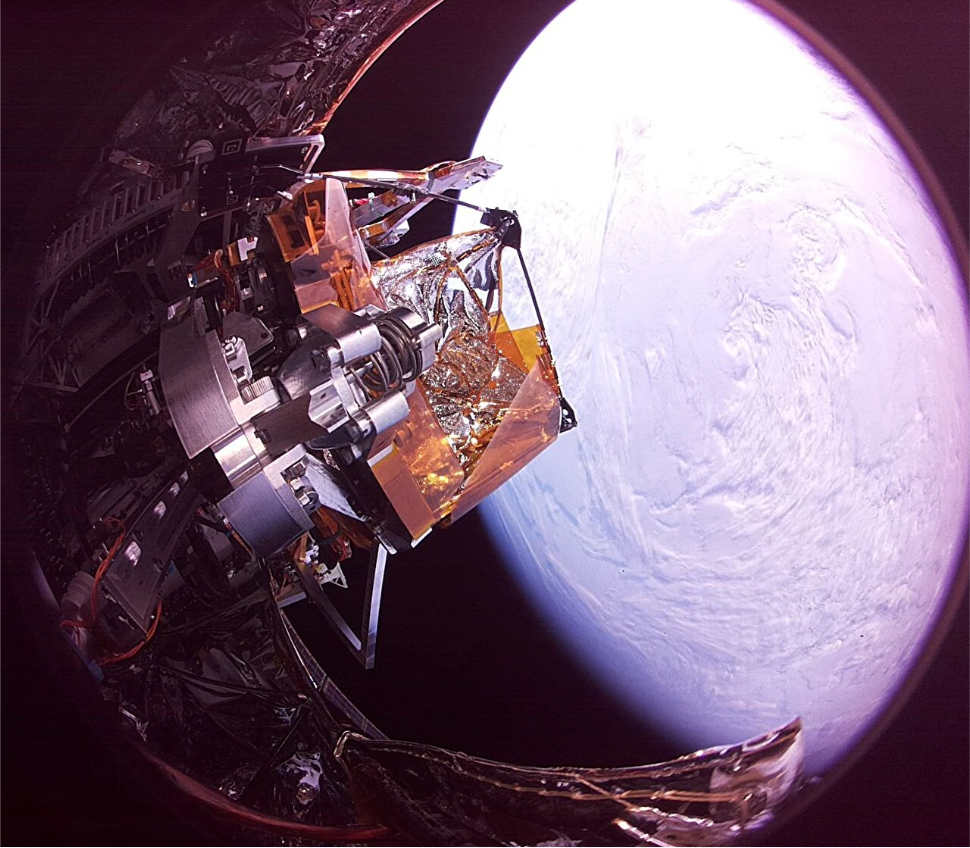
The ASTRA truss builder was able to construct a third bay of a truss structure in orbit. Credit: Caltech/Momentus
The robotic system, known as the Autonomous In-Space Tensioned Reflector Assembly (ASTRA), was designed to build a truss structure using individual components stored inside its payload.
It uses an autonomous manipulator that collects struts and joints from nearby dispensers and connects them to create sections, also called bays.The process resembles assembling a construction toy such as K'Nex or Tinkertoys. Individual members fit together at connecting points, allowing the robot to build a larger structure one section at a time. Once a section is assembled, the system attaches a thin, net-like reflective surface to it.The experimental antenna was designed to measure 1.4 metres in diameter and used composite fibre tubes, aluminium joints and a reflective Kapton surface. The robotic system successfully constructed an additional section of the truss while operating in orbit.Sergio Pellegrino, Caltech's team leader for the ASTRA demonstration, described the achievement as a first. “This is the first time that a structure has been autonomously constructed in space,” he said, according to Phys.org's report on the Caltech project.The demonstration did not require astronauts to assemble the structure manually. However, the research team on Earth sent commands to the onboard computer and examined photographs transmitted from the payload to check the results.
Why is assembling structures in space important?
Building large structures in space presents a practical challenge. Rockets have limited room for cargo, which restricts the size of objects that can travel inside them. Engineers have traditionally addressed this problem by folding structures before launch and unfolding them after reaching orbit, or by sending large components through multiple launches and assembling them manually.Both approaches place limits on the size and complexity of future installations. Building structures directly in space could offer another way to overcome these restrictions.DARPA's NOM4D programme aims to develop methods for constructing very large structures beyond Earth. Andrew Detor, the programme's manager, said its objective was to enable construction on a scale that could eventually reach hundreds of metres or even kilometres.
Such structures are beyond what current construction methods can achieve.The approach could support future space-based radio antennas, large solar arrays and habitats. Scientists could also use enormous reflector surfaces to build powerful space telescopes capable of observing distant objects.Detor compared the Caltech system to construction toys, explaining that it joins individual truss members at connecting points to create a larger structure.
He also noted that the system combines several operations in a way that could make the process scalable.
How did the robot operate after its launch?
The ASTRA team in Sergio Pellegrino's lab at Caltech with the space demonstration payload before it was delivered for integration on the spacecraft. Pictured from left to right: Charles Sommer, Sergio Pellegrino, graduate student George Popov, Jaden Suh and Alan Truong. Credit: Caltech
The ASTRA payload travelled to low Earth orbit aboard SpaceX's Transporter-16 mission on March 30, 2026. Momentus supported the mission by hosting the payload on its Vigoride orbital vehicle and providing services such as communications, power and imaging.The payload carried two preassembled sections of the truss, along with a robotic manipulator and the components needed to build another section.
After reaching orbit, the team released the launch restraints and deployed the two prebuilt sections. The robot then began assembling the next section using components stored in motorised dispensers.The process required careful coordination between the researchers on Earth and the system in orbit. Team members sent commands to the onboard computer and checked images returned by the payload. When unexpected problems appeared, engineers tested possible solutions using a spare version of the system in Caltech's laboratory before sending instructions to the flight unit.Communication also presented a challenge. Researchers had only around seven or eight short communication windows of approximately 15 minutes each day to contact the system. This meant the team had to identify problems, test solutions and relay instructions within limited periods. The researchers faced time constraints and could not complete the entire antenna structure. However, the robot successfully built the initial section needed to demonstrate that the assembly approach could work in the space environment.
What could this technology mean for future space missions?
The ASTRA demonstration is a proof of concept rather than a finished construction system. The team has shown that a robot can assemble structural components in orbit, but engineers still need to simplify and refine the design before applying the technology to much larger projects. The experiment also revealed why testing in space matters. Conditions beyond Earth differ significantly from those in a laboratory, and unexpected problems can affect how robotic systems operate.
The researchers used the mission to understand these challenges and identify improvements for future versions.Pellegrino said the demonstration had opened new possibilities for research. The technology could eventually help construct large reflector surfaces for astronomy, communications systems and space-based solar power installations.
DARPA's NOM4D programme has another milestone planned. A team from the University of Illinois Urbana-Champaign is expected to test a different space-manufacturing approach aboard the International Space Station.
Its project will examine how a specially developed resin system can be processed in space to produce a high-strength composite structure.The Caltech experiment has not yet delivered the enormous structures that future missions may require. It has, however, demonstrated a possible way to build beyond the size limits imposed by rocket launches. As space agencies and researchers explore longer-term missions, automated construction could help turn ambitious designs into structures assembled directly where they are needed.
KioskNews shows a cleaned-up reading view extracted from the publisher’s page — the original always lives on their site, not ours.