WhatsApp Channel, Social Media: Digital Offensive Behind Lula's Brazil Win
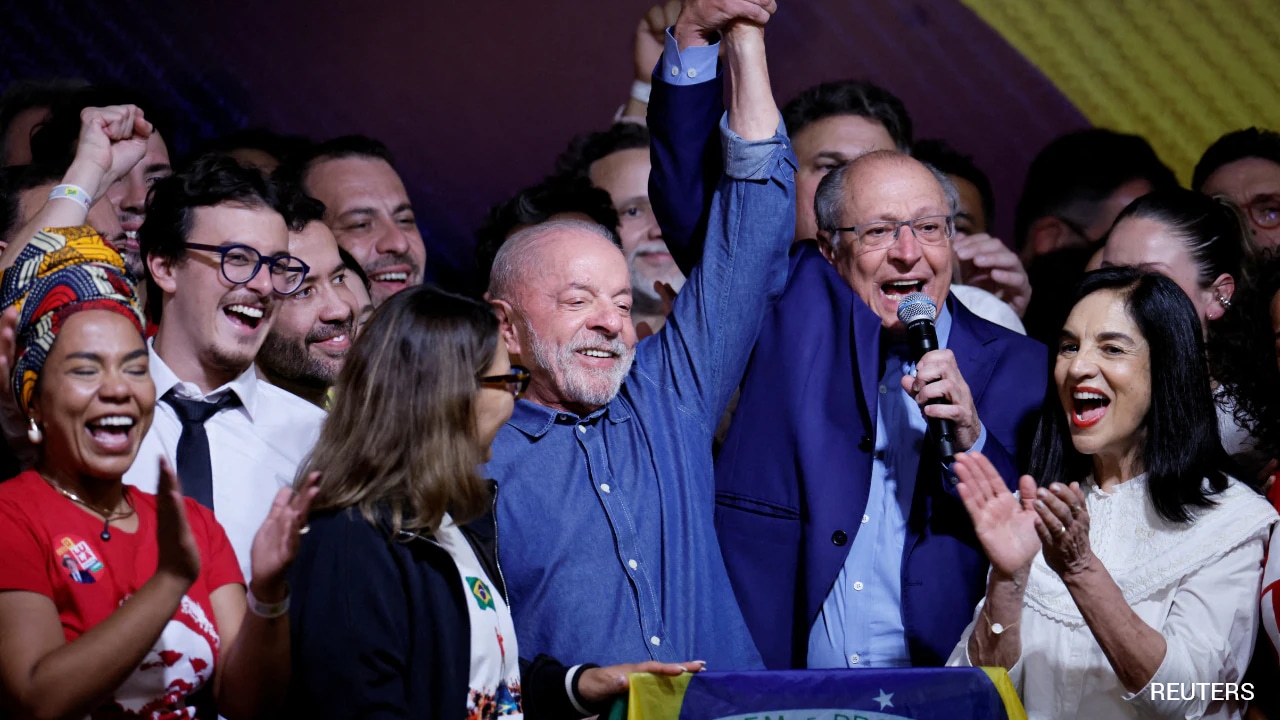
Brazilian President Luiz Inacio Lula da Silva stunned the world with an election victory that has landed him an unprecedented fourth term in office.
Bets were on right-winger Flavio Bolsonaro to become Brazil's next president after his shock first-round win earlier this month.
But the leftist incumbent bounced back with an energetic runoff campaign, going on to win 51.8 percent of the vote.
How did 80-year-old Lula pull it off?
Young People Take The Streets
While the campaign reeled from the first-round defeat, students and young people immediately took to the streets.
Marching to slogans like "Bolsonaro never again," thousands of people turned out in the cities of Rio de Janeiro, Sao Paulo and Belo Horizonte to rally support for Lula, his social policies and his promise to defend minority rights.
"The mobilization of young people was fundamental," said Eduardo Grin, a political scientist at the Getulio Vargas Foundation (FGV).
Lula's Workers' Party (PT) "managed to reconnect with that young audience," he told AFP.
The president himself said he had not seen anything like it since 1984, when a mass movement called for elections during Brazil's military dictatorship.
Digital Troops
Lula called his first-round campaign the most "disorganized" in decades and overhauled his social media strategy ahead of Sunday's vote.
The incumbent sought help from young influencer politicians, bought his first cellphone and declared himself "king of the selfie."
His supporters meanwhile launched a digital offensive of their own to counter the strong online influence of the political right.
Many leftists "spent hours and hours per day online just posting stuff or taking to the streets and talking to voters," Oliver Stuenkel of the FGV told AFP.
"The social network activity was exhausting; I devoted a lot of time outside my working hours with the awareness that I was working for Lula," publicist Taiza Mendonca, 36, told AFP in Rio.
Even Mendonca's "60-year-old aunties" learned the word "hashtag," she added.
The digital campaign spread wings via the "Lula's Army" WhatsApp channel, which went from having 60,000 followers to almost 11 million in three weeks.
Rejection Of Rival
According to Grin, "the mobilization in the streets and on social media managed to create fear of a return of the Bolsonaro family to power and concern for democracy and social rights."
Flavio Bolsonaro, 45, was chosen to lead the political right by his father, ex-leader Jair Bolsonaro who is serving a 27-year sentence for attempting a coup after his own loss to Lula in 2022.
His critics remember his administration for rising hunger rates, a poor handling of the Covid-19 pandemic, increased violence against minorities and environmental policies rooted in denial of climate change.
Bearing a strong physical resemblance to his father, Flavio called Jair his "compass" during the campaign, vowing to liberate him if elected.
Crowd Pleasers
Lula passed a raft of crowd-pleasing measures in the run-up to the election.
Congress handed him a key victory by approving a reform that guarantees workers two days of rest per week, a cornerstone campaign pledge.
The government rescheduled October welfare payments to land before the runoff instead of after, along with a wave of debt forgiveness for small-scale entrepreneurs and a raft of other popular measures.
"I'm not going to stop granting a benefit I can grant just because there are elections," Lula said in an interview on the campaign trail.
(Except for the headline, this story has not been edited by NDTV staff and is published from a syndicated feed.)
KioskNews shows a cleaned-up reading view extracted from the publisher’s page — the original always lives on their site, not ours.