Ho Chi Minh City rules out gasoline vehicle ban, bets on free buses and EV incentives instead
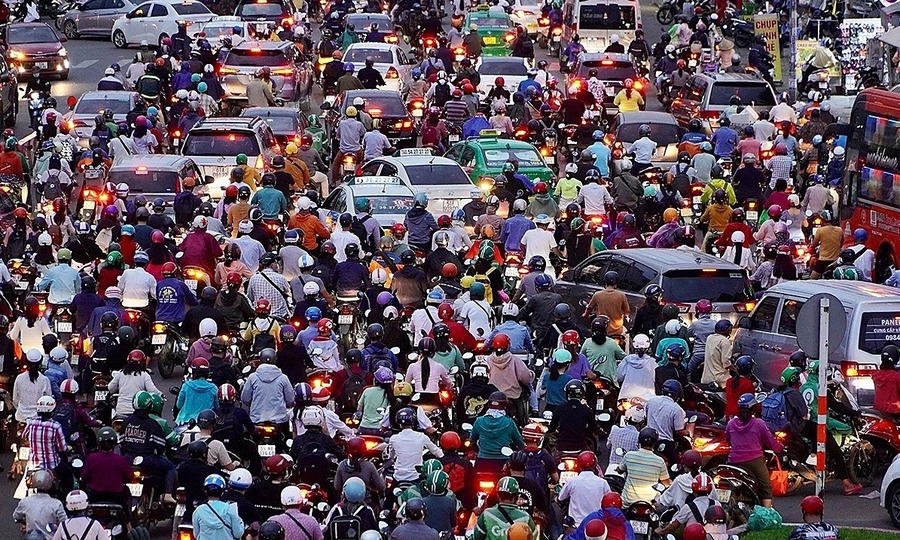
Ho Chi Minh City will not ban gasoline vehicles, relying instead on free buses, wider public transport and incentives to go electric, city Party chief Tran Luu Quang told voters on Thursday.
At the meeting in Quang's National Assembly constituency, voter Phan Thi Ngoc Huong said congestion was spreading from the city's gateways and arterial roads into many other areas.
She also urged the city to carefully assess the shift from gasoline to electric vehicles, saying it would directly affect people's lives, especially workers and low-income earners.
"We will not ban people from using gasoline vehicles," Quang said in response. The city will instead study economic and financial policies to encourage the switch, possibly with different rules for different areas.
Smart cameras could identify vehicles so electric vehicle users receive incentives and priority while gasoline vehicles face separate policies, he said.
The cost of the transition could be shared among the state, residents and businesses, allowing the switch to happen gradually rather than all at once.
Quang cited China, where some areas give electric vehicles priority so they travel faster.
People there can park gasoline vehicles outside restricted zones and continue their journeys on electric ones.
 |
|
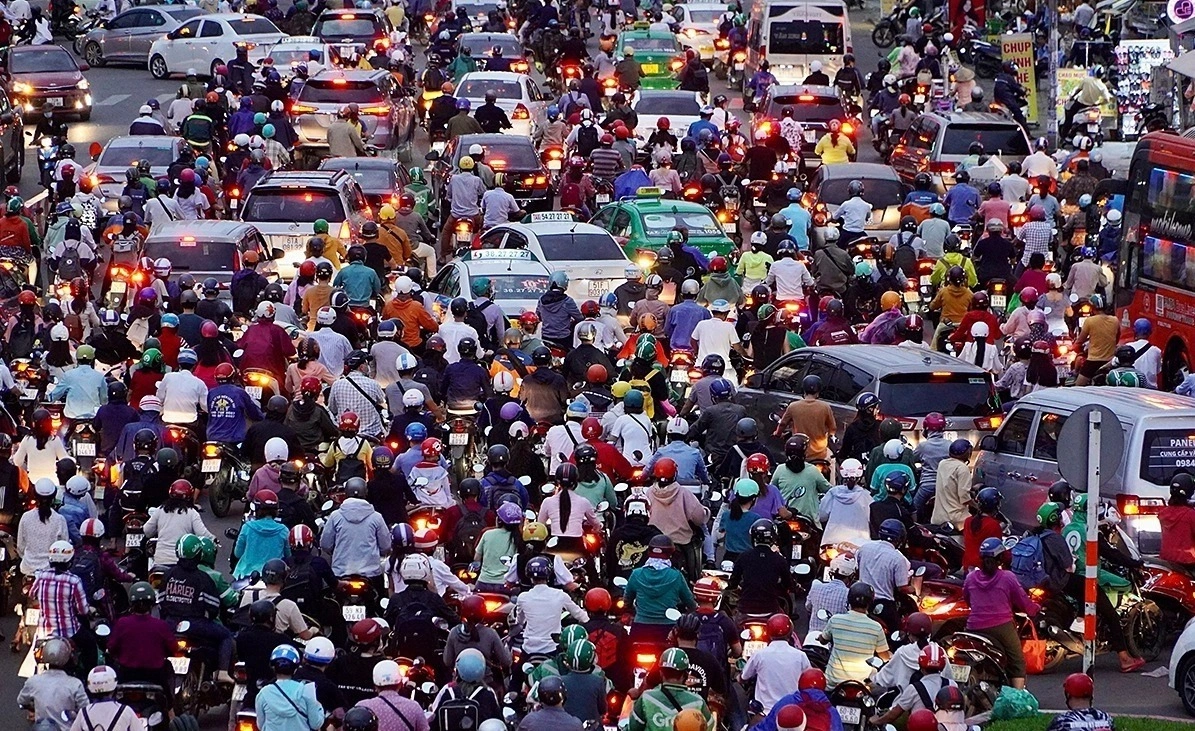
Vehicles back up at the Hang Xanh roundabout in downtown Ho Chi Minh City. Photo by VnExpress/Gia Minh |
Quang said congestion is harder to solve in HCMC than elsewhere because of its large population.
Working hours and daily routines are concentrated, sending vehicles onto the roads at the same time in the morning and afternoon.
No single measure can fix it, he added, calling for a mix of public transport, regulation of private vehicles, technology and a change in traffic culture.
"The first solution is public transport in place of private vehicles," he said, noting that the city had set aside more than VND2 trillion (US$77 million) to make bus rides free for a year.
The fare waiver took effect on July 1 on 134 intra-city routes and is currently set to run through Dec. 31, at an estimated cost of VND630 billion ($24 million).
The routes carried more than 26.8 million passengers from July 1 to Sept. 22, up 48% year-on-year, according to the city's Public Transport Management Center.
The city will deploy larger buses at peak hours and smaller ones when demand is low, using technology to match capacity to demand.
Buses will also be reorganized to feed passengers to the expanding metro network, while bus stops and passenger facilities are upgraded.
Drivers who squeeze into any gap on the road regardless of the rules disrupt traffic flow and make jams worse, Quang said.
"Traffic congestion is one of the four tasks the Party General Secretary assigned to HCMC at the city Party Congress," he said.
The city aims for public transport to meet 15-20% of travel demand by 2030.
HCMC is also studying restrictions on private vehicles by area and time slot. A draft plan by the city's Department of Construction proposes piloting a low-emission zone from July 2027 in the central core and Thu Thiem, then expanding it to Ring Road 2 from early 2029.
Private motorbikes would need to be electric or green-powered to enter the zone by 2035.
KioskNews shows a cleaned-up reading view extracted from the publisher’s page — the original always lives on their site, not ours.