He stars in the most expensive show ever made, but Ismael Cruz Cordova’s journey to Middle-earth was not easy
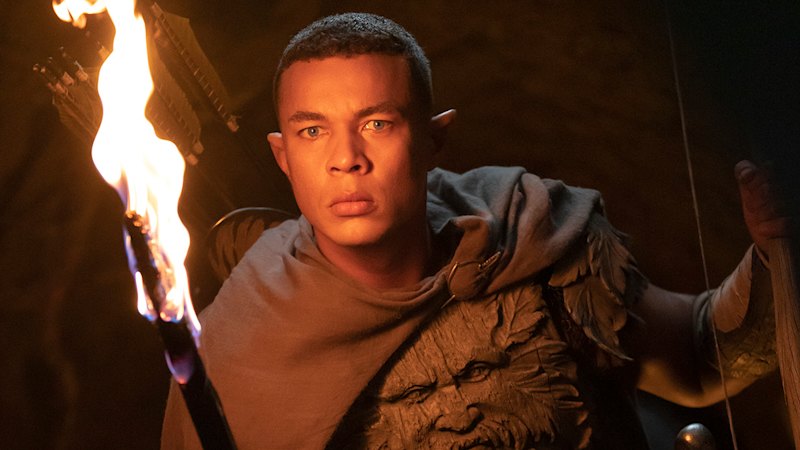
Every morning while filming The Lord of the Rings: The Rings of Power, actor Ismael Cruz Cordova would sit patiently while two make-up artists worked to craft his pointed elven ears. The prosthetics that transform him into dashing warrior elf Arondir are cast to the contours of his cheekbones and match his skin tone so well that Cordova himself cannot see the seam.
But when they are done, there is no longer a reflection of one man in the mirror. Rather, Cordova sees three people looking back: the elven warrior who has become something of a poster boy for the Amazon Prime Video series, the actor, who cut his teeth on The Good Wife, Ray Donovan and The Undoing, and the barefoot kid from the Puerto Rican mountains who washed cars to save money for a used DVD player.
“I absolutely love my ears,” says Cordova. “As an elf, there’s something about these ears that everybody wants. Because elves are so close to humans in form, that little hint of difference, it’s elegant and it’s this magical, mystical thing. I remember the first time that I saw myself with them on, at that moment, when it was complete, I just cried the biggest tears.
“It’s this ritualistic aspect of becoming. I’m a very physical actor, and as I transform into this character, by this point, there’s this sense memory. My voice begins to drop, my accent starts coming in. So for me, it’s this incredible rite of passage.”
The man in the mirror, he says, is a “composite of three things ... these three beings that are inextricably tied. Ismael now, and Arondir on top of that ... but it begins with the little boy that sees the movies for the first time. I grew up in the mountains, a very poor community, very rural, not a lot of opportunities. That little boy has to wash cars, lawns, mow lawns, do any type of errand to find a little bit of money to buy a DVD player and then a DVD.”
The first two DVDs he owned? Moulin Rouge! and The Lord of the Rings: The Fellowship of the Ring, both released in 2001. “This world opened up to me,” he says. “Moulin Rouge! was one of those movies that I was like, whoa, [it] blew my mind. But it was also the behind-the-scenes component [that came with the DVD]. I got to see what this was about from an abstraction to the reality, and it changed my life.”
And The Fellowship of the Ring? “Truly from the get-go, I wanted to be an elf because the elves are so close to who I was,” Cordova says. “They loved nature, [they are a] contemplative people, like my reverence for sunsets. I was always this precocious kid concerned with beauty and with natural beauty and what nature did. I’m still that way.”
In one sense, those ears – as expensive as they undoubtedly are – are a small line item in a big budget. The Lord of the Rings: The Rings of Power is one of the most expensive TV series ever made. The five-season commitment will exceed $US1 billion ($1.44 billion) in costs. And we’re just three seasons in.
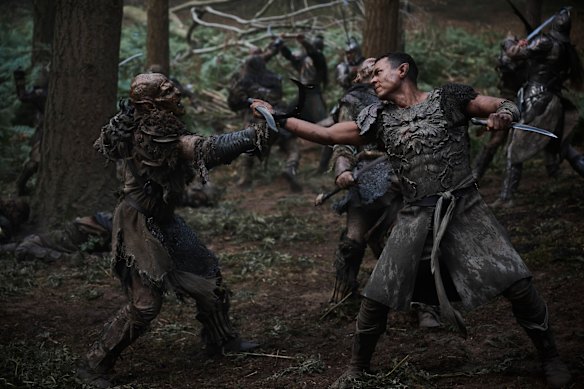
The series, developed by show runners J.D. Payne and Patrick McKay, is set during the Second Age of Middle-earth, thousands of years before the events of The Hobbit and The Lord of the Rings. It follows an ensemble of characters – the younger iteration of the elven queen, Galadriel, the future ruler of Rivendell, Elrond, and a wood elf warrior, Arondir – as they confront the rise of evil in Middle-earth.
The project began after Amazon secured the television rights from the Tolkien estate in 2017, and it sits in an ever-widening mosaic of Middle-earth-set storytelling. In 2024, under a different deal between movie rights holder Embracer and Warner Bros., Kenji Kamiyama directed an anime prequel, The Lord of the Rings: The War of the Rohirrim, about the history of the fortress Helm’s Deep.
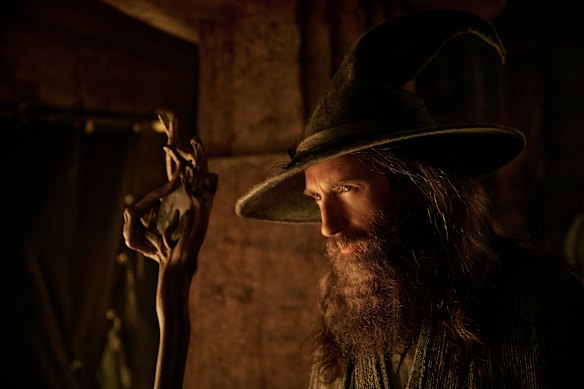
And a new film, The Lord of the Rings: The Hunt for Gollum – set between The Hobbit and The Lord of the Rings in the established cinematic universe of the Peter Jackson films – will feature Andy Serkis as Gollum and Smeagol, Ian McKellen as Gandalf, Jamie Dornan as Strider, Leo Woodall as Halvard, a Dunedain ranger, and Elijah Wood as Frodo Baggins.
All of that, on top of the new third season of The Rings of Power, and two more seasons to follow.
By and large, the television series is faithful to the original works of J.R.R. Tolkien, on which it is based. That said, the television adaptation has ruffled canonical feathers of the diehard Tolkien fans because of some of the liberties it takes.
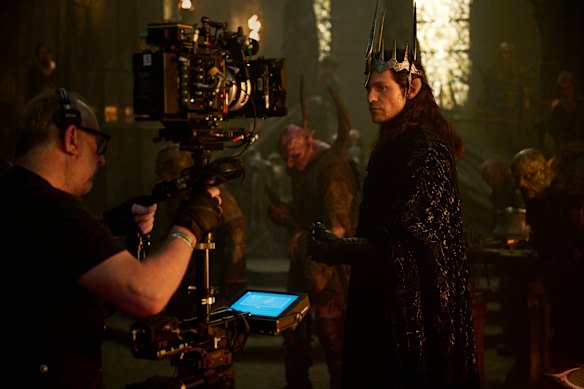
Most of its characters are drawn from familiar legend: Isildur, the mortal man whom we meet as a boy and who will eventually cut “the ring” from the hand of franchise baddie Sauron, and Celebrimbor, the master ringsmith of the elves, who begins creating the magical rings that are central to the story.
But Cordova’s Arondir is another story. He’s a piece of new canon, though his backstory is steeped deeply in Tolkien lore. The Silvan elves, of whom Arondir is one, are the elves who inhabited places such as Mirkwood and Lothlorien, and known for their connection to nature (that’s why they are called “wood” elves).
Arondir’s role in the story, too – the “watchwarden” of the Southlands – is based on the idea, in Tolkien’s postwar history, that after the defeat of the first Dark Lord, Morgoth, the elves kept a close watch on that part of Middle-earth.
“I’m at the whim and trust of the creators of the show,” Cordova says. “I’ve known that from the beginning. I’ve known that he’s going to go where he goes, and it’s allowed me also to be present. I’ve given my absolute entire soul to each moment that I have, not thinking that I’m going to play an arc of five seasons or anything like that.”
While all art is not necessarily inherently political, it is true The Lord of the Rings as an over-arching “legendarium” deals with some potential political themes. The inevitable corruption of absolute power, Saruman’s transformation of Isengard from a green valley into a crater of military manufacturing, the destruction of Fangorn Forest, and Grima Wormtongue’s poisoning of King Theoden’s mind with misinformation.
“About Tolkien’s [world], I think it’s open knowledge that it was created as a result of his experience during war and wartimes and industrialisation and seeing the landscape change, and seeing nature turned, human against human, and people not being able to see the beauty and the simplicity of things that are right in front of them,” says Cordova.
“All art is political. I do not have a capacity to understand otherwise because existence is political. I am always open and flexible for my views to be challenged. I speak with certainty, the things that I say, but I’m also certain that they might be wrong.”
Growing up in relative poverty in Puerto Rico, he says, “my core as an artist and my formation is the transformative power of art and what it can do for people like us and what it’s done, and how it changed my life. I’m here speaking with you in an almost improbable case of social mobility. The arc of my life is an arc of social mobility that a lot of people do not experience, and it has to do with the power of art.”
The Lord of the Rings: The Rings of Power streams on Amazon Prime Video from November 11.
Want more TV? We’ve got you.
- Newsletter: Find out the next TV, streaming series and movies to add to your must-sees. Get The Watchlist delivered every Thursday.
- November streaming picks: A guide to the best new shows this month.
- Hamish Blake: The beloved but “useless” comedian takes us inside his new series.
- The year’s best rom com? Why this episode of Nobody Wants This really stands out.
- The One About Matthew Perry review: This celebrity doco plays it far too safe.
- First Bluey, now Allen? The studio behind Bluey has made its first feature film.
- Watch (below): Deputy TV editor Meg Watson recommends the best new shows to start this week.
KioskNews shows a cleaned-up reading view extracted from the publisher’s page — the original always lives on their site, not ours.