Using IDs to check concert tickets, combat scalping could slow entry: tourism chief
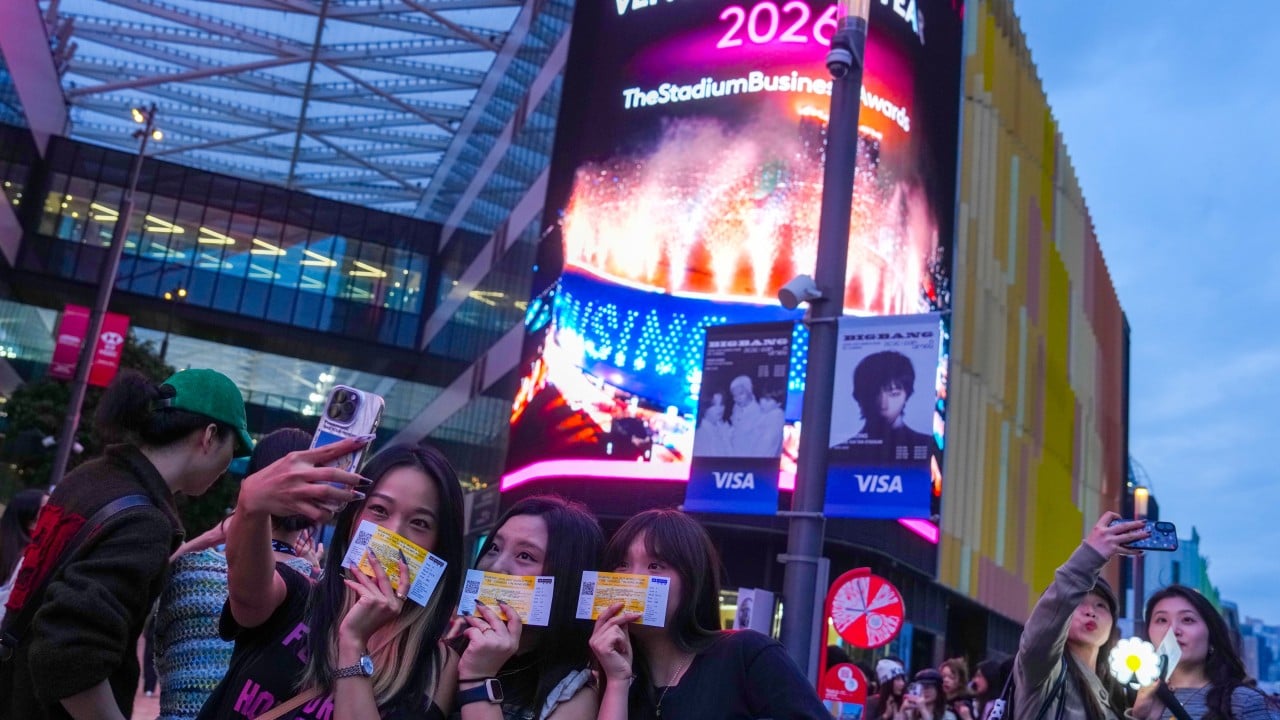
Hong Kong’s tourism chief has warned that requiring fans to show identity cards that match the names on their concert tickets to combat scalping could slow entry at venues, saying arrangements would need to be discussed with organisers for each event.
Secretary for Culture, Sports and Tourism Rosanna Law Shuk-pui also told a radio programme on Saturday that the city could record around 55 million visitor arrivals this year, 1.2 million more than the government’s earlier estimate of 53.8 million.
The proposal for mandatory real-name ticketing resurfaced in the Legislative Council earlier this month after reports that resellers were scalping tickets at three times the retail price or higher for admission to a South Korean group’s concerts.
A lawmaker asked whether Hong Kong should follow mainland China, Japan and South Korea in requiring identity checks at large-scale shows.
“Fans would have to come very early just to have their IDs checked and get a wristband,” Law said, adding that verifying the identities of tens of thousands of people would put considerable pressure on venue entry.
Asked whether authorities were ruling out the approach, Law said it had been used before and that arrangements would need to be discussed with organisers for individual shows.
The tourism chief said police had arrested suspected scalpers outside K-pop group BigBang’s recent shows at Kai Tak Stadium earlier this month, and that she expected enforcement against scalping and ticket fraud to continue at major concerts.
The band had drawn more than 150,000 fans across four sold-out performances, the highest number of shows in any city on its current world tour, according to organisers.
Kai Tak Sports Park said the concerts drew fans from Hong Kong, the mainland and overseas. Some food and drink outlets reported a 30 per cent increase in revenue, according to the venue.
Law also said she was confident the city would exceed its full-year forecast and expected arrivals to grow by at least 8 per cent in November and December, despite a higher base for comparison.
Hong Kong recorded 45.8 million visitor arrivals from January to October, up about 12 per cent year on year.
The tourism minister challenged a recent study by the Hong Kong Future Economy Institute that found 21.1 per cent of 95 Western artists’ tours in its sample stopped in Hong Kong, compared with 49.5 per cent in Singapore and 74.7 per cent in Tokyo.

The think tank identified ticketing and venue booking as barriers and called for higher scalping penalties, disclosure of ticket allocations and a two-year booking window at government venues.
Law said the study period, which began in January 2023, was two years before the sports park opened in 2025, and when Hong Kong was also still under pandemic restrictions.
With tours planned 18 months to two years in advance, promoters could have settled on their Asian stops well before the city had a venue capable of hosting some of the biggest productions, she said.
“Without a large venue like Kai Tak Stadium, even if these stars wanted to come to Hong Kong, they wouldn’t be able to [before March 2025].”
She pointed to The Weeknd’s four sold-out shows in October, saying the show’s towering installation at the centre of the stage would have blocked sightlines at the smaller Hong Kong Coliseum.
The pop star’s concerts were held just after the study’s September 2026 cut-off. Coldplay were the only Western act in the sample to have played at Kai Tak.
The institute said the gap persisted when it narrowed the sample to tours whose Asian shows took place between September 2024 and August 2026.
The institute called for a two-year booking window and a formal system for provisionally reserving dates at government venues.
Law said the Hong Kong Coliseum in Hung Hom could already pencil in dates for some acts before its usual one-year booking window opened.
She also said Kai Tak Stadium was already booked for New Year’s Eve 2027.
KioskNews shows a cleaned-up reading view extracted from the publisher’s page — the original always lives on their site, not ours.