After 16 years without a social life, I had to rediscover friendship in my 40s
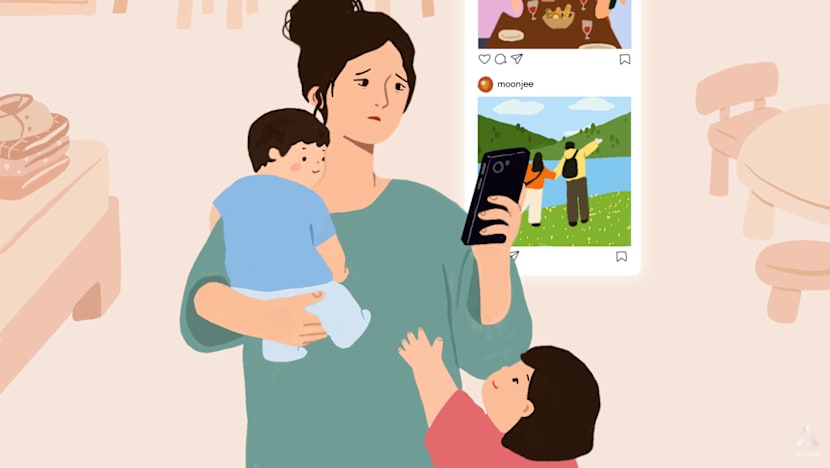
A dinner with former colleagues did more than ease Ms Daphne Ling's fears of being an outsider after years immersed in parenting. It gave her the confidence to open up to others again.
New: You can now listen to articles.

This audio is generated by an AI tool.

19 Sep 2026 09:30PM
For most of my 20s and 30s, while my friends were getting dressed up for drinks after work, or travelling on a whim to Europe, I was at home in a loose tee smelling of spit-up, with a baby in each arm and my unwashed hair scraped into a messy bun.
I had my first child at 26. In the next eight years, I went on to have four more – and all five needed my constant attention.
I was exhausted all the time. I gained weight, and oversized shirts and baggy jeans felt like the only clothes I could hide in. Next to my friends in their stylish outfits of the day and beautifully manicured nails, I felt hopelessly frumpy.
On the rare occasions I did go out, I spent the evening missing my babies.
They were the life I had always wanted, and yet a part of me wanted more. And I wasn't sure I was allowed to feel that.
Soon enough, it just became easier to stay home. I started passing on social invitations, thinking it would only be "for now".
One year became two, then five. Eventually, after enough refusals, my friends understandably stopped inviting me.
Before I knew it, 16 years had passed since I'd had anything resembling a social life.
WHEN MY KIDS DON'T NEED ME AS MUCH
When my youngest child started preschool, I suddenly gained a lot more freedom than I'd had in the better part of two decades.
I expected it to feel exhilarating. Instead, I felt strangely adrift. My babies were growing up; they didn't need me as much anymore.
The problem was I had spent so long being needed that I no longer knew who I was when I didn't have to shoulder that need.
Perhaps I could have carved out more time for myself. After all, my husband had always been a supportive partner and a present parent, often offering to watch the children if I ever wanted to go out.
For years, I had told myself I was making a noble sacrifice by giving everything up to be with my kids.
That was partly true. But in hindsight, I realised I had also fallen out of touch because my world had become so different from my friends'.
I had turned down many invitations not because my husband couldn't handle the children for a few hours, but because I felt I had nothing to contribute to lively conversations with people my own age.
Whenever friends texted or called, my thoughts weren't only on my children.
"I don't travel, so I don't have stories from my latest trip abroad. I don't go out, so I can't talk about a new bar or restaurant I've just discovered," I'd think. "What would I say?"
After 16 years, it felt like everyone else had moved on, and I had no idea how to find my way back.
CRAWLING OUT OF MY SHELL
Making friends in your 40s is hard enough as it is.
It's even harder when you're an introvert who has spent a decade-and-a-half living almost entirely inside the universe of diaper changes, school runs and bedtime routines.
Given how reserved I naturally am, reaching out to my friends felt like too much of a hurdle to overcome.
I told myself that my social life, or lack thereof, was fine as it was, until a chance encounter with someone from my "past life" made me realise, deep down, how much I missed having one.
Two years ago, a former colleague came into the cafe I used to run. We chatted, and I discovered that our old group was still meeting regularly.
"I'd love to join you for the next one," I heard myself say. As soon as the words left my mouth, I immediately felt a flash of panic.
"That would be fun!" she replied. "I'll arrange for all of us to catch up."
On the day of our scheduled dinner, my social anxiety kicked in as I approached the restaurant along Keong Saik Road in Chinatown.
Perhaps too much time had passed and meeting them would be weird. Perhaps they had grown closer without me, and I'd be the outsider left fumbling through awkward small talk and unfamiliar in-group references.
It turned out to be the exact opposite.
Even before the waiter arrived to take our order, we were chatting and laughing boisterously. Old stories and inside jokes resurfaced, and suddenly, we were back in our 20s, bonding over the collective trauma of our shared work experiences.
I went home that evening feeling lighter than I had in a long time, but it wasn't just about the fun we had.
They remembered a version of me that existed before I became somebody's mother, and in their company, I'd remembered her, too.
FINDING MY WAY BACK TO MY FRIENDS – AND MYSELF
For a parent who's been out of the game for years, regaining a social life is its own project.
In some ways, modern friendship can feel trickier than dating. No obvious playbook or timeline tells you when an acquaintance has become a friend.
These connections are supposed to develop organically, even though adult life leaves very few opportunities for that to happen.
You find someone whose company brings you joy, and one of you still has to risk saying: "I enjoyed spending time with you. Shall we do it again?"
I agonised over social cues that I assumed came naturally to the social butterflies in my orbit, who always seemed to be surrounded by friends.
Then, somewhere along the way, I stopped trying to crack the code.
My friends remembered a version of me that existed before I became somebody's mother, and in their company, I'd remembered her, too.
I started thinking instead about what I wanted from friendship at this stage of my life: good conversation, comfort in laughing or crying together, or simply sitting together in companionable silence.
I wanted friendships where I could show up as my true self.
We didn't need to be constantly present in each other's lives to know that the friendship was still there.
Over time, I found my way back to friend groups I had neglected for years.
I initiated dinners with old pals and sat with the discomfort of wondering whether things would be awkward.
I let people come closer and see the parts of me that were messy and imperfect.
Being vulnerable was terrifying, but it often made others feel safe enough to show me their mess and imperfections, too.
When life got rough, I realised what a gift it was to have someone say, "Hey, just checking in. How are you?" and be there to listen.
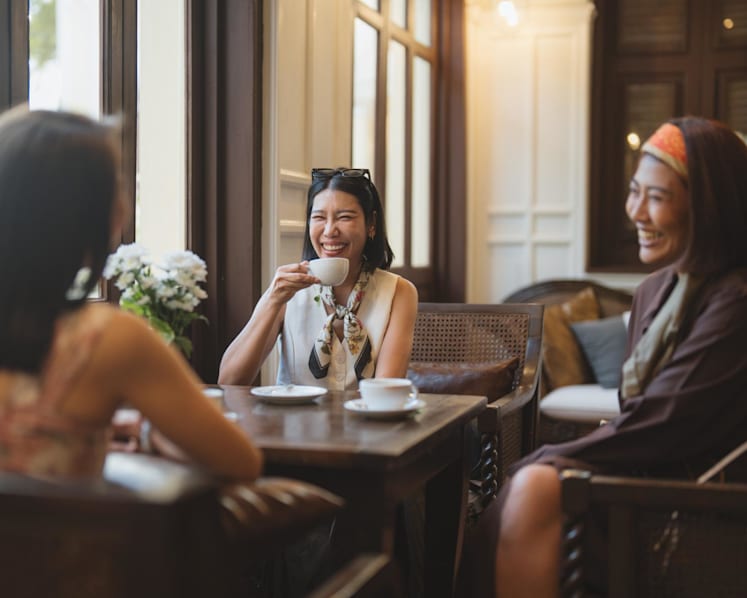
I also learnt to make new friends, which is more difficult than it sounds when everyone seems to have a full calendar all the time.
But slowly, I found people who brought out different parts of me.
Friends in their 30s taught me the art of striking a pose in a themed photo booth, something my Gen X self did for the first time at 44.
Friends in their 40s joined me in trying to work out whether we were having a midlife crisis or simply, finally, paying attention to what we wanted.
Friends in their 50s reported back from the front of the perimenopause battlefield: the sleep gets worse, the hormones become unpredictable, but on the whole, life itself gets better.
For 16 years, motherhood was my entire world. I don't regret it at all – but now, I'm seeing that I have room for new people, new conversations and new versions of myself.
I still think back often to that first dinner with my ex-colleagues. It hadn't magically given me a social life, but it reminded me that this part of my life was still possible.
After that night, I was added to the chat group to stay in touch and keep arranging gatherings.
The name of our chat group still makes me smile: "What's Next?"
I can't wait to find out.
Daphne Ling is a mum of five. She is also the co-owner of an advertising agency.
If you have an experience to share or know someone who wishes to contribute to this series, write to voices [at] mediacorp.com.sg (voices[at]mediacorp[dot]com[dot]sg) with your full name, address and phone number.
KioskNews shows a cleaned-up reading view extracted from the publisher’s page — the original always lives on their site, not ours.