8 years on, UP’s martial law museum still awaits construction


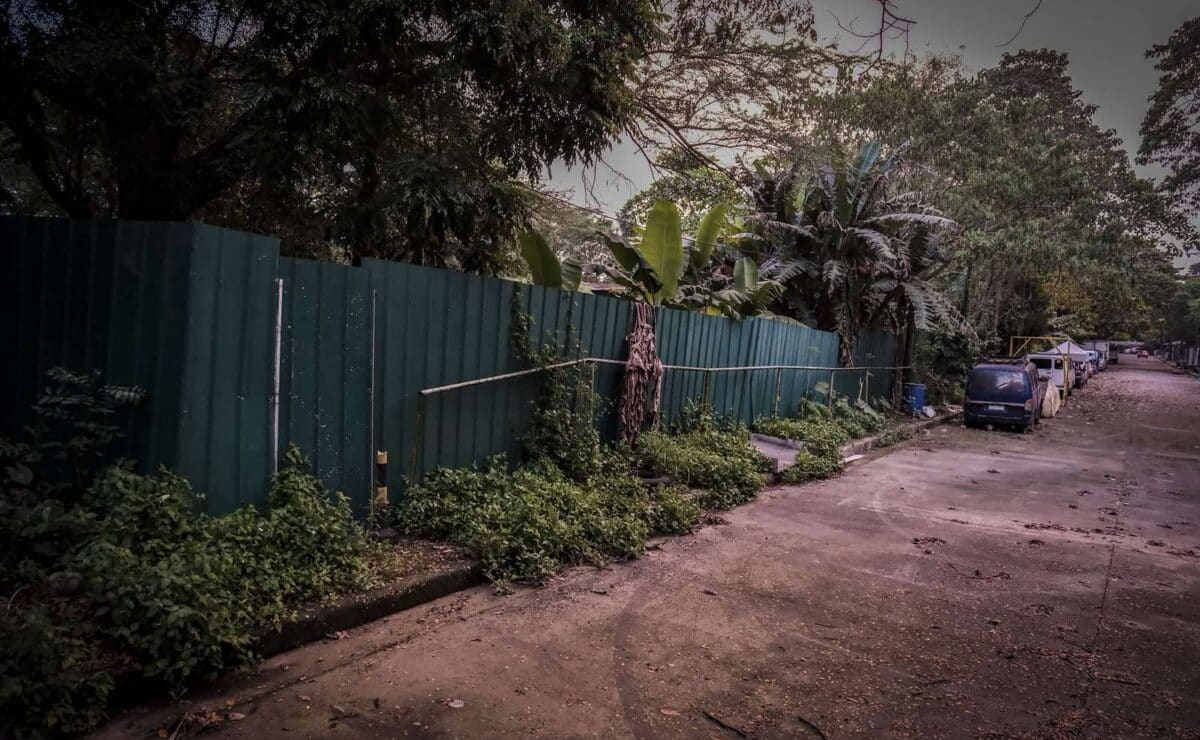
MANIL, Philippines — Along CP Garcia Avenue at the University of the Philippines (UP) Diliman, Quezon City, a 1.4-hectare property is reserved for a museum meant to keep alive the stories of Filipinos who suffered human rights violations under the regime of the late President Ferdinand Marcos Sr.
Eight years after plans were formalized, however, no museum has risen on the site.
Officially called The Freedom Memorial Museum, it remains in the preconstruction stage as the country marks the 54th anniversary of the declaration of martial law on Sept. 21, 1972.
Article continues after this advertisement
READ: Martial law museum to rise on UP Diliman campus
FEATURED STORIES
NEWSINFO
NEWSINFO
NEWSINFO
There has been progress on the site. About 6,000 square meters (sq m) of the 14,000-sq m property have been cleared, and UP president Angelo Jimenez said construction can already begin on that portion.
Museum for memory
“We have informed HRVVMC (Human Rights Violations Victims’ Memorial Commission) that approximately 6,000 square meters of the 14,000 square-meter site have been cleared where they can start to build immediately,” Jimenez told the Inquirer.
Jimenez described the development as a “breakthrough” for a project that has gone through several construction targets and difficulties over the relocation of university offices occupying the intended site.
But as of September 2026, construction itself has yet to begin.
Article continues after this advertisement
READ: Blame game over delayed martial law museum in UP
UP and HRVVMC signed a memorandum of understanding on Sept. 21, 2018 (a martial law anniversary), formalizing their partnership to establish at UP Diliman a permanent memorial and educational resource honoring the victims of the Marcos regime.
Article continues after this advertisement
For some survivors and advocates, the wait has since been imbued with a more personal urgency. When they met with UP and HRVVMC officials in September 2024, they urged the state university to speed things up, with the older ones saying they were looking forward to attending at least the groundbreaking rites for the project—in case they would no longer be around for the opening.
Martial law survivor and former Social Welfare Secretary Judy Taguiwalo welcomed the opening of HRVVMC’s smaller Freedom Memorial Museum Gallery on Panay Avenue also in Quezon City that year, but said a permanent space was still needed.
“While we’re happy that this exists, this small space also means that this isn’t enough,” Taguiwalo told the Inquirer at the time.
An agreement for the memorial complex was approved in 2019, with a 1.4-hectare site identified along CP Garcia Avenue. The area was occupied by UP Diliman’s Campus Maintenance Office (CMO), whose relocation became one of the issues affecting the project’s timeline.
Jimenez said UP considered alternative sites after encountering logistical problems in transferring the CMO, but eventually decided to proceed with the original location.
‘Breakthrough’

“We are cooperating with the [HRVVMC] in resolving matters that have affected the timeline, foremost of which is site readiness,” he said.
In a chance interview with reporters in Quezon City on Friday, Jimenez said UP had “never wavered” in its commitment to have the museum built, but acknowledged difficulties in relocating the CMO.
“There has been a breakthrough. It seems we have cleared the old site. The old site might be on the table,” he said.
Jimenez later confirmed to the Inquirer that UP had decided to proceed with the original site and that approximately 6,000 sq m had been cleared.
The remaining portion is expected to become available by late 2026 or early 2027.
“Everything is on the table right now, but I’m pushing,” he said. “I really made a statement that the project, as far as I’m concerned, is a go.”
Earlier targets
The project’s construction and completion target dates have gone through several revisions.
In 2022, HRVVMC executive director Carmelo Victor Crisanto said construction could begin that year, with the opening expected in June 2024.
By September 2024, UP and HRVVMC were publicly at odds over what was holding up CMO’s relocation. HRVVMC said it had completed the replacement facilities in October 2022, while UP said the necessary deed of transfer had yet to be signed.
The two sides later agreed to expedite the project. The deed was signed on Sept. 27, 2024, after which UP said site clearing had begun.
They set the groundbreaking for December 2024, while Crisanto said the transfer and clearing were expected to be completed within six months and construction within 18 months.
Government budget documents later set another timetable.
The Department of Budget and Management’s (DBM) Budget of Expenditures and Sources of Financing Fiscal Year (FY) 2026 said bidding for the museum was planned for July 2025 and mobilization by September 2025, with progress billing for construction anticipated in 2026.
As of September 2026, however, physical construction had yet to begin.
Jimenez said procurement, contractor selection and construction mobilization were under HRVVMC.
“Although construction was not able to proceed as initially projected, UP remains committed to working with HRVVMC towards successful completion of a project which we consider as a vital educational resource and poignant reminder of our nation’s history,” he said.
As of writing, HRVVMC had yet to respond to the Inquirer’s questions on whether bidding had been completed, whether a contractor had been selected, what happened to the planned September 2025 mobilization and when construction was now expected to begin.
Funding
The DBM said P381 million was released for the project in 2021, of which P127 million had been utilized as of September 2022.
The FY 2026 budget document showed HRVVMC’s trust account under Republic Act No. 10368 with a cash balance of P596.12 million as of Dec. 31, 2024. It programmed P177.52 million in expenditures for 2025 and proposed P379.07 million for 2026.
RA 10368, or the Human Rights Victims Reparation and Recognition Act of 2013, created HRVVMC and tasked it with establishing, restoring, preserving and conserving a memorial, museum, library or compendium in honor of human rights violation victims during the Marcos regime.
Your subscription could not be saved. Please try again.
Your subscription has been successful.
While the permanent museum at UP Diliman remains in the preconstruction stage, HRVVMC operates the Freedom Memorial Museum Gallery at its office on Panay Avenue. INQ
KioskNews shows a cleaned-up reading view extracted from the publisher’s page — the original always lives on their site, not ours.