Crop outputs grew up to 100% in China’s big agricultural experiment: scientists
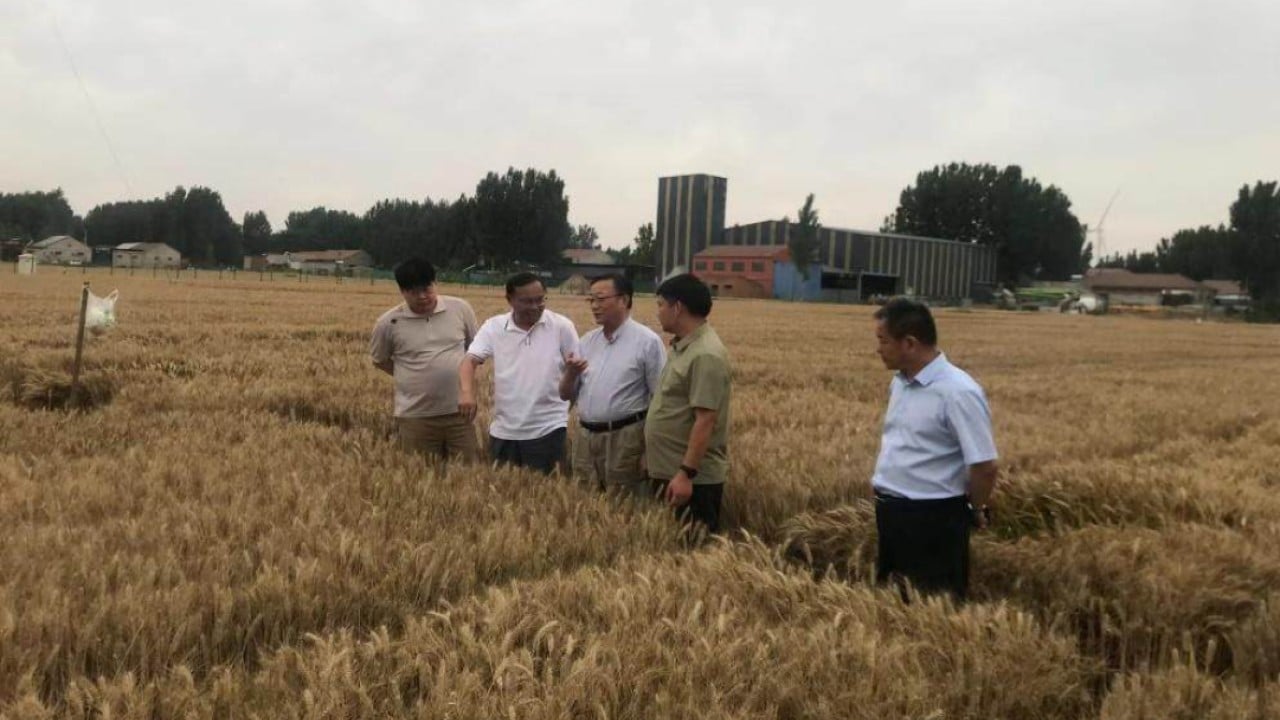
Large-scale field trials across China show that irrigation water treated with natural minerals radiated by sunlight could dramatically increase the yields of several crops, according to Chinese scientists behind the experiments.
The team said the trials, including on rice, wheat, soybeans, peanuts, sweet potatoes, sugar cane and vegetables, improved photosynthetic efficiency.
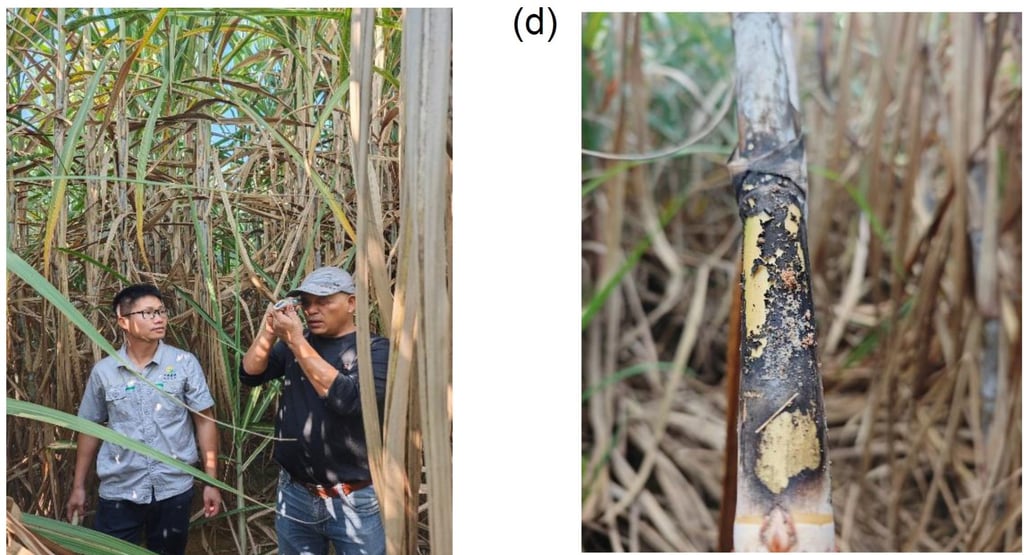
Their study, conducted from Heilongjiang province in northeastern China to Hainan province in the south, recorded yield increases of up to 40.6 per cent for rice, 24.7 per cent for wheat and 45.7 per cent for sugar cane, according to the scientists who said one sweet potato trial recorded an increase of 109.5 per cent.
02:59
China’s Great Green Wall stands against the spread of desert sands
Lu Anhuai, the lead scientist of the team and a professor at the School of Earth and Space Sciences at Peking University, said the approach could offer alternative ways of increasing agricultural production, such as improved crop varieties and fertilisers, by using irrigation water to improve how efficiently plants use sunlight.
“This is a new track,” Lu said in an interview on September 22.
“In the past, agricultural yield increases relied first on seeds and second on fertilisers,” he said, adding, “We rely on water [and] on improving photosynthetic efficiency”.
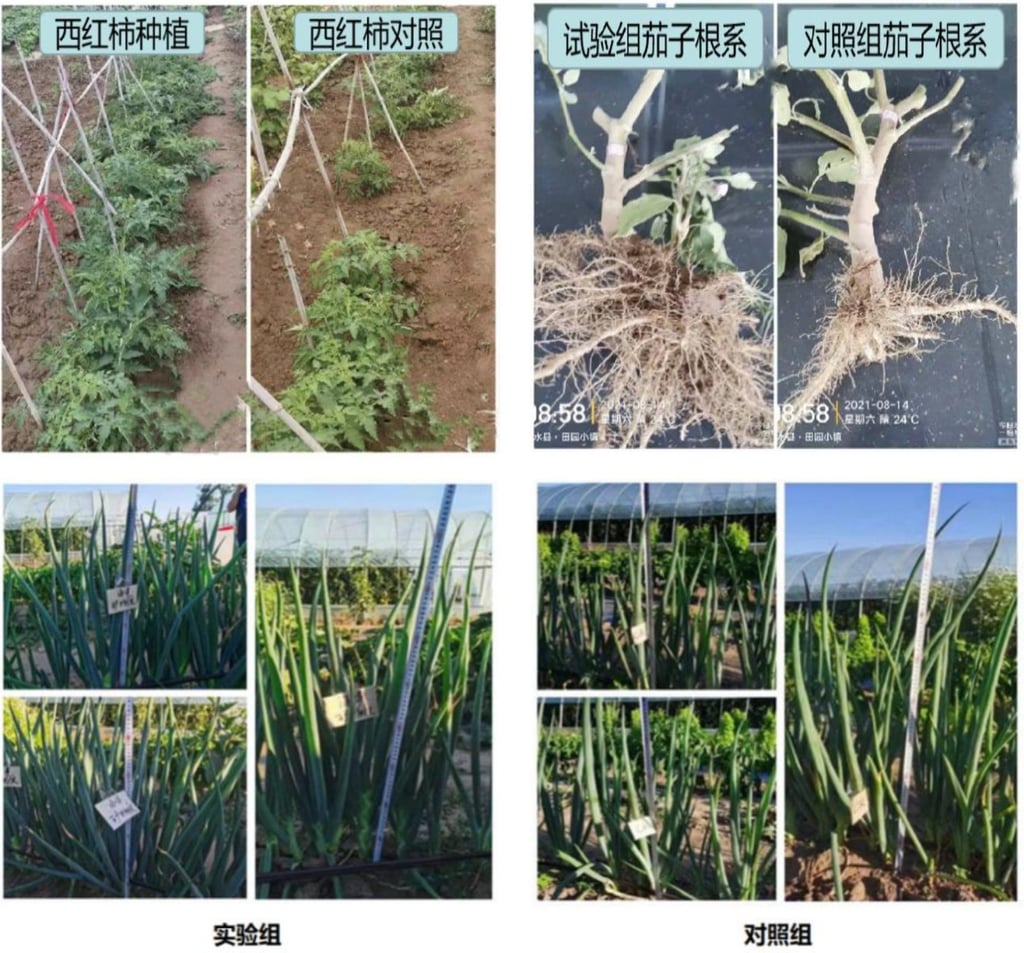
The results are part of a research programme led by Lu that has evolved over more than two decades. He said the technology could have broad applications because it was not limited to a particular crop.
“It can be used for all crops that need irrigation water,” he said, referring to rice, wheat and other major agricultural crops.
He said the approach could eventually be expanded across a wider range of agricultural regions around the world and asserted that Western countries did not have such research.
The trials covered rice in Sichuan, wheat in Henan, soybeans in Heilongjiang and Inner Mongolia, sweet potatoes and peanuts in Shandong, sugar cane in Guangxi, cherries in Gansu and vegetables in several provinces.
The researchers said the field data included a Sichuan trial in which the rice variety Chuanyou 617 produced 849.2kg per mu – a Chinese unit of measurement that corresponds to 0.16 acres or 0.07 hectares – an increase of 33.0 per cent.
Another variety, Shuxiang You 668, recorded a 40.6 per cent increase, a wheat trial in Henan recorded a 24.7 per cent increase for Xiyuan 151, while sugar cane trials in Guangxi reported increases of up to 45.7 per cent, according to the team.
In Shandong, a trial using the sweet potato variety Yanshu 25 recorded a yield of 5,229.0kg per mu, 109.5 per cent higher than the comparison figure, the researchers said, while adding that trials with cherries and peanuts also had improved yields.
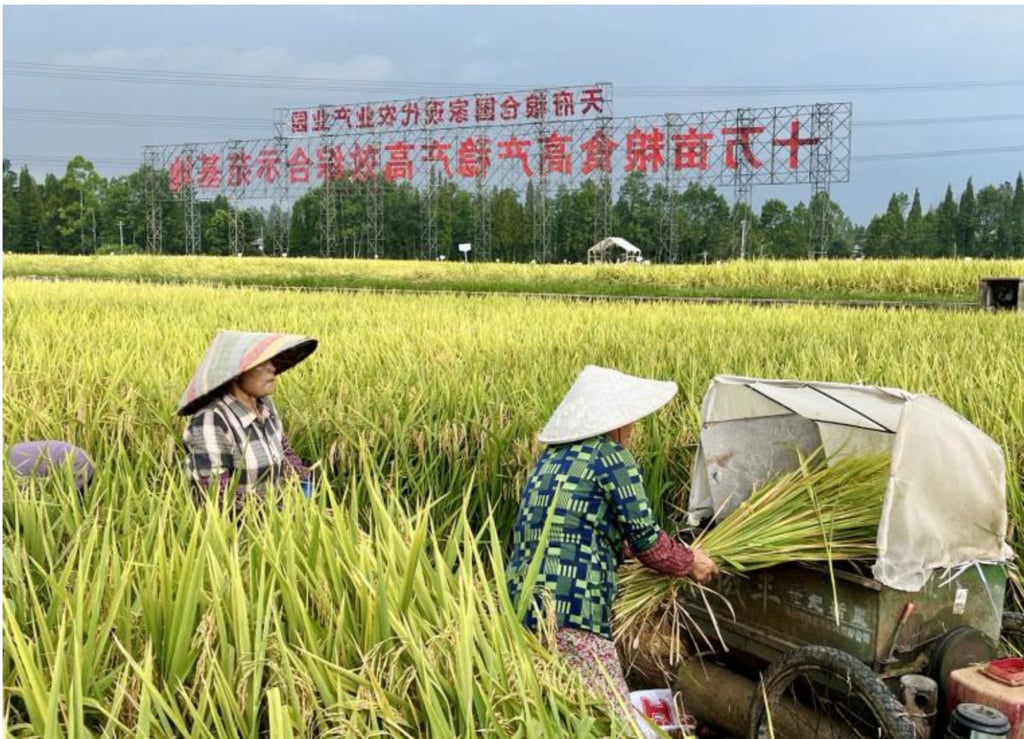
They said some of their most striking results came from the rice experiments, including a 4.4-mu field in Sichuan’s Tianfu Granary National Modern Agricultural Industrial Park, they said.
The team said the crop was irrigated five times during the grain-filling stage – the rapid growth stage after the flowering and pollination of cereal crops – and strong winds caused severe breaking in three of the four varieties in the control plots, while none of the four varieties treated with the mineral functional water did.
Lu has worked on environmental mineralogy since the 1990s and has led two major projects under China’s National Key Basic Research Development Programme, commonly known as the 973 Programme, serving as chief scientist for projects that ran from 2007 to 2011 and from 2014 to 2018. He was also president of the International Mineralogical Association.
The state-funded projects helped lay the groundwork for his team’s later research into the interactions between minerals, sunlight, microorganisms and biological energy conversion.
In 2019, Lu and colleagues reported in PNAS (Proceedings of the National Academy of Sciences) that iron and manganese-bearing mineral coatings on rocks and soils could convert sunlight into electrical energy via semiconductor photoelectric effects.
They then asked whether similar mineral-driven solar conversion could affect biological systems.
They focused on a manganese oxide material called birnessite. Deep inside plant cells, the manganese cluster (Mn₄CaO₅) drives photosystem II – the catalytic centre in chloroplasts that splits water to generate plant energy – leading to their “mineral functional water” in which minerals modify irrigation water instead of being applied directly to crops.
A paper by the team published online on August 27 in the peer-reviewed Chinese journal Acta Mineralogica Sinica which detailed the yield results described this as part of a programme from mineral photoelectric effects to mineral-assisted microbial metabolism and plant “semi-artificial photosynthesis”.
The proposed mechanism: minerals absorb broader wavelengths of sunlight and convert them into energy that alters water’s physical properties, including hydrogen-bond structure, making water easier to split during photosynthesis.
“Our technology works outside the chloroplast, using water as the medium,” Lu said. “The materials convert solar energy into the internal energy of the water.
“When this water is used for irrigation, it is easier to split at the manganese cluster in the chloroplast.”
Water splitting produces protons and electrons that feed into the photosynthetic electron-transfer system, enabling plants to convert carbon dioxide into organic matter.
In the field method described by the team, mineral powder was added to ordinary irrigation water at about 0.5 per cent, stirred under sunlight for one hour and then allowed to settle, with the clear water above the settled materials then used for irrigation.
05:43
‘Green miracle’: retired US teacher visits China forest he helped fund over 2 decades ago
Because the minerals did not dissolve in the water, the materials at the bottom could be reused, they said.
“The materials are cheap. They are natural minerals and it is easy to make,” Lu said, adding that the core formulation was proprietary and protected by patents. “It’s a mixture of ingredients. But the core formula is our secret.”
Lu said this technology for increasing crop yields had no harmful effects: the materials did not dissolve into the irrigation water and were neither a fertiliser nor a pesticide. He said they contained no heavy metals and did not introduce the dissolved mineral load associated with conventional fertiliser use.
The technology was moving towards commercialisation, according to Lu.
KioskNews shows a cleaned-up reading view extracted from the publisher’s page — the original always lives on their site, not ours.