US criticises China’s WTO compliance as industry groups mount complaints
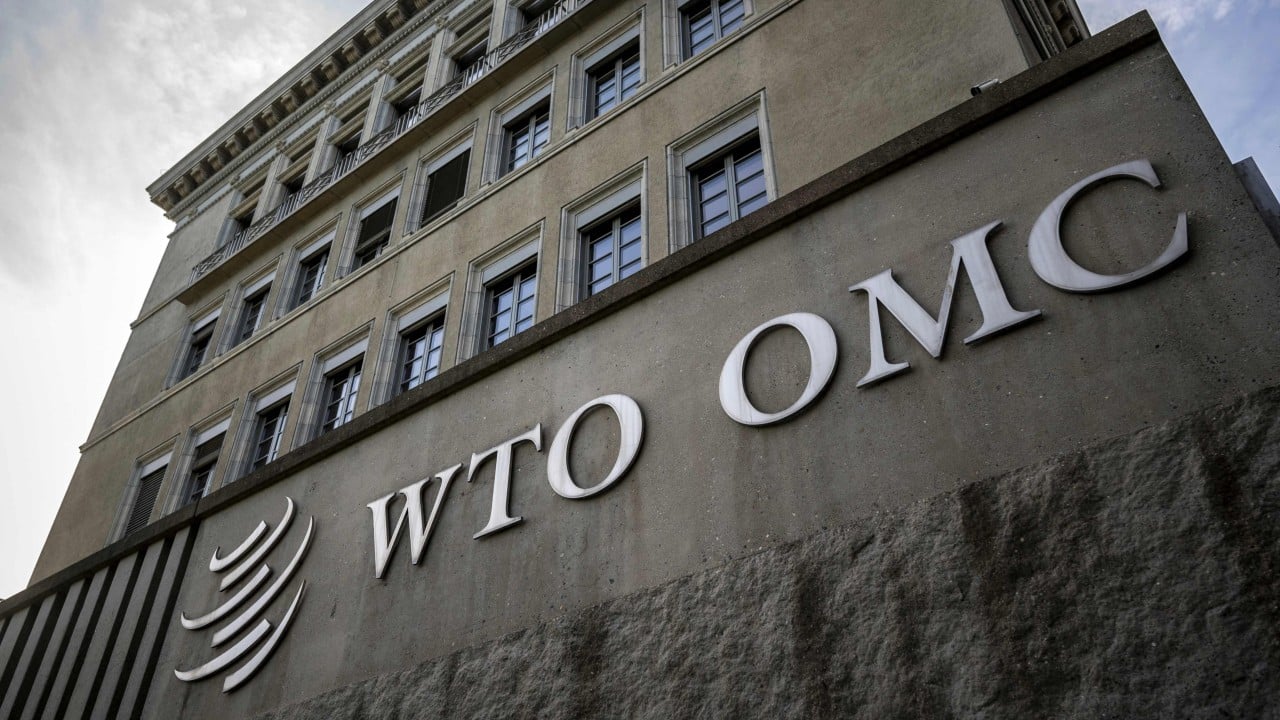
At a hearing reviewing China’s compliance with its World Trade Organization (WTO) commitments, a senior US trade official said Beijing was targeting entire industrial sectors for global dominance while retaining a non-market economic system.
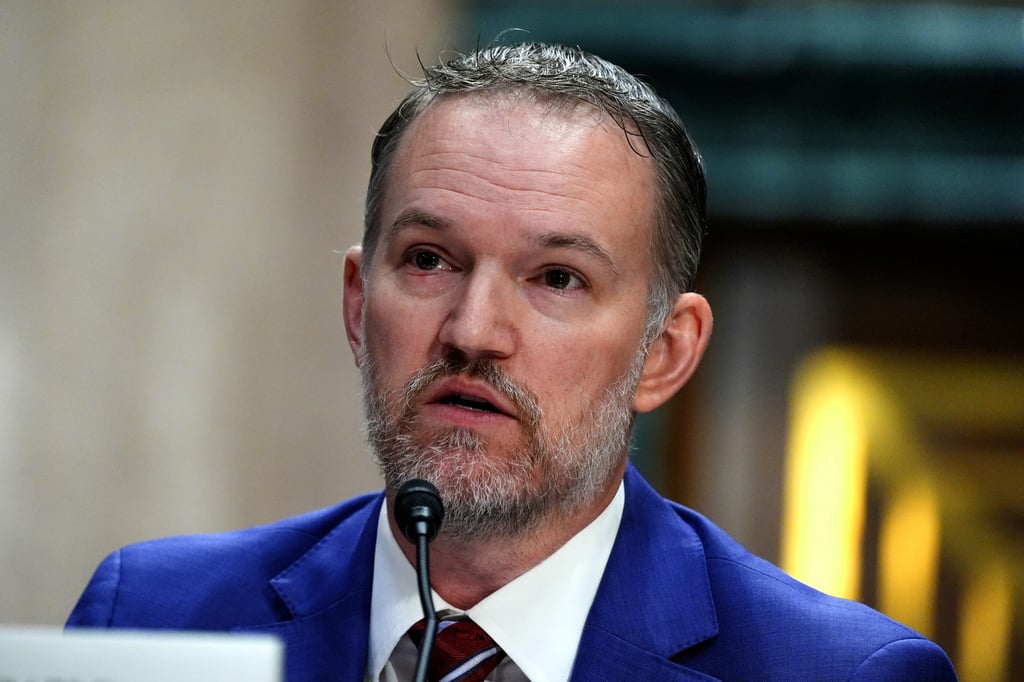
Terry McCartin, Assistant US Trade Representative (USTR) for China, Mongolia and Taiwan Affairs, said China’s anticompetitive behaviour posed a major challenge to the global trading system.
“More critically, after 25 years of WTO membership, China still embraces a non-market economic system,” McCartin said in his opening remarks at the hearing. He said China’s approach had evolved, with Beijing now focused on targeting entire industrial sectors for global dominance.
11:30
End of an era: why China no longer seeks WTO privileges as a developing country
This came as US steelmakers urged Washington to consider additional tariffs and coordinate with other countries to counter China’s steel overcapacity, as industry groups outlined complaints about Beijing’s trade practices ahead of the Wednesday hearing.
By law, US Congress requires the USTR to submit an annual report monitoring China’s compliance with its WTO commitments, utilising public comments and hearings.
Washington accuses Beijing of not meeting WTO commitments
The US has long accused China of failing to meet its WTO commitments. In its latest report, released in March 2026, USTR said China’s state-led economic model had deepened rather than softened after nearly 25 years of WTO membership.
The report argued that China’s industrial policies, state support and efforts to promote domestic industries continued to create challenges that existing WTO rules were not designed to address. It said the US therefore needed to use tools outside the WTO to respond to what it described as China’s non-market practices.
The Chinese embassy in Washington did not respond to a request for comment. Beijing has historically rejected US allegations regarding its trade practices, previously accusing the USTR’s compliance reviews of exposing a pattern of unilateral thinking and “consistent bullying” by the US.
Chinese officials have consistently rebuffed Washington’s claims over industrial excess capacity, arguing that the issue is being politicised and used as a pretext for protectionism and restrictive trade measures.
In its past policy papers, Beijing maintained that its industrial expansion is driven by innovation and global demand, calling for capacity disputes to be resolved through multilateral cooperation.
In written public comments submitted ahead of Wednesday’s hearing, 17 groups from sectors including agriculture and food, technology and digital industries, healthcare and consumer products outlined their concerns. Four representatives testified in person on Wednesday morning.
In its comment, the American Iron and Steel Institute (AISI) accused China of maintaining massive steel overcapacity through government subsidies and industrial policies, saying Chinese steel production far exceeded domestic demand and was exported worldwide, hurting US producers and workers.
AISI called for additional tariffs and stronger international coordination.
“For American steelmakers, the Chinese government’s flouting of market principles reiterates the need for clear, concerted action to address steel overcapacity,” Kevin Dempsey, president and CEO of AISI, wrote in its statement.
SCMP Plus is a new premium news platform that gives you an
all-inclusive edge to stay ahead on China news.
To access our exclusive content you’ll need to subscribe.
Already a subscriber?
LOG IN
The comments came as USTR Jamieson Greer announced on Wednesday that countries taking part in the Global Forum on Steel Excess Capacity had agreed to a new framework for joint action on global steel overcapacity.
US eager to work with ‘like-minded partners’: Greer
Greer said the US would work with “like-minded partners” to address the market distortions caused by excess capacity and highlighted tariffs and other Trump administration policies as having helped revive the US steel industry.
The Personal Care Products Council targeted Chinese regulatory barriers affecting US cosmetics, specifically urging Beijing to accept equivalent quality certifications, recognise foreign efficacy testing, and streamline routine product updates. The group noted that resolving these three issues could boost US exports by an estimated US$282 million annually.
Dr Andy Lee, Executive Vice-President of the American Association for Elder Care, which focuses on equipment for seniors and mobility devices such as wheelchairs, told the South China Morning Post that the group does not allege that China’s law on non-governmental organisations violates its WTO commitments. However, he emphasised that the group hopes for more transparency and predictability.
“In our experience seeking to conduct temporary activities through a Chinese partner, the approval criteria and timeline were not publicly available,” he said.
“We believe further clarification of the relevant terms and approval criteria would make local laws and regulations more predictable, allowing foreign organisations to prepare, comply, and contribute more effectively to health and eldercare cooperation.”
Other groups that filed comments included the Semiconductor Industry Association, the US Chamber of Commerce, the National Pork Producers Council, the US Meat Export Federation, US Wheat Associates, USA Rice, the Council for Innovation Promotion, the International Intellectual Property Alliance and the American Chemistry Council.
Their submissions covered issues ranging from Chinese government procurement preferences and export controls to agricultural market access, intellectual property protections, subsidies and regulatory barriers.
The WTO assessment is taking place alongside current trade talks between the two countries through the Board of Trade. After Chinese President Xi Jinping’s state visit to the US, Washington and Beijing have recommended US$30 billion of trade in non-sensitive goods on each side for more favourable tariff treatment under the framework.
Officials from the US Departments of Agriculture, Treasury, Labour, State and Commerce also attended the hearing. The USTR is expected to release its next report early next year.
KioskNews shows a cleaned-up reading view extracted from the publisher’s page — the original always lives on their site, not ours.