The 17-Part Mystery Series So Good, An Iconic Metal Band Wrote A Song About It

Casey Duby is an avid TV writer, watcher, and reviewer. She graduated from Emerson College in 2021 with a focus in Writing for Film and Television, where she wrote several pilots and watched countless more. She's been working in television ever since.
Casey loves thoughtful content that makes her ponder our world and the people in it, and she's learned that any genre can surprise her. With favorites in every genre from horror to politics, family to action, nothing is off limits.
Casey has experience working in TV development and writing scripted shows. Currently working as a Writer/Critic in Los Angeles, with an AMC A-List membership to boot, she is always hunting for the next good story and great theme song.
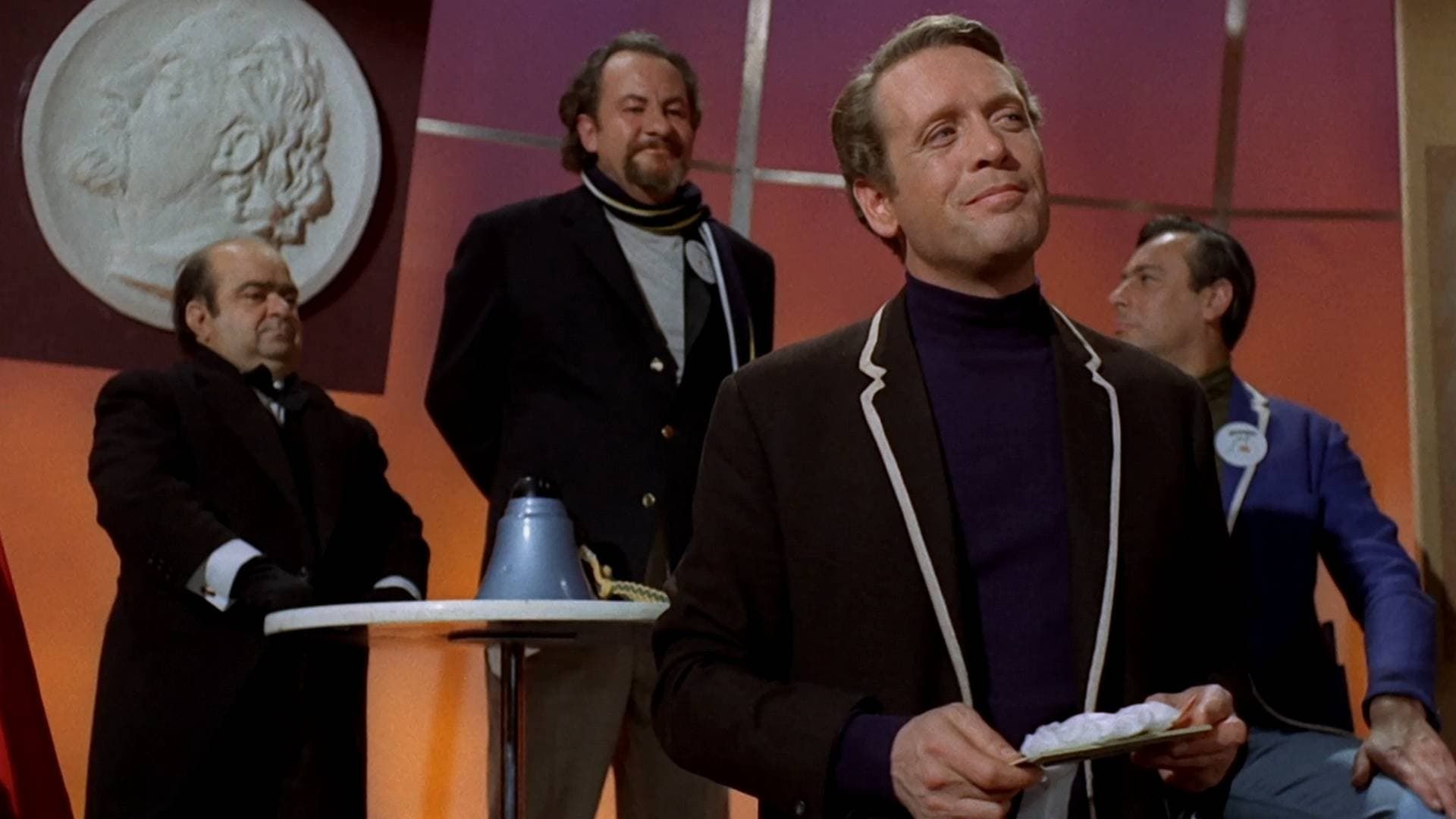
By 1967, Patrick McGoohan had risen to fame as the titular character in the UK espionage thriller, Danger Man. Danger Man's John Drake bore much resemblance to James Bond, so when McGoohan then starred as a secret agent once again in The Prisoner, viewers expected to see similar spy stories and action thrills. The limited series proved to be something very different.
In The Prisoner, McGoohan's character angrily resigns as a secret agent and is subsequently abducted and brought to "The Village," a picturesque island town where everyone is friendly and everything is provided. However, no one can leave the Village, and everyone is referred to as a number rather than by name. The titular character is branded Number Six.
The Village's pleasant appearance only thinly veils its reality as a true police state where the villagers are not only monitored, but experimented on in an effort to get them to disclose their secrets. Those running the Village are intent on learning the true reason for Number Six's resignation and whether he betrayed his country, going to increasingly mind-bending lengths to break his resolve.
Arguably the most interesting and influential element of The Prisoner is the way it constantly shifts between futuristic sci-fi and bizarre fantasy. Through it all, though, McGoohan's Number Six is both a professional and a man of honor, and his cunning charm gives the show a warm, quick-witted personality.
The show was truly ahead of its time, with many viewing The Prisoner as the very first mystery box show. It even had such an impact that a famous band wrote an entire song around the show's opening sequence.
Iron Maiden Have An Entire Song Dedicated To The Prisoner

Every episode of The Prisoner opens with the same sequence establishing the show's premise, culminating in Number Six declaring, "I am not a number! I am a free man!" while Number Two (the show's ever-changing antagonist) laughs maniacally. The metal band Iron Maiden used this familiar exchange as the opening for their 1982 song, also called "The Prisoner."
The rest of the song continued to pay homage to the '60s cult classic TV show with refrains like "not a prisoner, I'm a free man," "you'll be afraid of when I call out your name," and "you'd better scratch me out of your black book 'cause I'll run rings around you," which is exactly what Number Six does to the Village's powers-that-be.
For a small, quirky, and unprecedented series, the fact that it played such a prominent role in a heavy metal song 15 years later is a testament to its impact and its celebration of rebellion and non-conformity.
The Prisoner Started An Entire Genre Of TV

While it is known today as the mystery box genre, The Prisoner pioneered the idea of a premise built on unanswered questions and a story that only grows more bizarre as it works towards answering them. In the decades following its release, and even still today, the way The Prisoner has inspired contemporary mystery box shows is abundantly clear.
Twin Peaks, a 1990 cult classic, is highly evocative of The Prisoner's more surreal installments and generally unsettling atmosphere. Twin Peaks co-creator Mark Frost has even confirmed The Prisoner's influence on the show.
Yet The Prisoner's modern influence is perhaps most apparent when viewing Lost. Lost's basic premise of an island that can't be escaped is highly comparable to the conceit of the Village, but the shows' true resemblance is in their treatment of dueling elements of inexplicable surrealism and psychology-focused science fiction.
The Village's surveillance of its population is barely disguised, while the various Number Twos are transparent about their attempts to break Number Six's mind, both with futuristic technology and extreme psychological experiments. This bears a striking resemblance to Lost's Dharma Initiative, which pursued very similar mind-bending endeavors that blurred the line between reality and madness.
The Prisoner continues to influence the genre still today, as shows like From and Pluribus employ different elements of the trailblazing show in new and creative ways. Pluribus, with its abundantly friendly hive-mind, feels a bit like the Village in the way that Rhea Seehorn's Carol feels both isolated and constantly studied. Meanwhile, From has put a dark horror spin on the idea of a town that can't be escaped.
All of these shows feel both wholly original and emblematic of the evolving eras of television that they were created in, but none of them would be quite what they are without The Prisoner.

- Release Date
- 1967 - 1968-00-00
- Network
- ITV1
- Directors
- Don Chaffey, Pat Jackson, Peter Graham Scott
- Writers
- George Markstein, Anthony Skene, Terence Feely, Vincent Tilsley, Ian Rakoff
KioskNews shows a cleaned-up reading view extracted from the publisher’s page — the original always lives on their site, not ours.