Pakistan's Own Agency Busts Its 'Diwali Firework' Pollution Theory As AQI Crosses 600
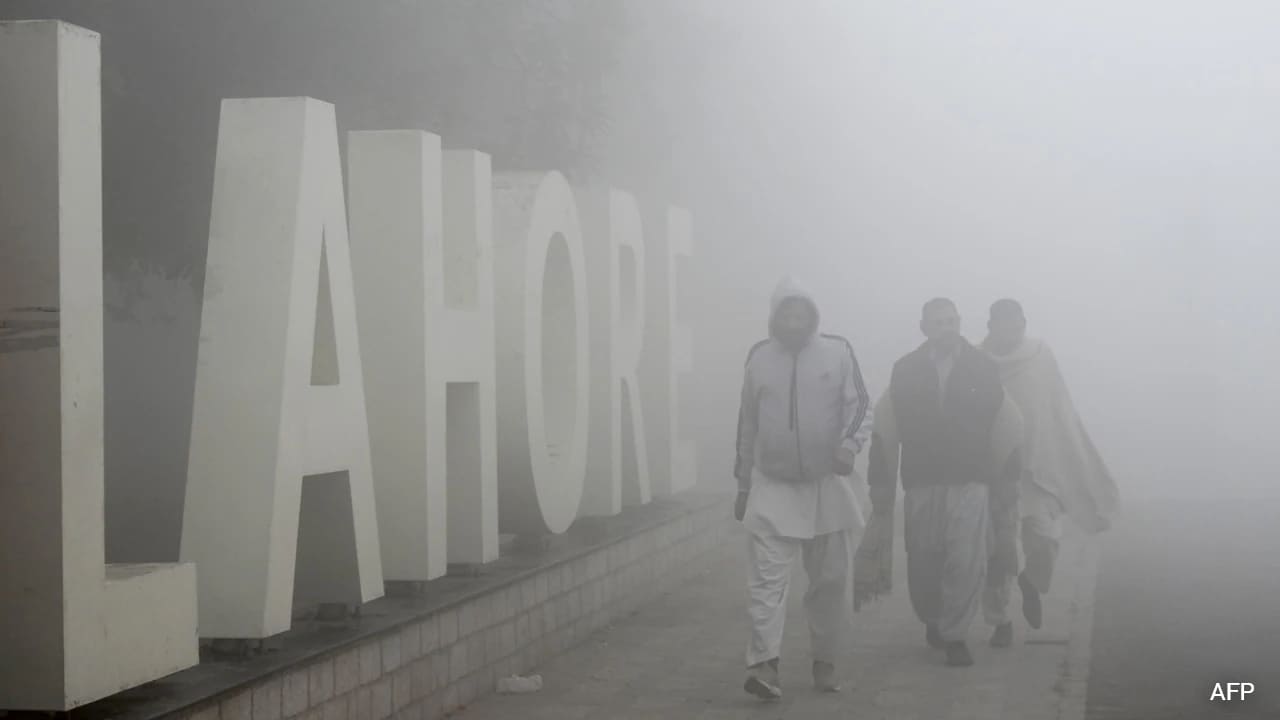
As the air quality index (AQI) in Lahore crossed 600 this week, Pakistan was quick to blame firecrackers burst during Diwali celebrations in India for poor air quality and a thick blanket of toxic smog. However, now its own air quality monitoring agency has raised questions over the propagandist narrative, noting there was no conclusive link between the fireworks and the post-Diwali pollution spike in Pakistan.
A report by the Pakistan Air Quality Initiative (PAQI) noted that satellite data has detected 16,714 likely crop-residue fires in Pakistan's Punjab between October 1 and November 9, while Lahore's average PM2.5 concentration was eight times the World Health Organisation's (WHO) guideline value.
It noted that approximately 89 per cent of pollution in Lahore and other areas of Punjab province in neighbouring Pakistan was likely due to crop-residue burning, according to a Dawn report.
Lahore was ranked the world's most polluted major city this week as its AQI reached 590, according to Swiss group IQAir. However, a separate historical reading on the platform showed an hourly index of 647, placing the city in the hazardous category.
The PAQI assessment also reportedly examined whether fireworks during Diwali celebrations in India on November 8 had contributed to deteriorating air quality in Punjab.
The report said the available evidence did not support attributing Lahore's poor air quality after Diwali to fireworks across the border.
Pakistan's Propaganda
Earlier this week, Lahore topped Swiss group IQAir's ranking of the world's most polluted major cities. It said the city's concentration of PM2.5, harmful airborne particles small enough to penetrate deep into the lungs, was 37.2 times above the World Health Organization's annual guideline.
Following this, Marriyum Aurangzeb, the Environment Protection Minister of Pakistan's Punjab, said pollutants had been carried into the region by light winds and air drifting from India in the aftermath of Diwali.
"However, air pollution is expected to gradually decrease from early afternoon as weather conditions improve and winds shift direction," she said.
India's foreign ministry has not commented on the matter yet.
Pakistan had similarly attributed its toxic air in 2024 to crop-waste burning in Indian Punjab, but officials from India's weather department had said at the time that the wind direction meant the airflow was actually from Pakistan into India.
KioskNews shows a cleaned-up reading view extracted from the publisher’s page — the original always lives on their site, not ours.