Now, a Rs 10,000 fine for open waste burning in Delhi. Here’s what new rules change
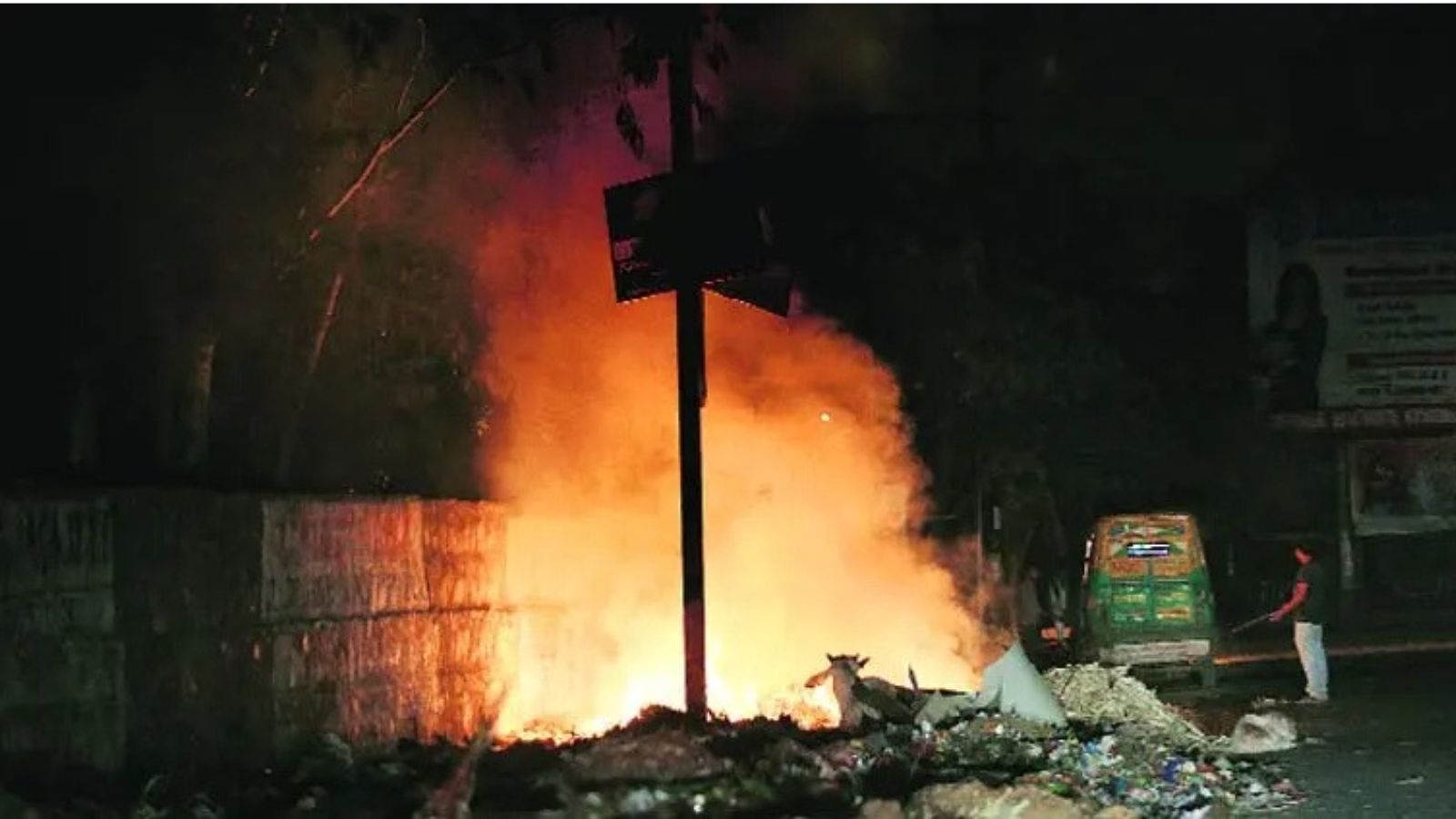
From a fine of Rs 500 on residents for not segregating household waste to Rs 1.5 lakh on factory owners and manufactures for violation of packaging waste management requirements, the Municipal Corporation of Delhi (MCD) has come up with a graded penalty structure under its new Solid Waste Management Bye-Laws 2026. The new rules, cleared by the civic body’s Standing Committee at a key meeting on Thursday, prescribe penalties depending on the nature of the violation and the category of the offender.
The civic body has also fixed monthly user charges for households, commercial establishments, hotels, restaurants, institutions, and other waste generators to fund garbage collection, transportation, processing, and disposal.
Waste management in focus
Under the bye-laws, open burning of solid waste will attract a penalty of Rs 10,000, while littering will lead to a fine of Rs 1,000. Drivers or owners of goods vehicles found littering will face a penalty of Rs 5,000.
Residential premises failing to segregate, store and hand over waste in the prescribed manner will attract a penalty of Rs 500. The same violation will invite higher fines for commercial establishments, with marriage halls, party lawns and exhibition venues facing penalties of up to Rs 15,000. Clubs, cinema halls, pubs and multiplexes will attract a fine of Rs 7,500.
Street vendors failing to manage waste generated through their activities will be fined Rs 500.
Improper handling of construction and demolition waste will also attract penalties, ranging from Rs 2,000 for residential premises to Rs 10,000 for non-residential properties.
Stricter penalties for commercial units
The bye-laws also prescribe substantial penalties for commercial establishments and institutions. Hotels will face a fine of Rs 75,000 and restaurants Rs 30,000 for failure to manage waste in accordance with the rules.
On the other hand, resident welfare associations (RWAs) and gated communities will attract penalties of Rs 15,000, while market associations and institutions will face fines of Rs 30,000 for such violations. These penalties will be levied only once per month.
Manufacturers and brand owners selling disposable products without a system to collect packaging waste will face the highest penalty of Rs 1.5 lakh. Failure to take other prescribed measures will attract a fine of Rs 75,000.
Industrial units failing to replace conventional fuel with refuse-derived fuel will also be fined Rs 1.5 lakh, while bulk waste generators failing to register or comply with their obligations will face a penalty of Rs 50,000.
Story continues below this ad
User charges
The bye-laws also provide for monthly user charges across categories of waste generators, including residential households, shops, offices, educational institutions, healthcare establishments, hotels and restaurants. The charges — collected by the MCD for solid waste and garbage collection services — will vary according to the size and category of the premises, as well as the type of establishment.
Both user charges and penalties will increase by 5% annually from January 1. A late payment surcharge of 10% will apply if dues are not cleared within 30 days of the demand being raised. To encourage advance payments, the MCD has also provided concessions, with annual payments equivalent to 10 months’ charges and six-month advance payments equivalent to five-and-a-half months’ charges.
Under the new rules, cases of repeated violations draw a higher penalty, with fines potentially being imposed for every default on a daily or monthly basis, as applicable. Environmental compensation may also be imposed by the Delhi Pollution Control Committee under Central Pollution Control Board guidelines.
KioskNews shows a cleaned-up reading view extracted from the publisher’s page — the original always lives on their site, not ours.