5 Classic Thriller Books Everyone Should Read at Least Once


Dyah (pronounced Dee-yah) is a Senior Author at Collider, responsible for both writing and transcription duties. She joined the website in 2022 as a Resource Writer before stepping into her current role in April 2023. As a Senior Author, she writes Features and Lists covering TV, music, and movies, making her a true Jill of all trades. In addition to her writing, Dyah also serves as an interview transcriber, primarily for events such as San Diego Comic-Con, the Toronto International Film Festival, and the Sundance Film Festival.
Dyah graduated from Satya Wacana Christian University in October 2019 with a Bachelor's degree in English Literature, concentrating on Creative Writing. On March 2026, Dyah graduated with Master's degree in English Literature Studies, with a thesis on intersectionality in postcolonial-feminist studies in Asian literary works.
Born and raised between Indonesia and Singapore, Dyah is no stranger to different cultures. She now resides in the small town of Kendal with her husband and four cats, where she spends her free time cooking or cycling.
Sign in to your Collider account
Hooking audiences with words on a page is a real skill, especially when it comes to thrillers. Modern audiences can enjoy the genre through countless movies and shows, but those mediums can put everything right on screen. Books, meanwhile, have to create an entire atmosphere through words alone—especially classic thrillers, which often focus more on the intricate mechanics of a mystery than fast-paced action. That makes them a great way to get back to what makes a thriller work.
While modern thrillers often rely on short chapters and quick pacing to keep things moving, classic thrillers show what makes a mystery truly addictive: A carefully built case, a detective piecing together clues, and clever methods of solving the crime. From a murder aboard a moving train to the debut novel of the legendary 007, here are classic thriller books everyone should read at least once.
'The Woman in White' (1860)

Before there was Sir Arthur Conan Doyle or Agatha Christie, there was Wilkie Collins, whose novel The Woman in White is regarded as a "sensation novel" because of how much it shocked readers during the time of its release. It's also considered one of the early ancestors of the thriller genre because of the mystery at its center. The Woman in White follows Walter Hartright, a young drawing teacher who encounters a mysterious woman dressed entirely in white on the streets of London. When he travels to Limmeridge House, he meets Laura Fairlie, a woman who looks remarkably like the stranger he met earlier, setting off a wild game of deception.
The Woman in White is basically a classic case of "Who is the real woman?" Collins doesn't give away everything at once. Instead, Walter discovers information piece by piece, with every answer leading to another question. A big part of the suspense comes from how the villains use social status, money, authority, and manipulation instead of simply relying on physical violence. Laura is surrounded by people who seem respectable on the surface, but their behavior becomes more unsettling as Walter starts questioning what they really want. What begins with Walter's strange encounter eventually connects to Laura's marriage, her money, her increasingly suspicious husband, and a much bigger secret hiding within the household.
'Murder on the Orient Express' (1934)

Christie's most beloved investigator boards the Orient Express for what should be a straightforward journey back to London in Murder on the Orient Express. Private detective Hercule Poirot is traveling from Istanbul when he finds himself sharing the train with a mysterious group of passengers, including American businessman Samuel Ratchett. His peaceful journey is soon interrupted when the train becomes trapped in a snowbank near Vinkovci, and Ratchett is found brutally murdered in his compartment with twelve stab wounds. With the murderer potentially still among the passengers, it's up to Poirot to figure out who's responsible while investigating everyone on board.
Apart from the fact that the train is mysteriously stranded during a snowstorm, creating the novel's signature chilly and claustrophobic atmosphere, Murder on the Orient Express features one of the most diverse suspect lists in Christie's series, ranging from a governess and lawyer to a valet and cook. Not only are there twelve alibis, but also twelve possible motives. It sounds redundant to go through everyone, but that’s the genius of the novel. Like any Christie mystery, solving the case requires reading with the belief that every word on the page is there for a reason, from each suspect's profession to every clue provided. Everything is written with a purpose.
'The Hound of the Baskervilles' (1902)

Sir Doyle wrote four Sherlock Holmes novels, but The Hound of the Baskervilles has easily become the most famous of the bunch. It starts with the death of Sir Charles Baskerville, whose mysterious demise brings an old family legend back into the spotlight. The Baskervilles are said to be cursed by a monstrous hound that has hunted their family for generations, and Sir Charles' death makes the legend suddenly feel a lot less ridiculous. Holmes sends Dr. John Watson to Baskerville Hall while he continues working on the case from London. Once there, Watson finds himself dealing with an escaped convict, suspicious locals and strange happenings.
Doyle has a lot of fun playing with the idea of a detective story where the supernatural might actually be involved. Holmes is about as skeptical as detectives come, yet the bleak Devonshire landscape makes it surprisingly easy to understand why people would believe in the Baskerville curse. The fog-covered moors, isolated mansion, and stories of a monstrous creature give the novel a distinctly Gothic feel. It also gives Watson considerably more to do than simply record Holmes' deductions. With Holmes stuck in London, Watson has to take the lead on the ground, and the novel gets to show just how capable he can be when he's given a mystery of his own to solve.
Collider Exclusive · 8 Questions · 2 Minutes Which Coen Brothers Movie Would You Thrive In? Lebowski · O Brother · Fargo · No Country
Nobody writes people like the Coen brothers. The decent ones. The talkers. The ones who stopped trying years ago. And the ones who can already see how bad this is going to get. Four films, four completely different ways of handling trouble. Eight questions decide which one you would actually walk out of.
🎳Lebowski(1998)
🎸O Brother(2000)
❄️Fargo(1996)
🪙No Country(2007)
01
A bag of money lands in your lap. What happens next? Every Coen film starts roughly here. It never goes smoothly.
02
Somebody is being completely unreasonable with you. How does it go? Coen dialogue is mostly people failing to understand each other.
03
What is your actual relationship with work? Everyone in these films is either working far too hard or not at all.
04
Long drive, bad weather, nobody else on the road. How are you? There is always a drive in these films. It is never a good drive.
05
You are offered a shortcut that is not quite legal. This is the moment where the Coens find out who you really are.
06
The plan has fallen apart completely. What is your move? In a Coen film the plan always falls apart. That is the genre.
07
Which of these sounds most like something you would say? Nobody writes a line quite like the Coens. Which one is yours?
08
How does your film end? Eight questions in, this is the one that decides your movie.
The Verdict Is In Your Coen Film Is…
Four films, four completely different ways of handling money, trouble and other people. This is the one you would survive, why it suits you, and what it would cost you to be there.
The Big Lebowski
You have quietly arranged your life so that very little can get to you, and a surprising number of people find that infuriating. You would be completely at home here.
- The Dude is the only person in the film with no ambition, and the only one who comes out the other side undamaged. That is not an accident.
- You do not chase things. You let situations arrive and you deal with them at your own pace, which is a genuine skill however lazy it looks.
- This is a full crime plot happening around a man who mostly wants his rug back, and that is exactly the energy you would bring to it.
- Everything goes wrong. You abide. The film ends.
O Brother
You talk your way through life and it works far more often than it should. Give you a bad situation and an audience and you will find a way out of both at once.
- Everett never has a plan that survives contact with reality. He has something better, which is the ability to keep talking until a new one turns up.
- You are the optimist in the group, the one who makes a ridiculous idea sound reasonable at two in the morning.
- This is the warmest film the Coens have made. It is a chase, a comedy and a musical at once, and nobody in it is quite beyond saving.
- You would end up famous entirely by accident, and act like you planned it all along.
Fargo
You would survive Fargo because you are the only kind of person who does: patient, decent, and completely unimpressed by anybody trying to be clever.
- Marge Gunderson solves the whole case by being polite, thorough and unhurried while everybody around her panics. That is the entire argument of the film.
- You do the boring parts of the job, which is precisely why you would notice the thing everyone else walked straight past.
- Fargo is about ordinary greed causing enormous damage, and about one person who simply refuses to be corrupted by any of it.
- You would go home at the end of it, have dinner, and sleep perfectly well.
No Country
You do not expect the world to be fair and you stopped being surprised about it a long time ago. That clear-eyed quality is exactly what this film asks for.
- No Country is the Coens at their coldest: a film where being smart, fast and careful might still not be anywhere near enough.
- You plan for the worst, you keep your own counsel, and some part of you is already working out the exit.
- Llewelyn Moss is competent, prepared and resourceful, and the film is honest about whether any of that is ever sufficient.
- You would see it coming. Whether that helps is the one question the film refuses to answer.
'The Thirty-Nine Steps' (1915)

It's a time-ticking manhunt in The Thirty-Nine Steps. Richard Hannay is bored with his quiet life in London after making his fortune as a mining engineer in Rhodesia. Everything changes when his neighbor, Franklin Scudder, suddenly shows up claiming he has uncovered a dangerous conspiracy that could lead Europe into war. After Scudder is murdered, Hannay finds himself on the run, carrying a coded notebook filled with clues about the plot. Hunted by both the police and a mysterious group of spies, he travels across Scotland and England, trying to figure out who he can trust.
"Man-on-the-run" thrillers have existed long before television and movies turned the concept into action-packed stories, and classics like The Thirty-Nine Steps are a prime example. Hannay's journey feels like a constant adventure as he moves from one place to another, using trains, disguises, and cars to stay out of trouble while trying to piece together the case. Put heavy emphasis on "trying," because Hannay doesn't actually know what he's doing. He's not a government spy; he's just an unassuming man who happens to be in the wrong place at the wrong time, but luckily knows how to think quickly on his feet.
'Casino Royale' (1953)

More than half a century before it became the source material for the movie that introduced Daniel Craig as James Bond to a new generation, Ian Fleming had a very different take on Casino Royale. Still revolving around a casino, James Bond heads to northern France, where he is instructed to bankrupt Le Chiffre, a Soviet-backed financier, in a high-stakes baccarat game. He is joined by Vesper Lynd, a British agent assigned to assist him, as well as agents from the CIA and French intelligence. Gambling might make for an unusual cover for espionage, but once the cards are laid down, so is Bond's cover.
Unlike the film, Casino Royale is much slower-paced, with much of the story focused on the baccarat game itself. While the movie swaps baccarat for Texas hold 'em, the novel makes the game feel like a genuine battle of nerve, luck, and strategy. Fleming also spends more time exploring Bond's thoughts, routines, and professional mindset, giving readers a clearer sense of the man behind the 007 persona. This makes the novel especially interesting for readers familiar with the films: its Bond is more experienced, calculating, and comfortable with violence, yet far more vulnerable when his personal feelings begin to interfere with his work. Rather than simply being an early Bond adventure, Casino Royale offers a closer look at what makes him such an influential character.
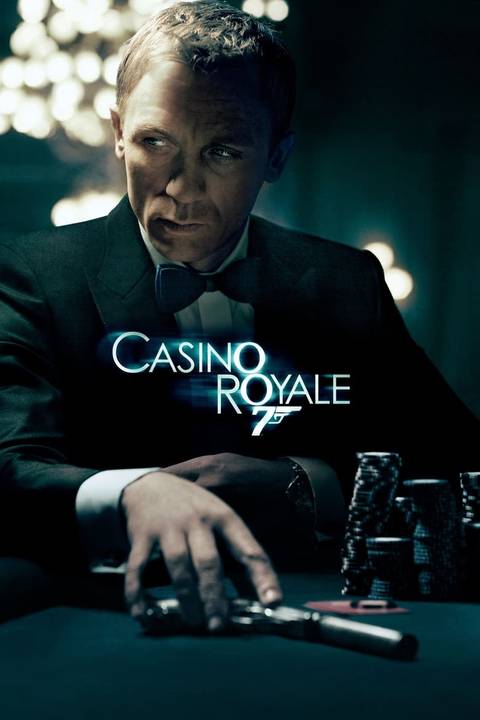
Casino Royale
- Release Date
- November 17, 2006
- Runtime
- 144 minutes
- Director
- Martin Campbell
- Writers
- Neal Purvis, Paul Haggis, Robert Wade, Ian Fleming
-

James Bond
-

Vesper Lynd
- Producers
- Barbara Broccoli, Michael G. Wilson
- Main Genre
- Action
- Budget
- $150 million
- Studio(s)
- Sony
- Distributor(s)
- Sony
- Executive Producer(s)
- Wayne Anthony, Callum McDougall
KioskNews shows a cleaned-up reading view extracted from the publisher’s page — the original always lives on their site, not ours.