Sheena Kalayil’s novel gives voice to ‘The Others’ of German reunification
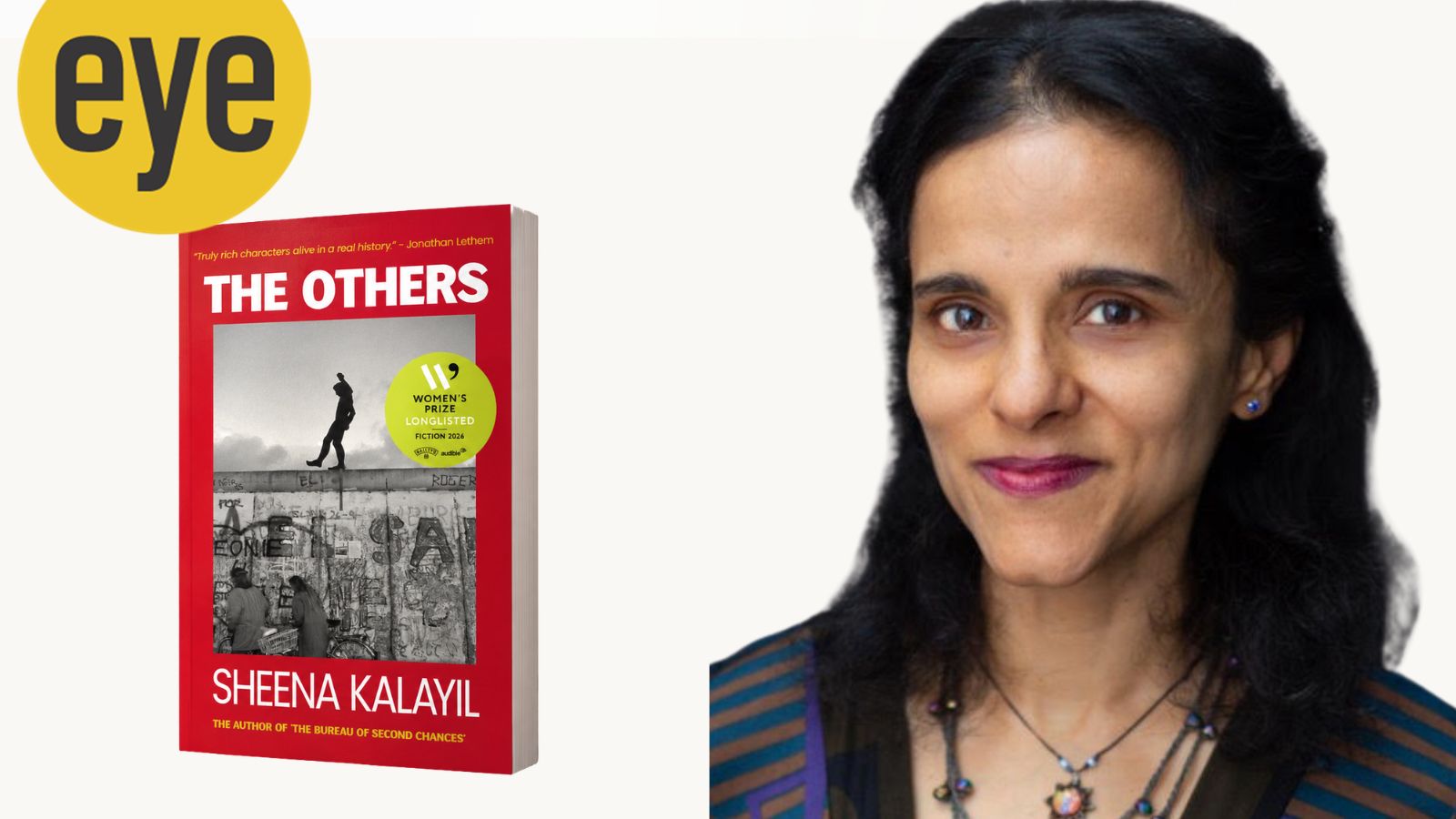
Sheena Kalayil's 'The Others'. (Photo by special arrangement)
Crowds surging through checkpoints, hammers chipping at graffitied concrete: the fall of the Berlin Wall is one of the defining images of the 20th century. Less familiar in the jubilant narratives of reunification is the plight of foreign workers and students from socialist countries such as Mozambique, Vietnam and Cuba, whose lives were irrevocably altered by the collapse of the German Democratic Republic (GDR). This neglected history lies at the heart of Manchester-based novelist Sheena Kalayil’s fourth novel, The Others, which made the 2026 Women’s Prize for Fiction longlist.
The novel is set in the months before and after the fall of the Berlin Wall. It follows three people from the margins: Armando, a factory worker from Mozambique; Lolita, a medical student from India; and Theo, an East Berliner who dreams of being a writer.
The story follows them as their lives become entangled in an eventual love triangle. Still, it is as much a meditation on race, migration, living with political uncertainty, what it means to be displaced in a crumbling authoritarian state, the itchy feeling of being surveilled, and the idea of home.
In 1989, when the Berlin Wall fell, Kalayil was a 19-year-old engineering student on placement in Budapest, caught up in the joy of the Wall’s collapse. “I didn’t completely understand what was going on. But I could sense the euphoria that people were feeling,” she told The Indian Express, speaking from her home in England.
Years later, while living in Mozambique, she met former madgermanes — Mozambican workers who had spent years in East Germany and left after reunification. “I felt a kind of affinity because we had both been behind the Iron Curtain in those countries before the Cold War ended,” she says. But when she first tried to write a novel from the perspective of a Mozambican worker returning home, it felt wrong. “It didn’t feel like I should be the person writing that story.”
Instead, she found a story she could tell, drawing on her experience as an international student, her knowledge of Mozambique, and the universal dramas of young adulthood playing out against a seismic political shift. “I wanted those kinds of personal dramas, those dilemmas that you have when you are a young adult to be the focus while the moment of political change is going on,” she said. “Because very often migration happens not through deliberate choice but through circumstance.”
That spirit of subversion extends to her heroine’s name. Lolita arrives with inescapable literary baggage, dragging Vladimir Nabokov’s controversial protagonist behind her. “The truth is I didn’t think of it deliberately, but subconsciously there must have been something going on,” she says. However, she acknowledges the name had been on her mind after a BBC radio short story she wrote was read by actor Lolita Chakrabarti. “I knew that name has a lovely sound to an Indian ear.”
Story continues below this ad
For Kalayil, the name also challenged expectations. Her Lolita is not an object of male fantasy. “I wanted her to be ordinary,” she says. “I knew that if you are young and female, you will be objectified whether your name is Lolita or not.”
She imagined her character’s parents —Keralites who studied in Moscow — as having the sense of humour to choose such a name. “Sometimes people are quite angry that I chose the name Lolita,” she adds. “But it is extraordinary to me that a name can carry so much weight.”
The novel itself challenges the publishing industry’s expectations for Indian and postcolonial writers. Many publishers rejected The Others before it found a home with an independent press. “There is a narrow lane where Indian authors are supposed to stay — writing about Indian issues,” she says. “If you are in the UK literary industry, there is an expectation that there will be some element of the British Raj involved or a second-generation experience.” For many, an Indian author writing about East Germany was outside the expected lane.
She also chafed against the expectation of a more florid, exotic South Asian aesthetic, sticking to her own style, which she calls “sparse, quite precise.”
Story continues below this ad
“I could write the flowery sentence, but I don’t want to. That is my choice. And in that way I’m quite uncompromising.”
She recounts a telling battle with a copy editor over a line in her previous novel, The Wild Wind. The editor wanted to change a mother’s dialogue from “Say thank you. Remember?” to “Remember to say thank you.” Kalayil refused. “I said, ‘No. The mom would say, “Say thank you. Remember?” It has got a completely different feel, a completely different texture to it.’”
She won the argument but the fight exposed a deeper suspicion about linguistic authority. “That suspicion might translate to ‘oh, they must have used AI’ or that shows the use of AI,” she says. “It is a bit worrying.”
The Others is a love story set against a backdrop of political upheaval. Why make a love story the vehicle? Kalayil says she chose the form deliberately, to give migrant characters the interiority often denied them. “A lot of stories of migration don’t allow that interiority,” she says. “That level of introspection is granted to authors who are not trying to write stories about migration.” For her, the political upheaval is the backdrop; the personal dramas are the true story.
“Migration is a circumstance, but in the end it’s the characters that are important,” she says. “One way of really ensuring that I would be able to have that humanness was through a love story.”
Story continues below this ad
At the end of the day, The Others is a novel that trusts its readers to find their own way through discomfort and ambiguity. The Women’s Prize longlisting has strengthened that conviction. “There are so many gatekeepers in the industry who do not trust the reader,” Kalayil says. “I trust the reader. The longlisting has galvanised me because somewhere, somehow, the pieces fell into place for me this time.”
It has given her the confidence to continue being, as she puts it, “uncompromising.” Her next project is underway, and while she remains secretive about the details, she says it centres on a character one does not often root for. “But I believe you will be rooting for this character.”

Aishwarya Khosla spearheads the digital strategy and execution for the Books & Literature and Puzzles & Games sections of The Indian Express. With over eight years of experience in journalism, Aishwarya specialises in literary criticism, cultural commentary, and long-form features, which explore the intersection of identity, politics, and social change. She was the recipient of the Nehru Fellowship in Politics and Elections, an intensive research fellowship in policy analysis and political communications, which informs her nuanced approach to cultural journalism, allowing her to provide readers with unique insights into how literature and media reflect broader political shifts. As a trusted voice for The Indian Express audience, she authors the popular newsletters, Meanwhile, Back Home and Books 'n' Bits, and hosts the podcast series, Casually Obsessed. Before her current role, Aishwarya spent several years at Hindustan Times, where she provided dedicated coverage of the Punjabi diaspora, theater, and national politics. Her career is defined by a commitment to intellectual rigor, making her a definitive authority on modern Indian culture and letters. Areas of Expertise Literary Criticism, Cultural Politics, Political Strategy, Long-form Investigative Features, and Newsletter Curation. Write to her You can reach her at aishwaryakhosla.ak@gmail.com or aishwarya.khosla@indianexpress.com. You can follow her on Instagram: @aishwarya.khosla, and X: @KhoslaAishwarya. Her stories can be read here. ... Read More
KioskNews shows a cleaned-up reading view extracted from the publisher’s page — the original always lives on their site, not ours.