Bangladesh draws closer to China in ‘political chessboard’ to balance India ties
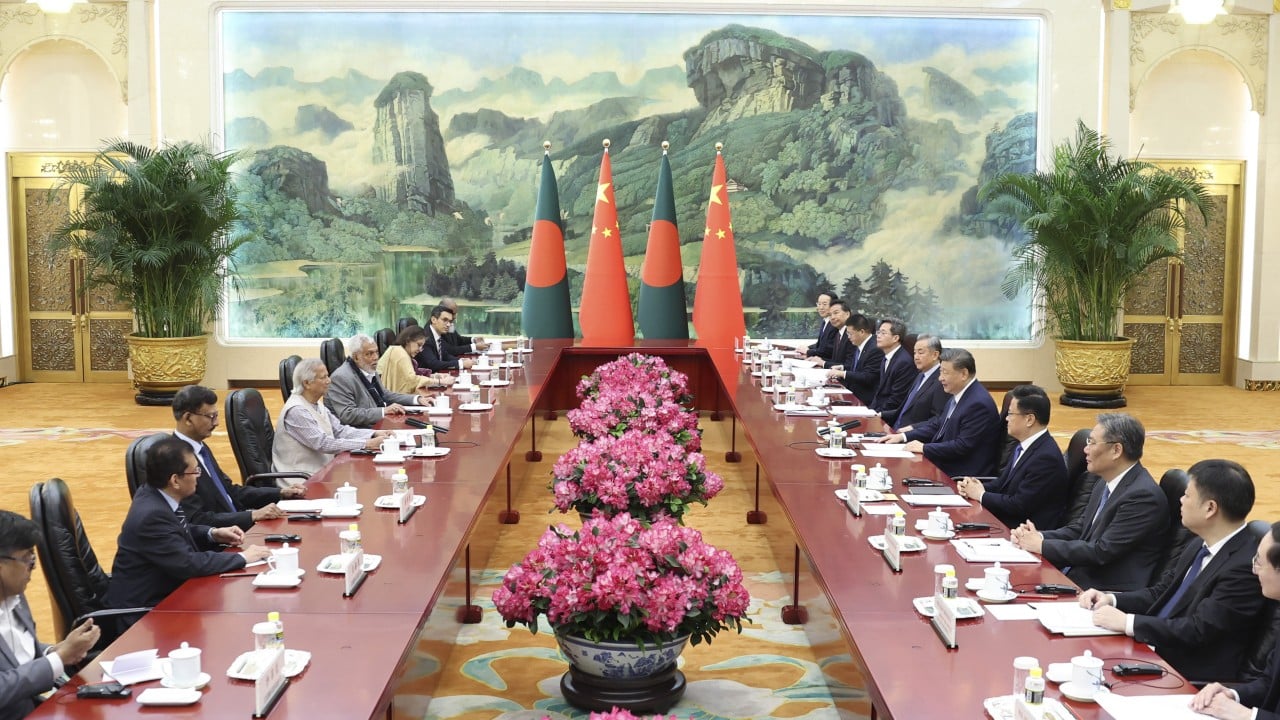
Bangladesh’s tilt towards China has added a new dimension to security and trade in South Asia, signalling what observers see as Dhaka’s desire to be a strategic actor in the region and ease its overreliance on India.
The hedging policy comes after the fall of Sheikh Hasina’s Awami League government in 2024 amid a student-led uprising.
Under an interim government led by Nobel laureate Muhammad Yunus, and then the Bangladesh Nationalist Party (BNP) after it came to power in February, the country’s diplomatic, economic and strategic ties with Beijing have deepened.
Both sides are preparing to launch a “2+2” dialogue covering diplomacy and defence, adding a new layer to bilateral ties that already span infrastructure development and trade. Humaiun Kobir, Bangladesh’s state minister for foreign affairs, announced the move after meeting Chinese Ambassador Yao Wen on August 30.
Shafi Md Mostofa, an associate professor specialising in South Asian foreign policy at the University of Dhaka, said the dialogue carried regional diplomatic implications and reflected a deliberate effort by Dhaka to diversify its external partnerships.
“China is indispensable for infrastructure, trade and defence modernisation, while Bangladesh also remains engaged with India and other partners,” Mostofa said. “This hedging strategy allows Dhaka to secure economic benefits and advanced technology from Beijing, while avoiding overdependence on any single power.”
KioskNews shows a cleaned-up reading view extracted from the publisher’s page — the original always lives on their site, not ours.