Night mining, numberless tippers, paper owners: Inside Punjab’s ‘illegal’ mining network
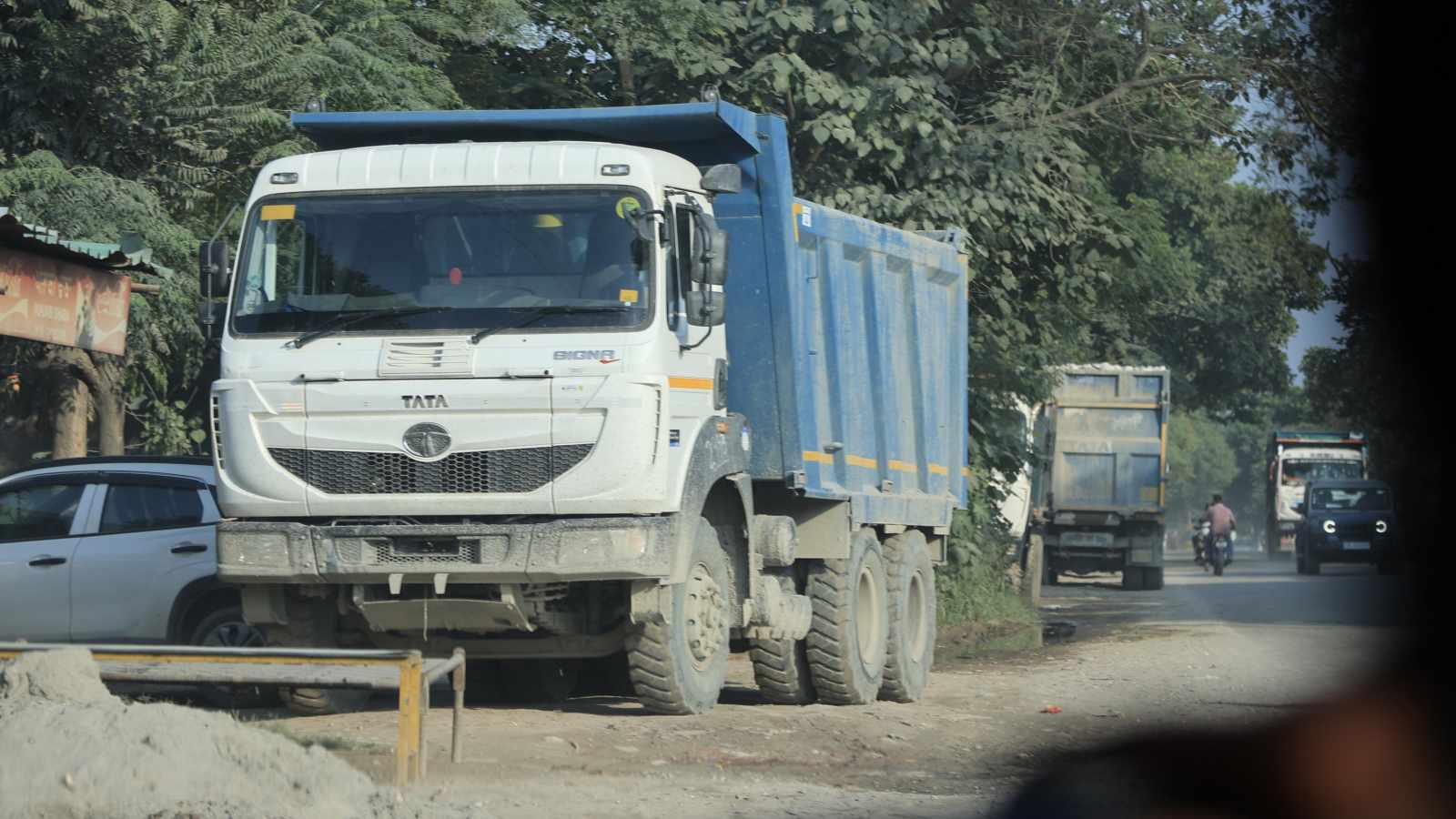
From paying village youths Rs 500 to keep a lookout for enforcement teams to transporting sand and gravel in vehicles without number plates, operators involved in alleged illegal mining along the Swan and Sutlej rivers employ multiple tactics to evade authorities.
Residents and anti-mining activists allege that excavation is often carried out at night to avoid detection, while documentation and changes in the stated ownership of stone-crushing units are used to obscure the origin of mined material and the identity of those running the operations.
Tikka Yashvir Chand, a resident of Bhallan and an anti-mining activist, alleged that village youths were paid to alert mining operators about the arrival of enforcement teams.
“Our boys are paid Rs 500 each to stand guard in the villages and alert the mining teams if any enforcement agency arrives for a raid. They are spoiling our children. The boys take the money and alert these people if they anticipate any danger,” Chand said.
Residents allege that mining operations are deliberately conducted in the dead of night to reduce the chances of interception and prevent enforcement agencies from collecting evidence. The use of tippers without registration plates, they said, further complicates efforts to identify vehicles transporting the material.
The Indian Express team witnessed tipper trucks without number plates on both sides of the Sri Anandpur Sahib road leading to the Agampur bridge over the Sutlej.
“There is connivance. Otherwise, such mammoth operations would not take place under the nose of the authorities,” an activist alleged, claiming that stone crushers often maintain that the material being processed was sourced from neighbouring Himachal Pradesh.
Story continues below this ad
Residents have also alleged that the ownership of stone-crushing units is frequently changed on paper to shield the people actually operating them. According to residents, the actual owners allegedly purchase stamp papers in villagers’ names every 15 days or so. If an illegal operation is detected, they claim, a sale agreement is produced to show that the crusher has been sold to a local resident. The villagers whose names appear in the documents are allegedly paid for allowing their identities to be used.
Activists have further questioned the use of bills issued by companies registered in Himachal Pradesh to establish the purported source of sand and gravel processed in Punjab. They argue that such documents do not, by themselves, establish where the material was excavated.
The allegations point to a possible pattern involving night-time excavation, unnumbered transport vehicles, paperwork citing an alternative source for the material and frequent changes in the declared ownership of crushing units.
Residents have alleged that the scale of the activity suggests the involvement or protection of influential individuals. These claims, however, could not be independently established.
Story continues below this ad
Punjab Mines Minister Barinder Goyal has said that the government does not permit illegal mining and that action is taken whenever violations are detected. He has also referred to cases involving tipper trucks operating without number plates.
In a recent night-time operation, the Mines and Geology Department, Ludhiana, intercepted a sand-loaded tipper coming from the Sidhwan Bet area. According to the department’s officials, an inspection found that the vehicle did not have a number plate.
The department subsequently handed over the tipper to the Sidhwan Bet police station. An FIR (No. 0283) was registered on October 6, 2026, the department said.
KioskNews shows a cleaned-up reading view extracted from the publisher’s page — the original always lives on their site, not ours.