War Requiem review – in the cathedral where it premiered, Britten’s masterpiece has lost none of its power
The premiere of Britten’s War Requiem as part of the consecration of Coventry’s new cathedral in 1962 left its German baritone soloist Dietrich Fischer-Dieskau “completely undone”. Sculptor Barbara Hepworth listened on the radio and declared herself “profoundly moved”. The composer described it as a “call for peace”; critics unanimously reached for the word “masterpiece”.
More than half a century later, some of the boy choristers from that world premiere were in attendance as the City of Birmingham Symphony Orchestra returned to Coventry Cathedral to perform the War Requiem – now marking both Armistice Day and 50 years since Britten’s own death. The work has lost none of its currency. Wilfred Owen’s texts still shock, the most explosive passages of Britten’s score continue to detonate as if physically threatening. And the mass cooperation of so many musicians continues to represent Britten’s hopefulness in humanity like nothing else.
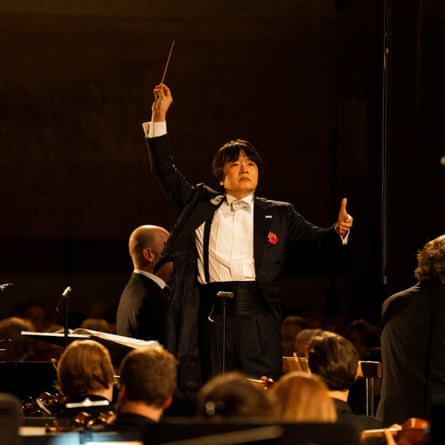
In this performance a vast sea of instrumentalists and singers surged before us as Kazuki Yamada presided, often bewitchingly still, always graceful. The cathedral’s cavernous interior is not designed to preserve diction, but some words did, miraculously, survive – both from the exquisitely polished CBSO Chorus (their blended tone as smooth as I’ve heard) and from the CBSO Youth Chorus and Trinity Boys Choir, whose upper voices emerged ethereally from behind the audience. At times, Britten pits the solo lines of his tenor and baritone – here Andrew Staples and Christian Gerhaher – against the orchestra so that they are inevitably submerged. Elsewhere, though, their words sliced through, grim and urgent. Both were on ferociously communicative form, Staples finding the beauty in Britten’s slowly unfurling melodies, while Gerhaher relished moments of vocal rawness – his baritone unadorned by vibrato, his tone as direct as any of Owen’s words.
Soprano Olga Peretyatko performed amid the chorus rather than from the front, her vocal lines becoming a kind of shining filigree soaring out of the mass of sound. The moments that will stay with me, though, were Britten’s radical shifts from the intimacy of just a few musical lines to the monumental sweep of brass, thunderous percussion, hundreds of voices – all raised together in protest and in hope.
KioskNews shows a cleaned-up reading view extracted from the publisher’s page — the original always lives on their site, not ours.