Lula pulls off Brazil’s first-ever run-off comeback to beat Trump ally Flavio Bolsonaro
Flavio Bolsonaro’s lawyers had separately asked the electoral court to extend voting in 17 flooded municipalities in three states.
Many stations had already shut their machines when Zanin’s order arrived, and the system does not allow a closed machine to be reopened. The electoral court then told regional courts that only stations still open should keep receiving voters until 7pm, and Zanin narrowed his order to match.
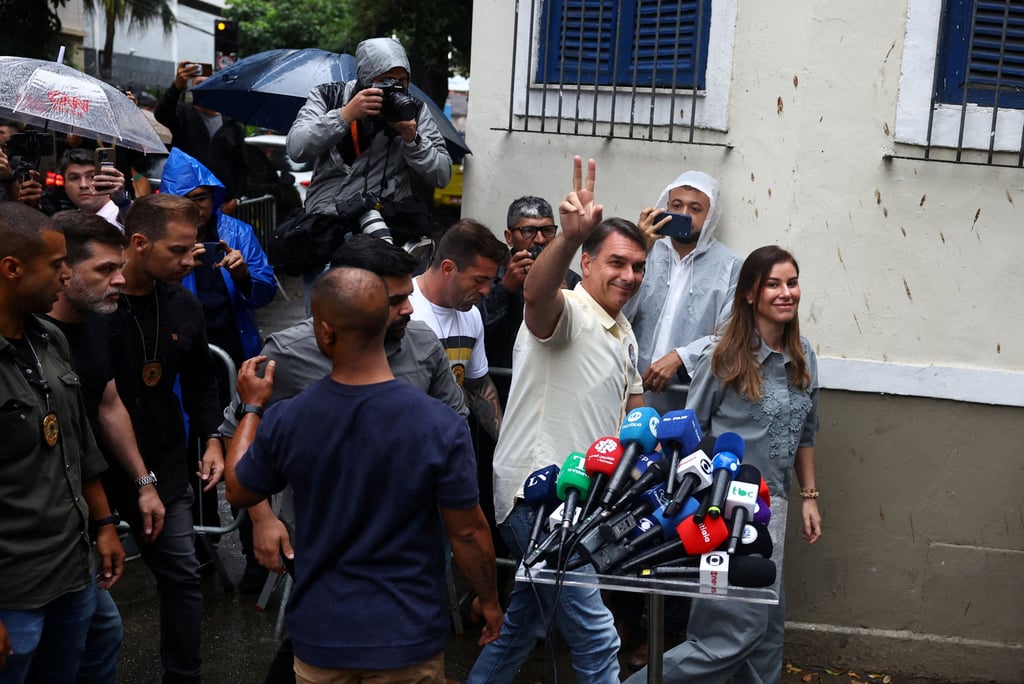
Some voters were sent home at 5pm while others cast ballots until 7pm, and either campaign could cite that to seek an annulment. Any such request would go to the electoral court, chaired by Kassio Nunes Marques, Jair Bolsonaro’s first appointee to the Supreme Court.
The result keeps Latin America’s largest economy – and Beijing’s biggest destination for Chinese capital – out of the group of Trump-aligned governments that now includes Argentina, Chile and Colombia, frustrating Washington’s bid to curb Beijing’s presence in the hemisphere.
Talks with the US over tariffs and critical minerals will resume with a government that has offered American companies access to its rare earths but without preferential treatment.
Lula’s programme also commits Brazil to a regional strategy for mapping and processing critical minerals, and to pressing ahead with a Brics agenda that Trump has threatened to punish with extra tariffs. Brics is a grouping of Global South economies formed to increase global economic cooperation and counter Western dominance.
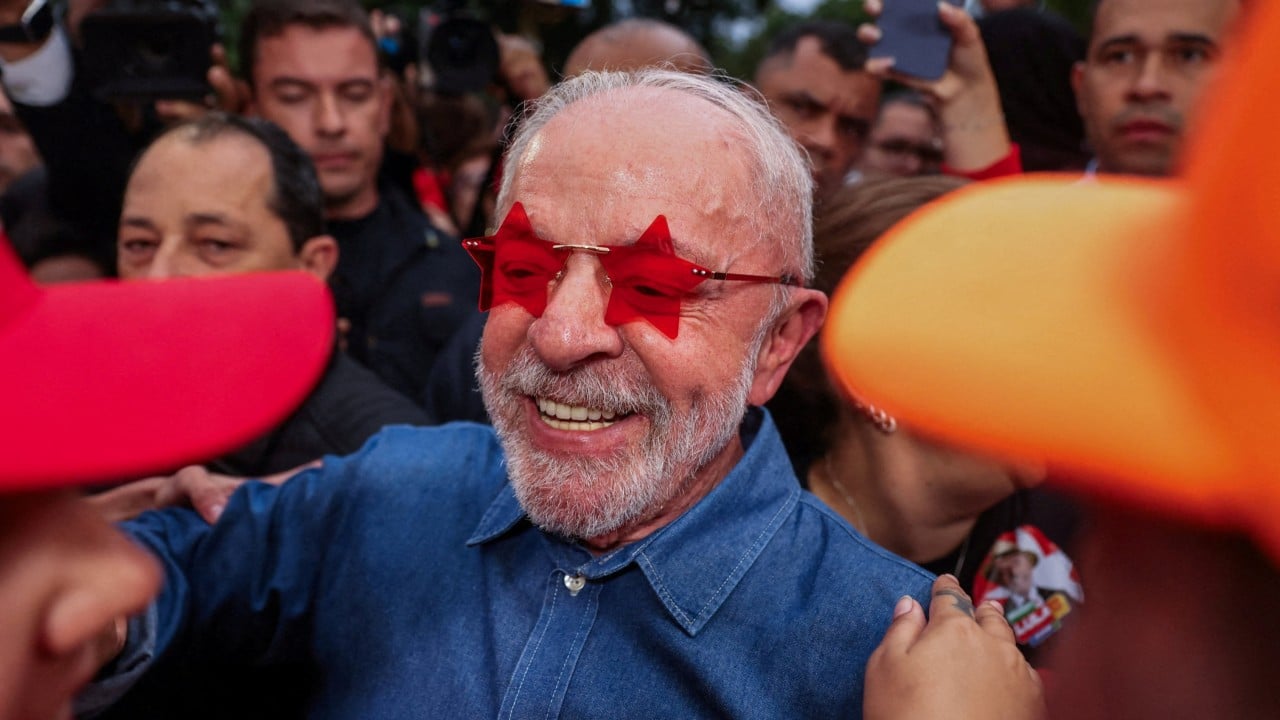
Lula, who at 80 is Brazil’s oldest-ever sitting president, will begin his fourth term in January, more than two decades after he first took office.
He governed from 2003 to 2010 and returned in 2023 after narrowly beating the senator’s father, Jair Bolsonaro, who is now serving a 27-year prison sentence for plotting to overturn that defeat.
Flavio Bolsonaro built a campaign around ties to the Trump administration, which received him in the Oval Office in May. Flavio Bolsonaro pledged to join a US-led security alliance in the Americas and offered Brazil’s rare earths to Washington as an alternative to Chinese supply.
For most of this year Lula had looked like the favourite, and pollster Quaest gave him a seven-point lead over the senator in a run-off in January.
Six of the seven pollsters that published surveys on the eve of the first round still had him ahead, yet he finished 2.2 million votes behind.
Most run-off polls showed Flavio Bolsonaro narrowly ahead or tied within the margin of error. Lula’s team tried to deepen voters’ resistance to his rival and to bring first-round abstainers back to the polls.
Lula’s political attacks focused on Jair Bolsonaro’s handling of the Covid-19 pandemic and on Flavio Bolsonaro’s dealings with Daniel Vorcaro, a banker who is now in jail.
The senator had asked that banker for US$24 million to fund a biopic of his father, months before the central bank shut down the financial institution for suspected fraud.
Flavio Bolsonaro responded by raising a police investigation into Lula’s son Fabio Luis.
A Supreme Court justice authorised the inquiry in July to examine whether he lobbied officials for a company linked to a scheme that allegedly skimmed money from pensioners’ benefits, and Lula said in a televised debate this month that the fraud had begun under Jair Bolsonaro’s government.
Sovereignty and Washington
Lula had tried to keep a working relationship with Trump, whom he met at the White House in May for about three hours as Brazil sought to head off a new round of tariffs.
Washington imposed duties of up to 50 per cent on Brazilian goods last year in protest at Jair Bolsonaro’s trial.
During the meeting, Lula told the US president that Brazil’s critical minerals were open to any country willing to process them locally. “Americans, Chinese, Germans, Japanese, French, whoever wants to participate with us to help us mine, separate and produce the wealth that these rare earths offer us, they are invited,” he said afterwards.
The talks did not stop Washington from imposing a 25 per cent tariff on most Brazilian goods in July, and Lula blamed the Bolsonaro family. The senator’s brother Eduardo had spent last year lobbying Washington for sanctions against Brazilian officials over their father’s trial.
Lula made sovereignty the centre of his campaign, and in a television broadcast in September he said those willing to hand Brazil’s rare earth reserves to other countries were “the real traitors of the homeland”.
Brazil holds the world’s second-largest reserves of rare earth minerals after China.
“There are people abroad keeping an eye on them and people here ready to hand everything over on a platter,” Lula said.
“This time we will not export rocks only to buy back technology.”
Two weeks later, he signed a law creating a national policy for critical minerals, including rare earths.
In the final week of the campaign, he accused the US government of meddling on Flavio Bolsonaro’s behalf, and his campaign asked the electoral court to disqualify the senator over claims that Meta Platforms had boosted him online.
Ties with Beijing
Lula travelled to Beijing in April 2023 on a trip his government described as an effort to restart ties that had cooled under Jair Bolsonaro.
In Shanghai, he toured Huawei Technologies’ research centre and called for an alternative to the US dollar in trade between the two countries.
Lula was back in Beijing in May last year for a summit with Latin American leaders and came home with 27 billion reais (US$4.7 billion) in investment pledges from companies such as Great Wall Motor and Meituan.
Chinese companies put more money into Brazil than into any other country last year, with a record US$6.1 billion spread across 52 projects, according to the Brazil-China Business Council.
Bilateral trade then hit a record US$143 billion in the first nine months of this year as oil sales surged after the war in Iran disrupted Gulf supply, and Brazil’s treasury is now preparing to issue its first yuan bonds in China with a view to borrowing there regularly.
China takes over the chair of Brics next year, and Lula’s government programme promises closer ties with the bloc of emerging economies. Flavio Bolsonaro has said he might pull Brazil out of the grouping, which Washington has worked to undermine.
Less than two weeks after Washington announced its tariffs, Xi told Lula in a phone call that China supported Brazil in “safeguarding sovereignty and independence, opposing external interference”.
The hour-long call was their second this year, and the two leaders agreed to speed up talks on a trade deal between China and the South American trade bloc Mercosur without providing details.
KioskNews shows a cleaned-up reading view extracted from the publisher’s page — the original always lives on their site, not ours.