MND Local: Is the tourism outlook in Los Cabos improving?
Spring was a poor season for tourism in Mexico. International air arrivals — the driver of 80% of all tourism revenue in the country, with two out of every three passengers hailing from the U.S. — were down nationwide in March, April and May.
That trend continued in June, as spring turned to summer, despite Mexico’s role as a host for the 2026 FIFA World Cup. But outside of the host cities, which received a boost from the event — albeit not to the extent expected — high-value tourism to traditional beach tourism destinations in Mexico like Los Cabos continued to plummet. International air arrivals fell 7.1% in Los Cabos in March, 9.7% in April, 10.5% in May and 14.2% in June, relative to the same months in 2025.

July was even worse, with international air arrivals falling by 16.6%. That means that in the first seven months of the year, international tourism fell by 7.2% in Los Cabos, with overall tourism declining by 5.4%. Unfortunately, things don’t look much better for the second half of the year, with U.S. air bookings for the next six months down 13% from 2025.
That said, there are some signs of a brightening outlook for Los Cabos.
Domestic tourism is beginning to improve
After seeing falling numbers for 10 straight months — from July 2025 to April 2026 — the domestic travel market has recently shown signs of life in Los Cabos. Domestic arrivals nosed into positive numbers in May and were up 7% in July, with nearly 20,000 more Mexican nationals visiting the destination relative to the same month in 2025.
Low season rates are part of the appeal. High season prices typically peak in April (US $470 per night for hotels in 2026), with summer seeing lower average hotel room rates in Cabo San Lucas (US $336 as of the most recent numbers from May) and San José del Cabo (US $339), as well as for the destination as a whole (US $414).
But since airline bookings for the next six months are up 5.4% domestically, with a better than 9% increase in passengers from Mexico City expected through the end of the year, it appears that this isn’t just a seasonal spike, but rather a welcome return to form for what has traditionally been an important market, accounting for over one-third of overall tourists to Los Cabos.

Tourism from Canada is on the uptick
The Canadian tourism market is not as robust as the U.S., at least not in Los Cabos. Last year, for example, over two million tourists from the U.S. visited Los Cabos, versus 215,000 from Canada. So even though tourism from Canada is up 8.8% in 2026, that doesn’t make up for U.S. tourism being down by more than 7%.
Still, it’s significant that numbers are up this year for visitors from Canada, as well as for visitors from Europe, the Caribbean, and Central and South America. This diversification is important to the local economy, especially if U.S. tourism to Mexico continues to slump.
Cruise tourism continues to boom
The reason international arrivals are considered “high-value” is because these tourists, on average, spend more than US $1,300 each. Cruise ship tourists, by contrast, traditionally spend less than US $100 per person. Every little bit helps, however, especially when it comes to keeping businesses alive in downtown Cabo San Lucas.
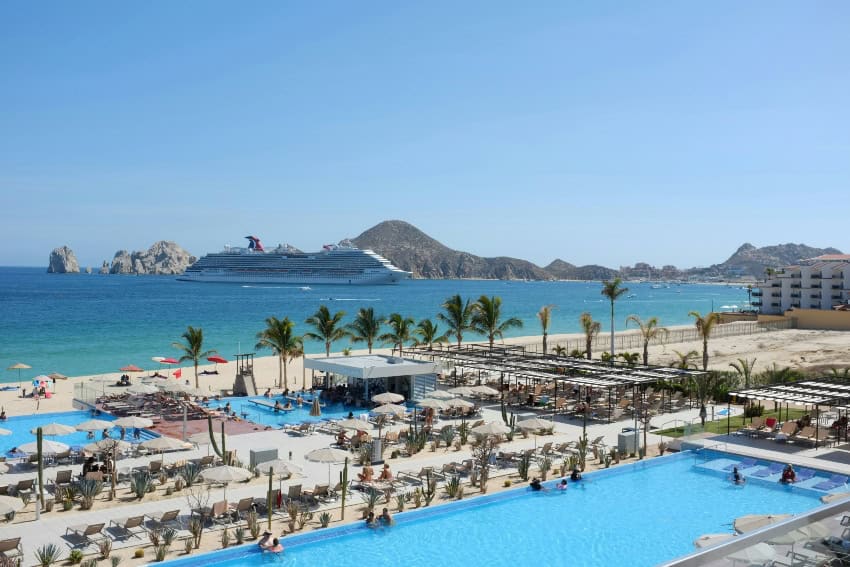
Last year, the Land’s End city set a record, surpassing one million cruise ship tourists for the first time. This year, that record will almost certainly be broken, as through June, cruise ship arrivals were up by 64.5% through June; 789,919 through the first six months of 2026, compared to 480,198 during the same timeframe in 2025.
If this pace continues, Cabo San Lucas will top 1.5 million cruise ship passengers for the year, cementing its position as the nation’s fourth largest cruise ship destination, behind only Cozumel, Mahahual and Ensenada.
New air routes added to replace those that have been lost
Airline capacity cuts due to rising jet fuel costs, combined with a declining demand for seats to Mexican beach destinations, have led to the cancelation of several Los Cabos-bound routes this year, including the loss of Southwest flights from Baltimore, Chicago and Indianapolis, and a Delta flight from Seattle.
Fortunately, though, new flights have been added this summer to make up for, or at least mitigate, previous tourist losses. Southwest added its first nonstop flight from Las Vegas to Los Cabos during the first week of June, the same week a new domestic route was added by Volaris connecting Puebla to Los Cabos.
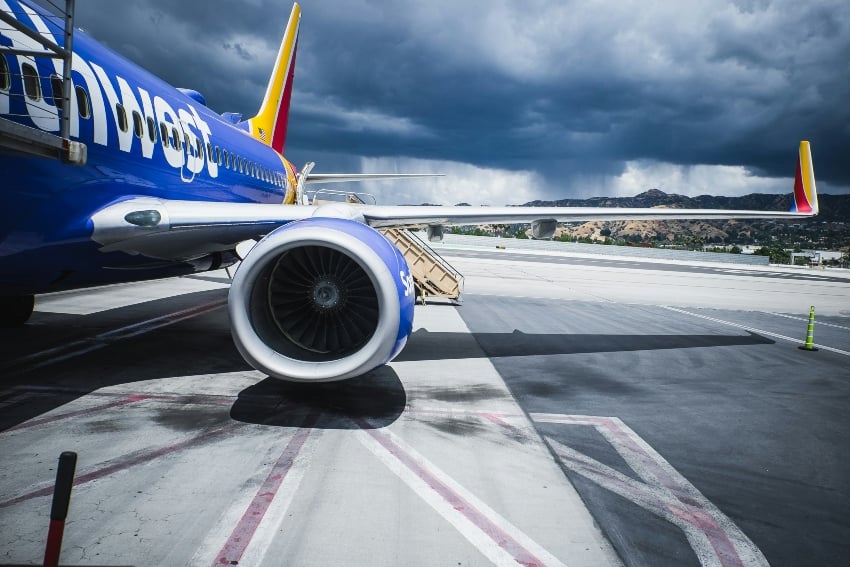
Once high season returns this fall, expanded service to Los Cabos will also be offered by several airlines, including Volaris in Mexico; American, Southwest and United in the U.S.; and Air Transat, Porter and WestJet in Canada.
Chris Sands is a writer and editor for Mexico News Daily, and the former Cabo San Lucas local expert for the USA Today travel website 10 Best and writer of Fodor’s Los Cabos travel guidebook. He has also contributed to numerous other websites and publications, including The San Diego Union-Tribune, Marriott Bonvoy Traveler, Forbes Travel Guide, Porthole Cruise and Travel, and Cabo Living.
KioskNews shows a cleaned-up reading view extracted from the publisher’s page — the original always lives on their site, not ours.