Man who claims to sleep 30 minutes a day for 17 years snores on livestream meant to prove it
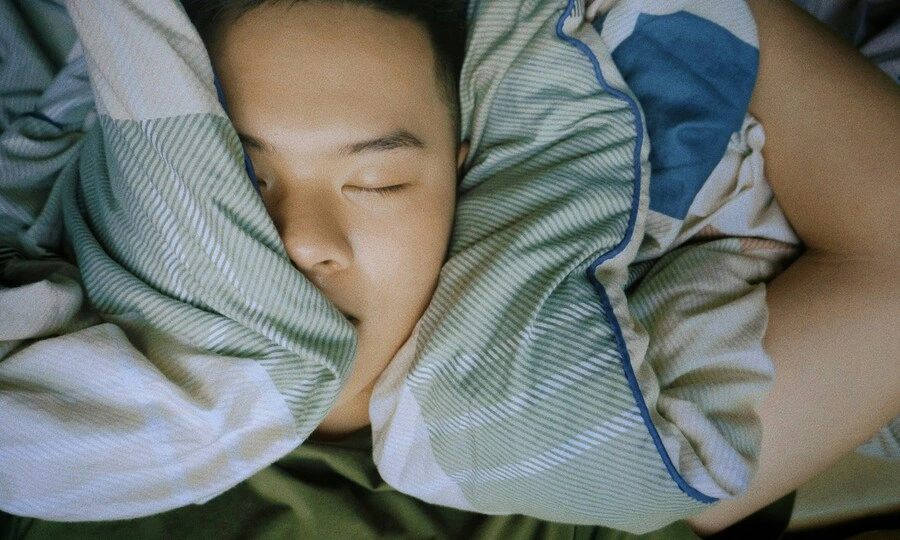
A Japanese entrepreneur who says he has slept just 30 minutes a day for nearly 17 years repeatedly appeared to fall asleep during a weeklong livestream meant to prove the claim.
Daisuke Hori heads the Japan Short Sleeper Training Association and sells a sleep-improvement program.
At the suggestion of a skeptic, he began a round-the-clock YouTube broadcast at 8 p.m. Japan time on Sept. 9, scheduled to run through Sept. 16.
On Sept. 10, the second day, Hori snored and slept for about 27 minutes during a head massage.
On waking, he said he had only experienced around 10 microsleeps and insisted it amounted to "zero sleep," ZAKZAK reported.
On Sept. 13, during a treatment at a beauty salon, the stream's audio went silent while Hori lay face down with his face barely visible for about 30 minutes, prompting viewers to question whether he had fallen asleep again, Smart FLASH reported.
The magazine said his eyes looked bloodshot from around the second day, and by the third he had started wearing sunglasses.
On Sept. 14, Hori announced he would take naps for the remaining three days.
 |
|
Japanese entrepreneur Daisuke Hori. Photo courtesy of Instagram |
Dr. Mikiya Takasu, director of Takasu Clinic's Nagoya branch, then declared the challenge a failure, saying Hori was clearly sleep-deprived and exhausted, Tokyo Sports reported.
In an episode of the YouTube show "Reiwa no Tora" released the same day, Hori said he plans to stop billing himself as a 30-minute sleeper around October, Yutura reported.
Masashi Yanagisawa, a University of Tsukuba professor named a 2026 Lasker Award winner for discovering orexin, a protein that regulates wakefulness, told Weekly Gendai in 2024 that true short sleepers are determined genetically and number around one in several thousand people.
He said the trait cannot be trained and that more than 99% of self-described short sleepers are not genuine. Chronic sleep loss, he added, gradually dulls a person's awareness of their own sleepiness.
Osaka sleep specialist Masahiko Atsumi said in an Aug. 19 YouTube video addressing Hori's claims that a single all-nighter makes substances suspected of causing dementia more likely to accumulate in the brain.
He added that chronic short sleep is tied to depression, damage to blood vessels in the heart and brain, and higher mortality.
A 2018 U.S. National Institutes of Health study found that one night without sleep raised levels of beta-amyloid, a protein associated with Alzheimer's disease, by about 5% in the thalamus and hippocampus.
The U.S. National Sleep Foundation recommends seven to nine hours of sleep a day for adults aged 18 to 64.
KioskNews shows a cleaned-up reading view extracted from the publisher’s page — the original always lives on their site, not ours.