80s kids loved power cuts: When blackouts meant terrace games and ghost stories
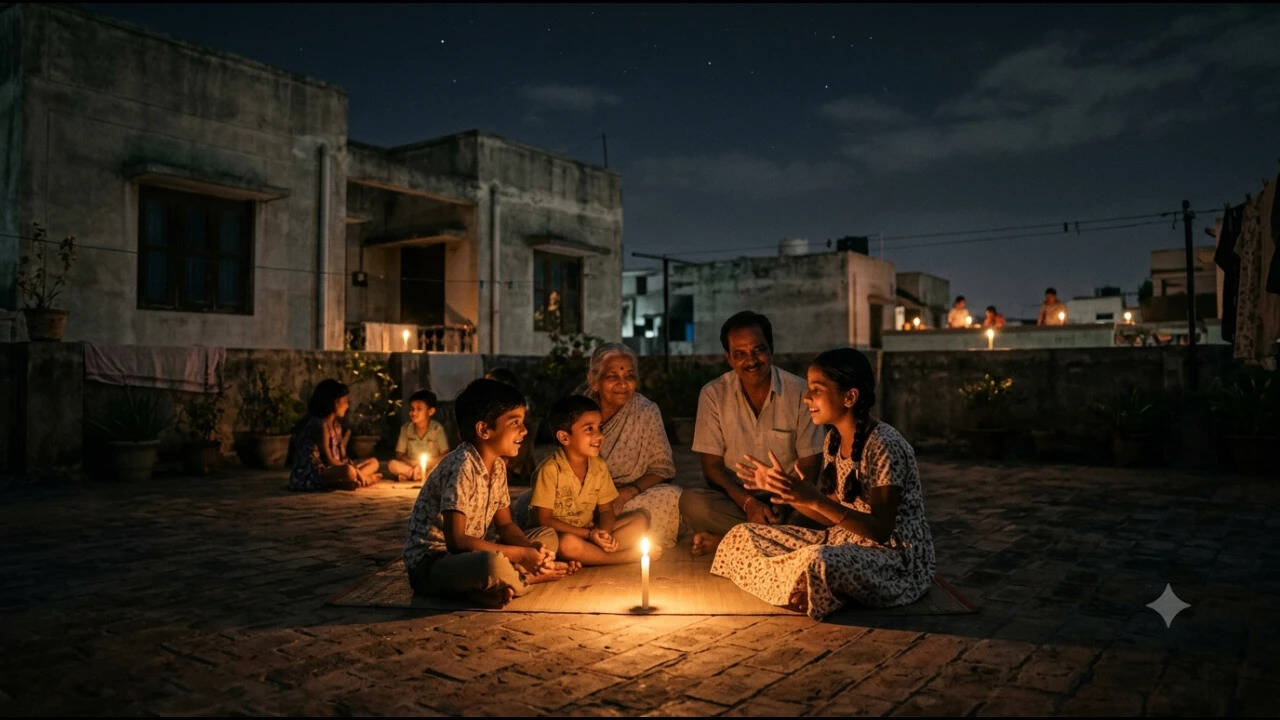
For many Indian children growing up in the 1980s, power cuts were more than an inconvenience. They often brought families and neighbourhood children together for terrace games, storytelling, candlelit conversations and long summer evenings. The nostalgia comes from a slower childhood where entertainment had to be created rather than streamed.
There was a strange little excitement attached to a power cut in many homes of the 1980s. The fan stopped. The television went blank. Someone immediately searched for candles. Yet children often had a very different reaction: relief.For many 80s kids, an unexpected blackout could mean an evening without homework, television or the usual instructions to stay indoors. It meant slippers at the door, cousins appearing from neighbouring homes and a slow walk towards the terrace. In the darkness, ordinary evenings somehow became memorable ones.
22 Sept 2026 | 14:56
Does your child tell you everything about school? What helps them open up?
When the terrace became the neighbourhood playground
Before smartphones, gaming consoles and constant television schedules, children created entertainment from whatever was around them.A terrace could become a cricket ground, a hiding place or simply a spot to sit and watch the sky. Children played antakshari, cards, hide-and-seek and other simple games. Younger ones chased each other around while older children talked about school, films and neighbourhood gossip.This was not simply nostalgia. India's education framework today also recognises the value of play.
Candlelight changed the mood of the entire house
A candle did more than provide light.
It changed how people occupied a room.Grandparents, parents and children often ended up sitting together because there was little else to do. Someone would start a story. Someone else would interrupt. A grandmother might remember something from her childhood, while a child waited for the scary part.Ghost stories were especially powerful after sunset. A creaking door or shadow on the wall could suddenly become part of the story.
The fear was usually harmless, shared and temporary. The lights returning often brought everyone back to ordinary life.
The summer night felt longer
Power cuts during Indian summers could be uncomfortable. Without a fan, families looked for cooler corners, verandahs or terraces. Windows stayed open, hand fans came out and sleeping arrangements sometimes shifted outdoors.Yet discomfort also created togetherness. Neighbours exchanged news across balconies.
Children counted stars. Adults talked longer than they normally did.That slower pace is probably what many people remember most.
There was no algorithm deciding what came next
An 80s child did not have an endless stream of entertainment waiting on a screen. Boredom had to be handled differently. Children invented games, negotiated rules, argued over turns and made up stories.That does not mean childhood in the 1980s was automatically better. Power shortages were a real inconvenience, and many families experienced them far more seriously than others.
But an accidental break from electricity sometimes created something modern childhood rarely gets by accident: uninterrupted time with people nearby.
Why the memory still feels so special
Perhaps the nostalgia is not really for the power cut. It is for what disappeared when the electricity did.The television disappeared. The routine disappeared. The pressure to keep everyone occupied disappeared for a while. What remained was a terrace, a candle, familiar voices and a night that seemed much bigger than the four walls of a home.For many Indian children who grew up in the 1980s, even a blackout could become one of those ordinary things that turned into a story worth remembering decades later.
KioskNews shows a cleaned-up reading view extracted from the publisher’s page — the original always lives on their site, not ours.