Kisses galore, seaside shenigans, McRoman adventures and street feats – the week in art
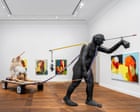
Nicole Eisenman
A free display beside the seaside from the witty and imaginative sort-of-figurative artist.
Turner Contemporary, Margate, from 14 November to 11 April
Also showing
The Last Human Kiss
Snogging galore by Wolfgang Tillmans, Tracey Emin and other contemporary romantics.
Sainsbury Museum and Art Centre, Norwich, until 11 April
Roman Scotland
Images of classical gods, tombs of fallen legionaries and mysterious relics of Pictish life in a journey to the edge of the Roman empire and beyond.
National Museum of Scotland, Edinburgh, from 14 November to 18 April
Beyond the Streets
In spite of the title, this is very much a celebration of street art and culture starring Shepard Fairey, Goldie, Jenny Holzer and many, many more.
Saatchi Gallery, London, until 5 May
Dialogues: Wilhelmina Barns-Graham x Haroun Hayward
A contemporary artist goes head-to-head with the noted modernist who died in 2004.
Hales Gallery, London, until 18 December
Image of the week
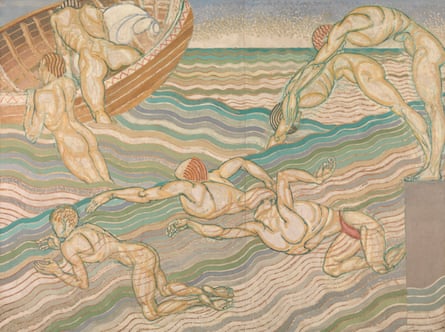
We found Tate Britain’s new exhibition, Vanessa Bell & Duncan Grant: Inside Bloomsbury, an “epic yet flaccid roam through the complicated lives and desperately mediocre paintings” of the co-habiting modernists. Read the full review
What we learned
The brilliantly bolshie artist Ryan Gander lambasted practically everyone
Jill Posener’s cheeky, feminist photography served as a rebuttal to 80s misogyny
Epstein survivors were overwhelmed by messages of support at pop-up art exhibition
The Vatican houses a collection of Indigenous treasures questionably ‘gifted’ to it
after newsletter promotion
Masterpiece of the week
Head of Christ Crucified by the Master of Liesborn (Johann von Soest?), probably early 1480s-1490
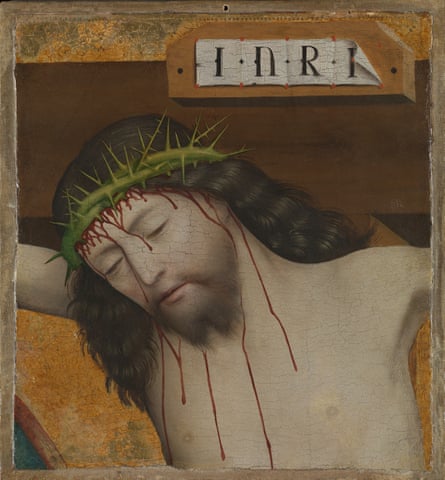
The blood streams over Christ’s deathly white face in a vivid, almost Hammer horror contrast between gore and pallor. It flows in thick rivulets from the crown of thorns that has been mockingly forced on to his head. The initials INRI on a piece of paper fixed to the cross stand for “Jesus of Nazareth, King of the Jews” in Latin, and the cruel crown rams home the barb. Christ bears the laughter and the physical pain with patience and dignity, lowering his eyes in sorrow as he waits for his earthly body to die. The stark, simple shock of this image comes from an age in which Europeans were encouraged to identify with Christ, to imagine themselves suffering alongside him. At the same time this artist’s explicit focus on flowing blood may serve a theological function: the central moment of the medieval Mass was the miraculous transformation of bread and wine into the actual body and blood of Christ. According to the philosopher Thomas Aquinas this took place literally: the bread and wine kept their “accidental” appearance while changing their “essential” nature. This painting is part of an altarpiece from Germany, but not all Germans were convinced by such ideas. In the early 1500s Martin Luther would rebel against the miracle of transubstantiation, and against art like this which he regarded as idolatry.
National Gallery, London
Sign up to the Art Weekly newsletter
If you don’t already receive our regular roundup of art and design news via email, please sign up here.
Get in touch
If you have any questions or comments about any of our newsletters please email newsletters@theguardian.com
KioskNews shows a cleaned-up reading view extracted from the publisher’s page — the original always lives on their site, not ours.