China state funds double down on Hua Hong in legacy chip push
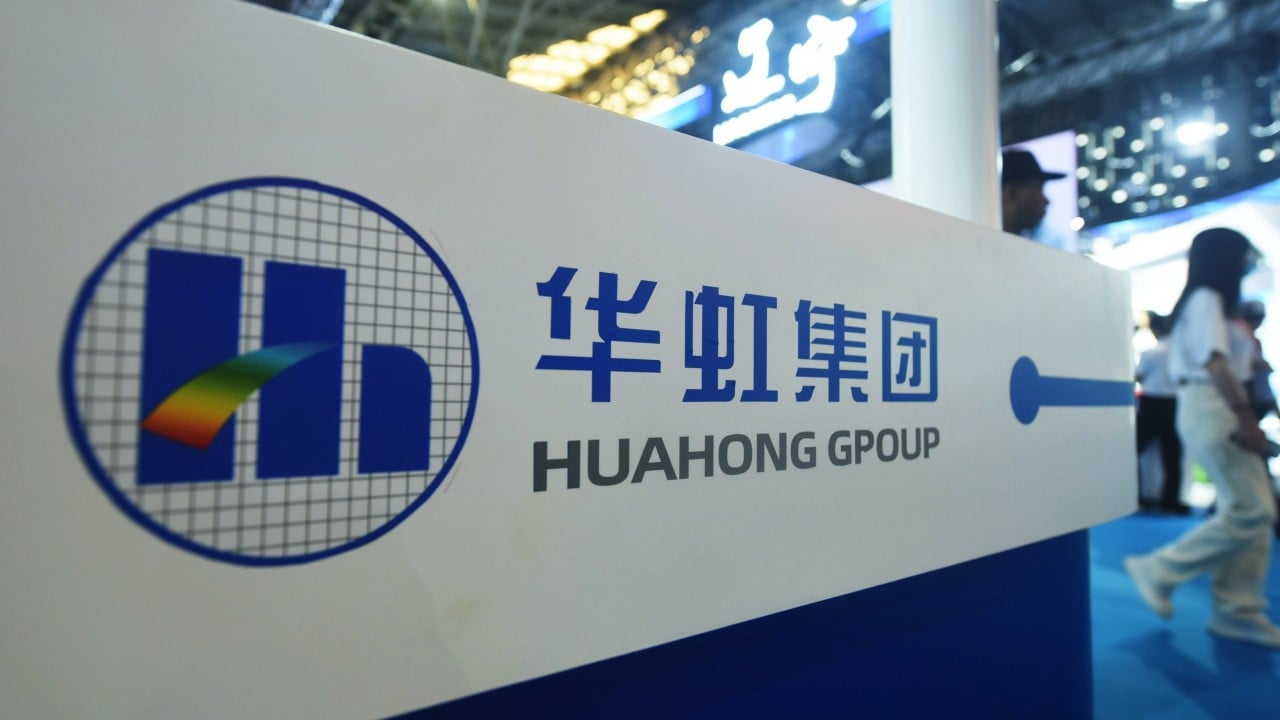
Chinese state funds are ramping up support for the country’s second-largest contract chipmaker, pouring billions of yuan into the parent of Hua Hong Grace Semiconductor and a new manufacturing facility to fuel Beijing’s drive for self-reliance in mature-node chips.
The capital blitz, spanning Hua Hong’s Shanghai-based parent company and a fabrication plant in Wuxi, highlights how government-coordinated financing is doubling down on domestic foundries, as Washington tightens technology restrictions on China.
Registered capital of Hua Hong Group, the Shanghai- and Hong Kong-listed chipmaker’s owner, surged to 19.7 billion yuan (US$2.9 billion) from 13.5 billion yuan, according to a stock exchange filing on Thursday. The 6.2 billion yuan injection was led by Shanghai Guosheng Group, a state-backed investment vehicle.
Following the transaction, Guosheng’s direct stake in Hua Hong Group would jump to 41.7 per cent from 15.3 per cent, while its indirect holding would rise to 10.2 per cent from 3.8 per cent.
The Shanghai State-owned Assets Supervision and Administration Commission – the local state-assets regulator – also injected 19.7 million yuan, maintaining its role as Hua Hong Group’s ultimate actual controller.
Blocked by the US from acquiring the most advanced chipmaking equipment, including extreme ultraviolet lithography systems, Beijing has channelled state funds towards dominating legacy and mature-node semiconductors, generally defined as chips made using 28-nanometre process technology and above.
While less sophisticated than cutting-edge artificial intelligence processors, legacy chips remain essential for electric vehicles, industrial automation, Internet of Things devices and consumer electronics.
Hua Hong has accelerated investment in its third fab project in Wuxi, in China’s eastern province of Jiangsu. Registered capital at the joint venture managing the fab skyrocketed to US$4.17 billion from 6.68 million yuan earlier this month – an over 4,000-fold increase – according to Chinese corporate database Tianyancha.
The venture has drawn major state investors, including the National Integrated Circuit Industry Investment Fund – known as the “Big Fund” – alongside local government capital.
The move follows a fundraising round in September, when Hua Hong invested US$2 billion in the facility. Hua Hong and its Shanghai subsidiary hold a combined 51 per cent controlling stake, with the remaining stake held by state-backed investors.
Construction of the facility, known as Fab 9B, began in March. It would focus on specialty technology chips used in power devices, analog chips and embedded storage, according to Hua Hong.
Once fully operational, Fab 9B would add 55,000 wafers to Hua Hong’s monthly production capacity, expanding its total Wuxi capacity by roughly 30 per cent.
During an earnings call in May, Hua Hong chairman and president Bai Peng said the company “did not see any impact” from US export controls on equipment procurement for the Wuxi project.
Hua Hong’s Hong Kong-listed shares fell 3.7 per cent to HK$92.05 on Friday morning, tracking a broader pullback across Chinese semiconductor stocks.
KioskNews shows a cleaned-up reading view extracted from the publisher’s page — the original always lives on their site, not ours.