15 Best Episodes of 'Batman: The Animated Series', Ranked

Updated
Born with Autism (formerly classified as Asperger syndrome), Tyler B. Searle has been obsessed with storytelling since he was old enough to speak. He gravitated towards fairy tales, mythology, the fantasy genre, and animated movies and shows aimed at family audiences. When not writing, Tyler enjoys watching more cartoons and reading fantasy books in his home in Ontario, Canada.
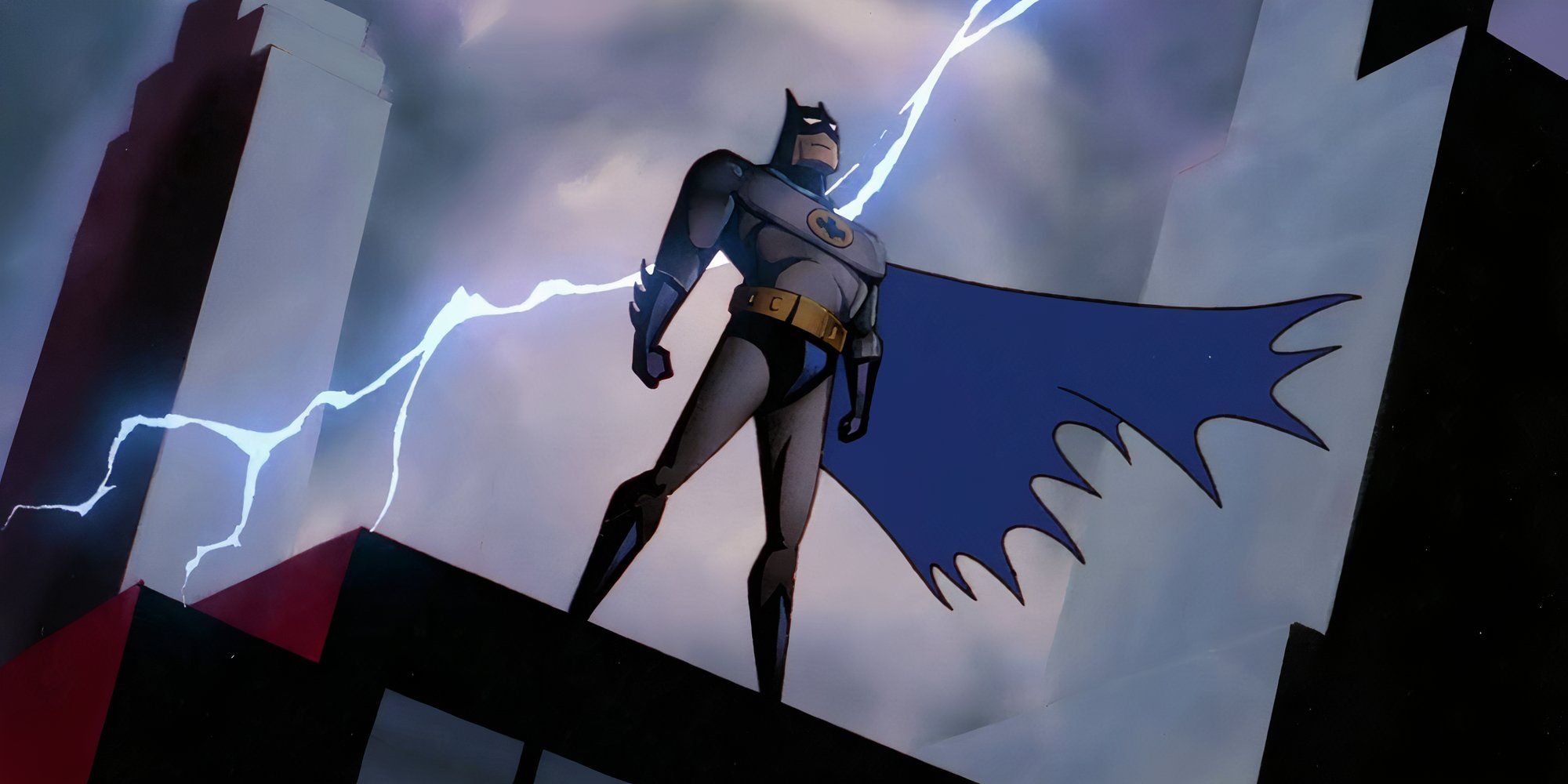
There are few shows that can reach the heights of Batman: The Animated Series. It pushed the boundaries of what children's entertainment could get away with at the time with its dark tone, complex characters, and iconic art style. Thanks to an all-star cast of writers and voice actors, it has become many people's definitive version of Batman and his villains.
Nearly every character in the show was given a developed and complex backstory, often pulled straight from classic Batman comics. Some of the show's best episodes focus on the drama of a particular character, hero or villain, and make sure to play up the tragedy of their situation. These are the best BTAS episodes, ranked.
15 "Harley and Ivy" (Season 1, Episode 56)

After a failed heist, The Joker (Mark Hamill) decides to kick Harley Quinn (Arleen Sorkin) to the curb. She decides to prove herself by performing a heist of her own, and happens to run into the eco-terrorist Poison Ivy (Diane Pershing) robbing the same museum. The two work together to evade the police and team up to become the new Queens of Crime.
"Harley and Ivy's" biggest strength comes from the camaraderie that forms between the titular criminals. Their complementary personalities and abilities lead to plenty of fun conversations and creative action sequences, and it's cool to see how effective Harley could be if she broke away from the Joker. The team-up proved to be so popular that they would do it many more times, both in this show and other DC properties, like 2019's Harley Quinn.
14 "Birds of a Feather" (Season 1, Episode 47)

After his most recent arrest, Oswald Cobblepot (Paul Williams), known to Gotham City as the Penguin, decides that he's done with a life of crime and wants to reform. At first, it seems nobody believes him, but he eventually meets socialite Veronica Vreeland (Marilu Henner), who begins spending time with Oswald with the intention of inviting him to a high society party as a joke. However, the more time she spends with Oswald, the more Veronica comes to appreciate him for real.
"Birds of a Feather" is one of the show's many villain-centric episodes that makes you empathize with their humanity. The Penguin is ultimately doomed in his attempts to reform, yet when you see how hard he's trying to reform, and Veronica's changing opinion, you get really invested in his story and want to see him succeed. It shines a light on the very real issues that people face when they leave prison and try to return to society, and also shows the pain that can come from stringing someone along for your own selfish entertainment.
13 "On Leather Wings" (Season 1, Episode 1)

When a bat-like figure attacks a pharmaceutical company, detective Harvey Bullock (Robert Costanzo) gets permission from the mayor to lead a task force to bring down Batman (Kevin Conroy). Meanwhile, the Caped Crusader begins his own investigation, which brings him into contact with Dr. Kirk Langstrom (Marc Singer). As it turns out, Langstrom tested a new formula based on bat DNA on himself, and now transforms into a horrific hybrid called Man-Bat (Frank Welker).
"On Leather Wings" is the perfect episode to start the show. It captures the show's dark, gothic aesthetic, establishes several key characters, and demonstrates how tight the writing is on both a pacing and character front. Man-Bat also makes for a great choice for the first villain, especially thanks to how well animated he is, both in flight and during the horrific transformation sequence.
12 "Dream in Darkness" (Season 1, Episode 28)

Batman stops a man from poisoning a spa's water pipes, but gets exposed to a chemical gas created by the Scarecrow (Henry Polic II). This causes Batman to experience violent hallucinations, and while there is an antidote, it would leave him incapacitated for two days. Batman puts off taking it until he's stopped Scarecrow, but as the visions get more violent, Batman soon finds himself admitted to Arkham Asylum.
"Dream in Darkness" is one of the most visually stunning episodes of the show. The animation was done by Studio Junio, and they went all out in bringing to life Batman's hallucinations in vivid detail, which include seeing Bruce's parents walk into the barrel of the gun that killed them, to a horrific sequence of Batman's rogues morphing into one another to attack him. Aside from the visuals, it's also a compelling episode that demonstrates the depths to which the Dark Knight is willing to push himself for the sake of the city, and Scarecrow makes great use of his limited screen time.
11 "Feat of Clay: Part 2" (Season 1, Episode 21)

Actor Matt Hagen (Ron Perlman) has been exposed to an overdose of skin-altering chemicals by thugs of corrupt business executive Roland Daggett (Ed Asner). Instead of killing him, the chemicals have transformed Hagen into a sentient mass of clay that can change his appearance. Hagen plans to get revenge by killing Daggett, which brings him into conflict with Batman.
With the setup taken care of in part 1, this episode dives into the tragedy and horror of Hagen's transformation into Clayface. Themes of addiction, abuse, body image, and identity loss are on full display, and Perlman perfectly captures the fury and desperation of Hagen's plight. The real star of this episode is the animation by TMS Entertainment, which reaches cinematic levels of detail and fluidity when Clayface transforms.
10 "Robin's Reckoning: Part 1" (Season 1, Episode 32)

After stopping some goons, Batman and Robin (Loren Lester) interrogate one, who reveals he is working for Billy Marin. Batman then tells Robin to remain in the Batcave while he tracks down Marin alone. Robin then checks the Batcave's computer and learns Marin is the alias of Tony Zucco (Thomas F. Wilson), the man who killed his parents.
This episode earned the show a Primetime Emmy for Outstanding Animated Program. The flashbacks are some of the series' most dramatic moments, with the shocking death of Dick Grayson's parents to a tender moment where Bruce Wayne offers comfort through his own experiences with loss. Even the crew felt this episode was too good and that the second part would inevitably feel like a disappointment.
9 "The Man Who Killed Batman" (Season 1, Episode 51)

A small-time goon called Sid (Matt Frewer) wants to gain respect in the criminal underworld. While on a job, he accidentally knocks Batman off a building and into an explosion. Suddenly everyone is hailing Sid as the man who killed Batman, but with that fame comes new troubles, especially when the Joker hears of him.
This episode began life when Bruce Timm and Paul Dini wondered if they could make an episode where Batman wasn't a major focus. The answer was a resounding yes and gave the show one of its best minor protagonists in Sid. The moments with the Joker are some of his best in the entire show and hit differently after the passing of Kevin Conroy in November 2022.
Collider Exclusive · 8 Questions · 2 Minutes Which Superhero Team Should You Join? Avengers · X-Men · Teen Titans · The Boys
Every team is a personality test with a uniform. One saves the world and argues about it the whole way home. One has been fighting for the right to exist since the day it formed. One is still working out who it is while the fighting happens. And one has no powers at all, plus no intention of playing fair. Eight questions decide where you actually belong.
🛡️Avengers(Marvel Studios)
🧬X-Men(Marvel)
🐦Teen Titans(DC)
💊The Boys(Prime Video)
01
What kind of power would you actually want? The power matters less than what you would be willing to do with it.
02
Why join a team at all? Nobody puts on the suit for the reason they say out loud.
03
How do you feel about the people in charge? Every team has a chain of command. Very few of them survive contact.
04
What is your role inside a group? Every roster needs the same handful of people to function.
05
How do you win a fight you should lose? This is the scene the entire film gets built around.
06
What is this work costing you? Nobody does this for free. The bill just arrives differently for everyone.
07
How should the world see your team? Half of this job is public relations, and everybody knows it.
08
The offer arrives. What makes you say yes? Eight questions in, this is the one that decides your team.
Recruitment Is Complete Your Team Is…
Four teams, four completely different reasons to put yourself in danger for strangers. This is the roster you actually belong on, what they would want from you, and what it would cost you to stay.
The Avengers
You belong where the stakes are largest and the personalities are loudest. This is a team of people who are all used to being the most important person in the room, which is exactly why it works and exactly why it keeps nearly falling apart.
- The Avengers are not friends who became a team. They are a team that slowly and reluctantly became friends, and you would recognise every stage of that process.
- You can hold your own among big egos without needing to win every exchange, which is the real entry requirement here.
- The arguing is part of the method. This group does its best thinking mid-disagreement, usually at volume, usually in a very expensive building.
- When the sky opens, they are who shows up. You would want to be standing in that line.
The X-Men
You have never had the luxury of being thanked for this. The X-Men protect a world that has never once been comfortable with them existing, and something in you understands exactly why they keep doing it anyway.
- This is the only team on the list whose central conflict is not a villain. It is being wanted gone by the same people they keep saving.
- You know what it is to be the outsider in a room and to decide, anyway, that you will not make yourself smaller so everyone else is comfortable.
- The X-Men are the most genuine found family in comics. People arrive with nowhere else to go and are never once asked to explain themselves.
- You would not be joining for the glory. There has never been any.
The Teen Titans
You do not want colleagues, you want your people. The Titans are the team where the friendship came first and the world-saving turned up afterwards as an inconvenient side effect.
- Every Titan is somebody's sidekick who decided to stop being one. That decision, not the villain of the week, is what the team is actually about.
- You would be joining people who are all working themselves out at the same time as you, which is far less lonely than being the only one.
- The Titans lose regularly. Then they eat together and come back better, which is a more honest model of growing up than any other team here manages.
- The tower would be loud, chaotic, and the first place that ever felt like yours.
The Boys
You are not asking who to trust. You worked out the answer a while ago and it was nobody in a cape. This is where you go once you have decided the people in charge need watching, and that nobody else is going to do it.
- The Boys have no powers, no mandate and no funding. What they have is leverage, patience, and a very high tolerance for consequences.
- You are the person in the room who notices the thing everybody else has quietly agreed not to mention.
- This is not a heroic team and it has never pretended otherwise. It is a group of damaged people doing necessary work in ways nobody would call clean.
- You would not sleep well. You would keep going anyway.
8 "Perchance to Dream" (Season 1, Episode 30)

After being knocked out while pursuing some criminals, Batman wakes up at home to find that things are amiss. Both his parents are alive, he is engaged to Selina Kyle (Adrienne Barbeau), and someone else is fulfilling the role of Batman. He tries to enjoy this new life, but cracks continue to form and remind him this is all a lie.
Conroy said this was his favorite episode, and it's easy to see why. He perfectly captures Bruce's confusion and anger over this confusing reality and even got to voice Thomas Wayne. His best moments come during the climax, where Bruce faces off against Batman and learns the truth of who is behind this and why.
7 "Beware the Gray Ghost" (Season 1, Episode 32)

A new villain called the Mad Bomber has been plaguing Gotham City, demanding a million dollars. Batman realizes his attacks mirror those of an episode of The Gray Ghost, a superhero show he watched in his youth. Since the archives were destroyed in a fire, Batman seeks out the Gray Ghost's actor, Simon Trent (Adam West).
West is best known for playing Batman in the 1966 television series, and this episode is built around that fact. Hearing Conroy's Batman say how the Gray Ghost inspired him is a fitting tribute to West's time under the cowl, and lets audiences see a new side of the caped crusader. The episode also has a strong message regarding typecasting and an actor rediscovering their love for a role.
6 "Two-Face: Part 2" (Season 1, Episode 11)

The newly emerged Two-Face (Richard Moll) has been making a name for himself by attacking the empire of crime boss Rupert Thorn (John Vernon). However, he longs to be reunited with his fiancé, Grace (Murphy Cross), whom Thorn intends to use to track him down. Meanwhile, Batman is wracked with guilt over the loss of his friend and vows to help him.
This episode does not shy away from the tragedy of the villainous Two-Face's situation. Batman's guilt-fueled dream is one of the most intense sequences in the show, while Grace's attempts to reach Harvey's humanity serve as a strong anchor to keep him from sinking deeper into madness. In typical Batman fashion, the ending is bittersweet while still hinting that a happier conclusion is possible.
KioskNews shows a cleaned-up reading view extracted from the publisher’s page — the original always lives on their site, not ours.