Scientists find planet made on new matter recipe, and it formed after a Red Giant ate a solar system
Death of a star may not be game over for the inner solar system after all
When yellow dwarf stars like our sun die, they swell to an enormous size and destroy their inner planets by either crushing them with massive gravity or evaporating them with astounding heat. While these suns later settle down to become a white dwarf, the process is nearly always game over for planets in an inner solar system.
Or maybe not, according to a paper published on Monday titled “Discovery of a second-generation planet candidate accreting onto a white dwarf.”
As explained by NASA’s Hubble Mission team, the paper’s authors pored over Hubble Space Telescope observations of white dwarf star HS 0209+0832 from 1999. According to the paper, data from those scans “revealed the presence of carbon, aluminum, silicon, calcium, titanium, nickel and zinc in the atmosphere, as well as ~100 lines that could not be identified.”
REG AD
The authors of this paper used new techniques to identify the mystery matter, and concluded that there’s plenty of the element niobium present in what looks like a gas giant orbiting HS 0209+0832.
REG AD
In NASA’s post, co-author Nicholas Stone, a theoretical astrophysicist at the University of Wisconsin, pointed out that “Niobium and other elements heavier than iron are astronomically special because, unlike many common elements, they are not formed in the cores of stars by thermonuclear fusion.”
“Instead, these heavy elements can only be synthesized in the exotic conditions that briefly emerge inside dying stars. The presence of niobium is a signpost of these ‘death’ throes, and the expulsion of the dying star's innards into space.”
Finding niobium is also notable because, as the paper explains, “the canonical rock-forming elements [are] silicon and iron.”
The paper explains that its authors compared the material observed at HS 0209+0832 with all known examples of rocky material around white dwarfs, and to all meteorites in our Solar System, but could find “no compositional matches.”
That finding suggests that the niobium-rich gas giant at HS 0209+0832 represents both a secondary planet – which are rare – and a body composed of material we’ve not previously seen becoming a planet. It also shows that planets can form close to a star after the hellish red giant phase.
Oh, and let’s not forget that HS 0209+0832 is also an exoplanet, a class of body humanity first spotted in only 1992.
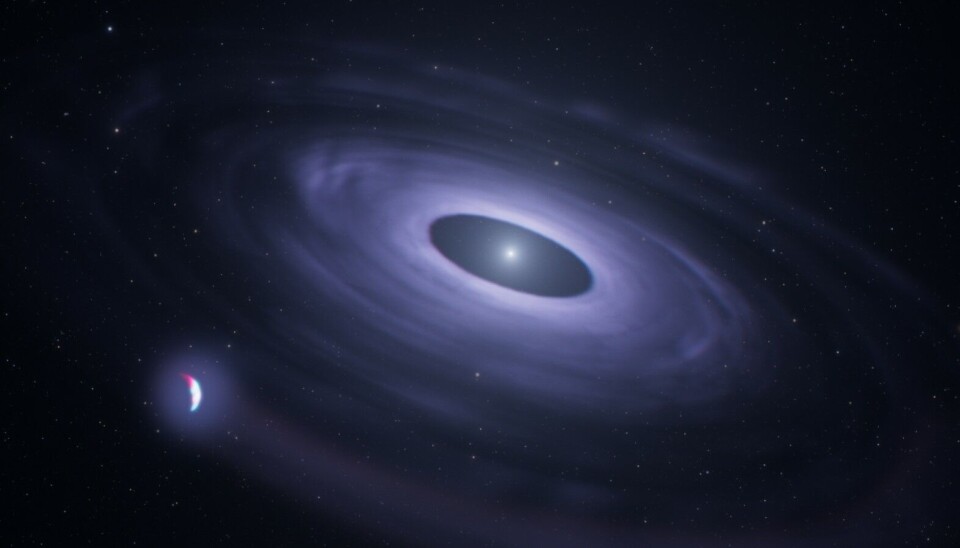
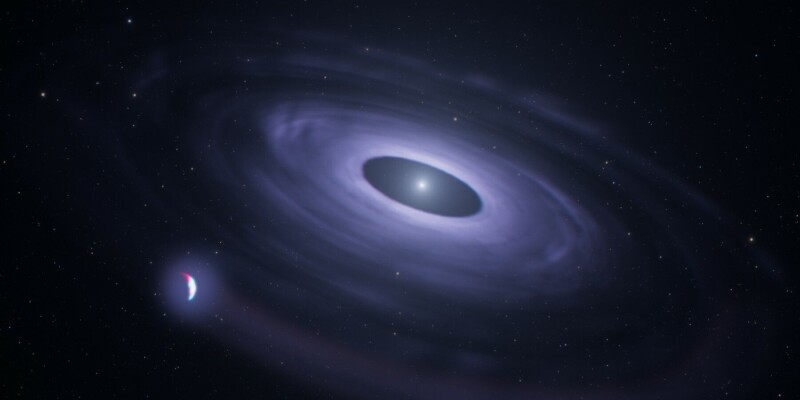
The paper suggests the niobium gas giant is about the size of Jupiter, but that the white dwarf is blasting away its atmosphere and perhaps creating “a comet-like tail of material that would form a disk around the white dwarf star and fall back on to its surface, leading to Hubble detecting the niobium when studying the star”
REG AD
Co-author Jamie Williams, from the Department of Physics at the University of Warwick, told NASA he thinks the niobium world will stick around.
“If the second-generation planet is there, I think it is likely to survive. Eventually the white dwarf will cool and then maintain a consistent temperature, with the planet in its stable habitable zone for millions of years,” Williams said. ®
KioskNews shows a cleaned-up reading view extracted from the publisher’s page — the original always lives on their site, not ours.