Google looking to boost investment: PM
Anutin credits skilled workforce, robust infrastructure and competitive tax rates
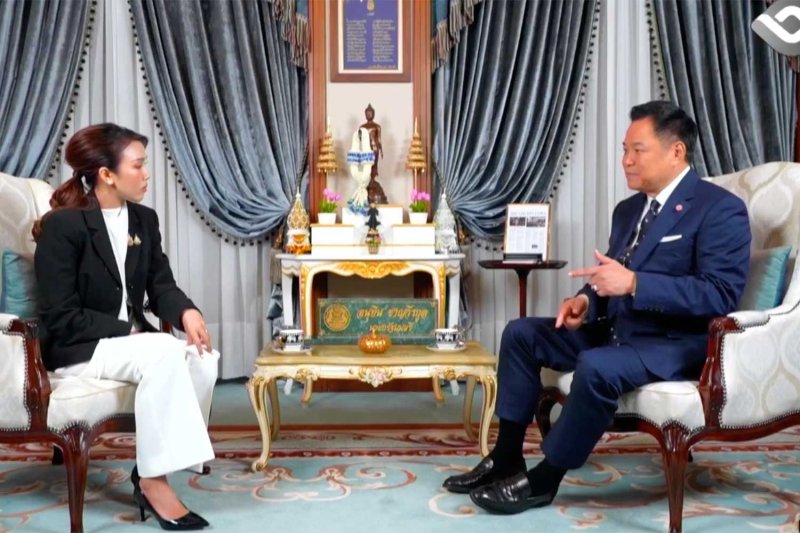
Google is looking to expand its investment in Thailand, reflecting the tech giant's confidence in the country's potential, Prime Minister Anutin Charnvirakul said on Saturday.
Speaking on his weekly television programme, Mr Anutin said he had discussed investor confidence and opportunities for expanding Google's operations in Thailand with the company's executives.
Google has already invested about US$6 billion (more than 200 billion baht) in Thailand, but its executives indicated they wanted to increase that amount, he said.
Describing the existing investment as "too little" and "too small" compared with the company's future expansion plans, Mr Anutin said Google was prepared to invest at least as much in Thailand as it had in Malaysia.
Google announced on Nov 4 that it would invest $15 billion in Malaysia between 2027 and 2028, with the money earmarked for data centre campuses, clean energy, water security and workforce development.
Mr Anutin said Thailand's appeal to foreign investors stemmed from its skilled workforce, education programmes capable of supporting further training and upskilling, infrastructure, strategic location as a regional hub, political stability, distribution networks and competitive tax rates.
He estimated that each major foreign investment could generate between 20,000 and 30,000 jobs for Thai workers.
On technology and artificial intelligence, Mr Anutin said the government had a clear regulatory approach based on the principle that humans must control AI rather than allow it to control them. This was necessary to prevent technological adoption from displacing workers, he said.
To facilitate investment, the government has the Fast Track scheme, which offers companies establishing or expanding production facilities a one-stop service through the Board of Investment, he said.
Mr Anutin also pledged transparency, saying investors would face no discrimination or demands for under-the-table payments.
Turning to global security, economic and energy uncertainties, Mr Anutin said Thailand had strong fundamentals to withstand external shocks and turn global risks into economic opportunities.
He also sought to reassure the public that the government's recommendation to prepare 72-hour emergency supplies did not mean the country was facing war or food shortages.
People could continue their daily lives normally, as most households already kept basic provisions, the PM said.
The government was instead prioritising early-warning systems and rapid assistance for vulnerable groups during emergencies, he said.
KioskNews shows a cleaned-up reading view extracted from the publisher’s page — the original always lives on their site, not ours.