Top Court Tells Delhi Police To Make Women Safe, Even At 11 pm
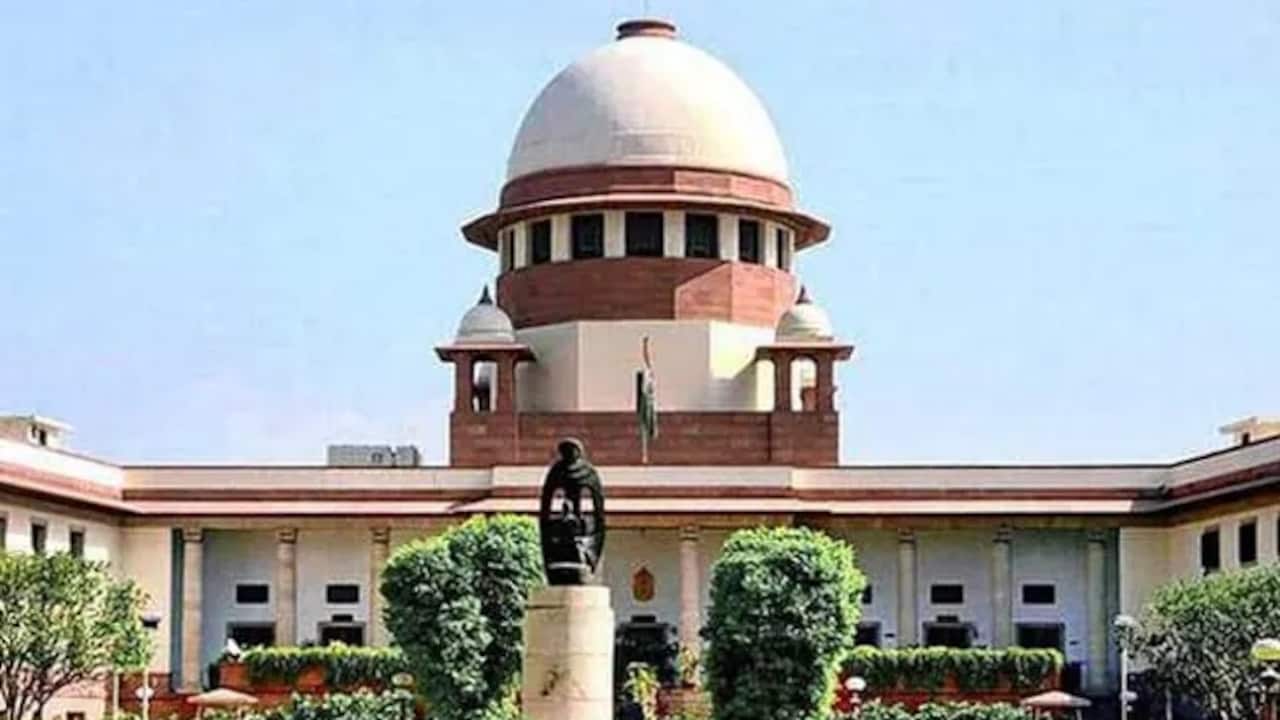
Stressing the need to instil fear in the minds of anti-social elements, the Supreme Court on Monday said there appears to be a feeling that women are not safe in the city, more particularly in some vulnerable pockets of the National Capital Region.
A bench of Justices J B Pardiwala and K Vinod Chandran said it must be ensured that every woman should feel safe even at 11 pm or late at night, whether travelling on the roads or in the metro.
The bench asked Delhi Police to focus on intensifying surveillance and patrolling at public places including bus stands, railway and metro stations, parks, and schools and colleges where women are more vulnerable.
"Don't let us down. Rise to the occasion. Every women, every girl molested is our sister, our mother. It is a huge challenge for the police department. Don't allow such things to happen. Take up the challenge (sic)," Justice Pardiwala observed.
Some senior officials of Delhi Police were also present during the hearing of the suo motu case titled 'In Re: Recent rape incidents in Delhi NCR'.
At the outset, the bench said the court, the government, police department and the court-appointed amicus curiae senior advocate Liz Mathew should ponder over the issue and try to do their best to ensure that crime against women are not committed repeatedly.
"The only concern with which we have taken this suo motu is that there appears to be a feeling that women are not safe in the city, more particularly in some vulnerable pockets of the city," the bench said.
It said the deficiencies, if any, should not facilitate commission of crime.
"What is important is to prevent a crime, not what you do after a crime is committed," the bench said.
Solicitor General Tushar Mehta told the bench that there was nothing adversarial in the matter.
"We have to work together. We must ensure that every women in NCT of Delhi should feel safe even at 11 pm whether travelling on the roads or in metro (sic)," the bench said.
Mehta told the bench that he had held discussions with Delhi Police and others on the issue.
"We should always endeavour to make something better. Should we not focus on those grey areas which enables individuals to commit crime (sic)," the bench said.
It said the most vulnerable areas were public places like parks having no security and sufficient lighting.
"We want you to start working on these, and it will help in prevention of commission of crime," the bench told the police officials.
It said the function of the police is to maintain law and order.
The bench asked that when one talks about surveillance through CCTVs, how far these cameras would be helpful in curbing crime if there is no continuous monitoring in war rooms.
"Rape is something which is not at all acceptable to any society," it said, while impressing upon the police to go through the order passed by the court on September 28 in the matter.
While apparently referring to the horrific 2012 Nirbhaya gangrape case, the bench observed there were thousands of illegal eateries where anti-social elements gather and consume liquor.
"You know what had happened in 2012. The record says they (accused) consumed liquor, boarded the bus and committed the crime," it said.
The bench also stressed the need to strengthen beat patrolling.
"You need to create fear in the mind of a man who is prone to commit offences. Unless you don't create fear in the minds of goons, anti-social elements that 'Ab kuch kiya toh maare jayenge' (If we do something now, we won't be spared), you will not be able to prevent commission of crime (sic)," it said.
The bench said police should regularly interact with people.
"You must live up to the expectations of people. People should not run away from you. People should come and talk to you," it said.
The amicus flagged the issue of beat patrolling and also referred to vacancies in the police force.
The bench said it was essential to work at the grassroots level.
"In a country like India, merely putting it all this on a paper will not work. If you have to be strict, don't hesitate. There may be people raising hue and cry about Article 21, but whatever is the duty you have to perform, you do it. Our endeavour is to ensure that rape, etc is done away with (sic)," it said.
It said that police patrolling should be intensified and steps must be taken for the recruitment process in the department.
"We are doing it for the society and for the safety of women and girls," the bench said, adding that its immediate concern is to prevent crime relating to women.
The bench said that with the festivals coming, the disruptive elements would be at high.
"You have to be very careful. Create a fear in the minds of all these criminals that if something goes wrong, they are doomed," it said.
The bench, which said it would pass a detailed order in the matter, posted it for further hearing on November 16.
The top court had on September 28 taken suo motu cognisance of news reports about crimes against minor girls and women across Delhi-National Capital Region (NCR), observing that such cases underline a systematic failure on the part of law enforcement authorities.
The top court took cognisance of the alleged gang-rape of a 17-year-old girl at Aastha Kunj Park in Delhi, the gang-rape and murder of a teenage girl in the Swaroop Nagar area of Delhi and the sexual assault of a minor girl inside a moving sleeper bus which the law enforcement agencies failed to intercept while it traversed a distance of over 47 km from Greater Noida to Delhi.
(Except for the headline, this story has not been edited by NDTV staff and is published from a syndicated feed.)
KioskNews shows a cleaned-up reading view extracted from the publisher’s page — the original always lives on their site, not ours.