From purple dyes to olive oil: Ancient factory made every season count, study finds

The ancient industrial factory at Tel Shiqmona on Israel’s Carmel coast was one of the most important centers for producing the blue (techelet in Hebrew) and purple (argaman) dyes used by ancient kings and priests in biblical times.
Now, new research published in the PLOS One scientific journal suggests that the same facilities used for extracting the coveted pigments from sea snails were also repurposed throughout the year for making olive oil, producing textiles and sheltering livestock.
The study, published September 24, suggests that the site was surprisingly flexible, utilizing its space, labor force, and resources for different purposes throughout the year.
0:00 / 0:00
Promoted: Z3 2026

“When archaeologists find an olive press, the natural tendency is to say, ‘Olive oil was produced here,’” University of Haifa researcher Golan Shalvi, who directed previous excavations at Tel Shiqmona, explained in a press release. “However, the olive harvest lasts for only a relatively short period at the end of autumn. Therefore, to understand how space was used, we need to ask what was done there during the rest of the year.”
A royal production facility
Tel Shiqmona is the largest known Iron Age purple dye factory in the Mediterranean region. The site, measuring about two acres and located on the outskirts of modern Haifa, has been excavated multiple times since the 1960s, revealing remains spanning from the Late Bronze Age (1500-1150 BCE) to the Byzantine period (4th-7th century CE).
Get The Times of Israel's Daily Edition by email and never miss our top stories
By signing up, you agree to the terms
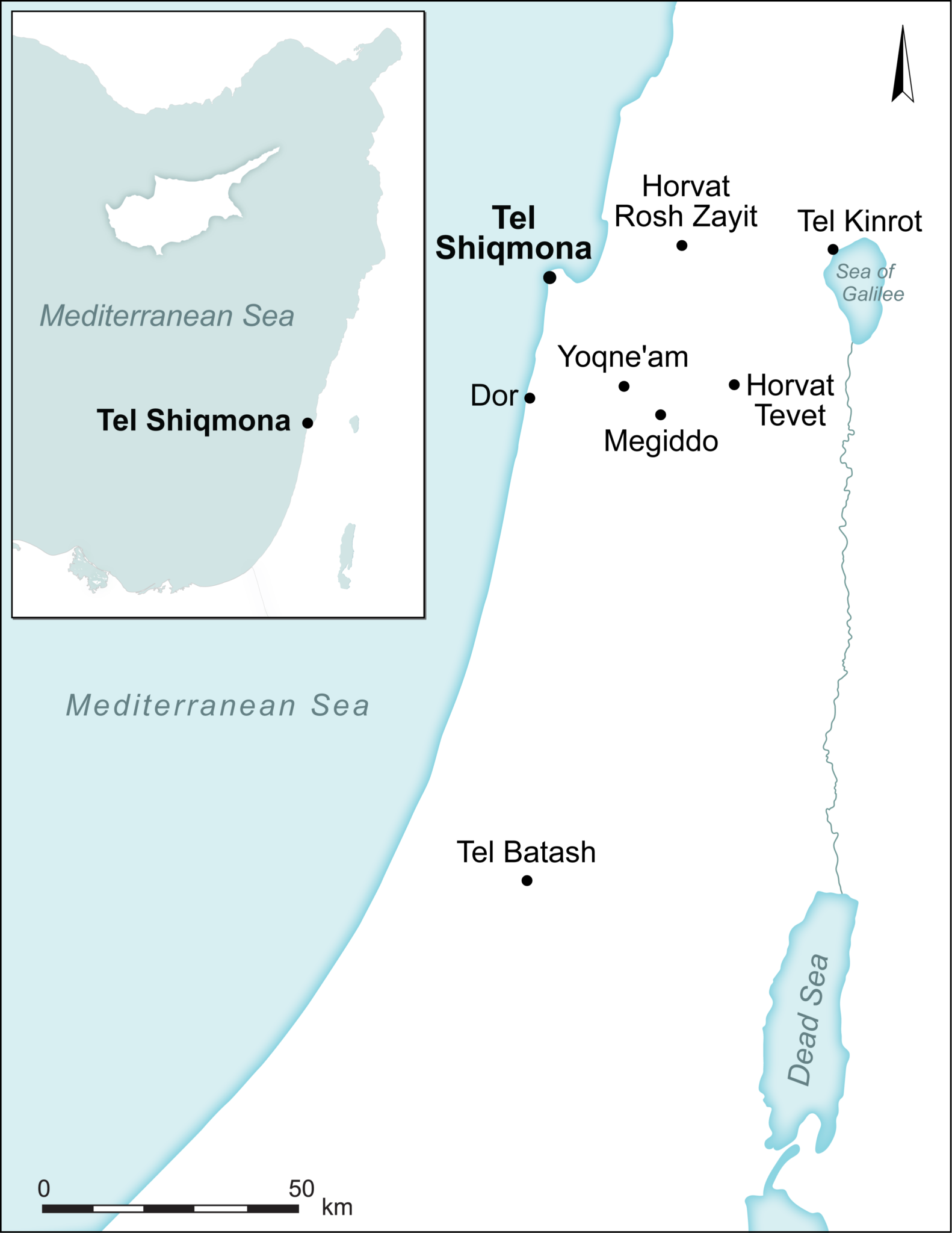
Researchers believe the site, originally a small Phoenician village, was taken over during the 9th century BCE by the northern Kingdom of Israel and transformed into a state-controlled industrial hub, producing the dyes on an industrial scale.
These dyes are extracted from the glands of three types of murex snails and were costly and rare. Large quantities of the shellfish were needed to produce relatively small amounts of dye. Tel Shiqmona was likely chosen as the site for the facility because its rocky seabed provides an ideal habitat for these snails and access to an abundant local supply.
Fabrics dyed with these hues, likely from Tel Shiqmona, may have been used in the First Temple in Jerusalem, in line with the biblical commandment regarding materials used in the Tabernacle during the Israelites’ wanderings in the desert.
These dyes were also prized throughout the ancient world, and Tel Shiqmona was likely a significant exporter of the pigments to neighboring kingdoms such as Philistia, Moab, Edom and Judah. Research published last year indicates that purple dyes were produced on site en masse.
“Tel Shiqmona offers evidence that already in the 9th century BCE, purple dye was produced at an industrial scale,” Prof. Ayelet Gilboa from the University of Haifa, told The Times of Israel at the time. “It was not just one individual dyeing a garment for a king.”
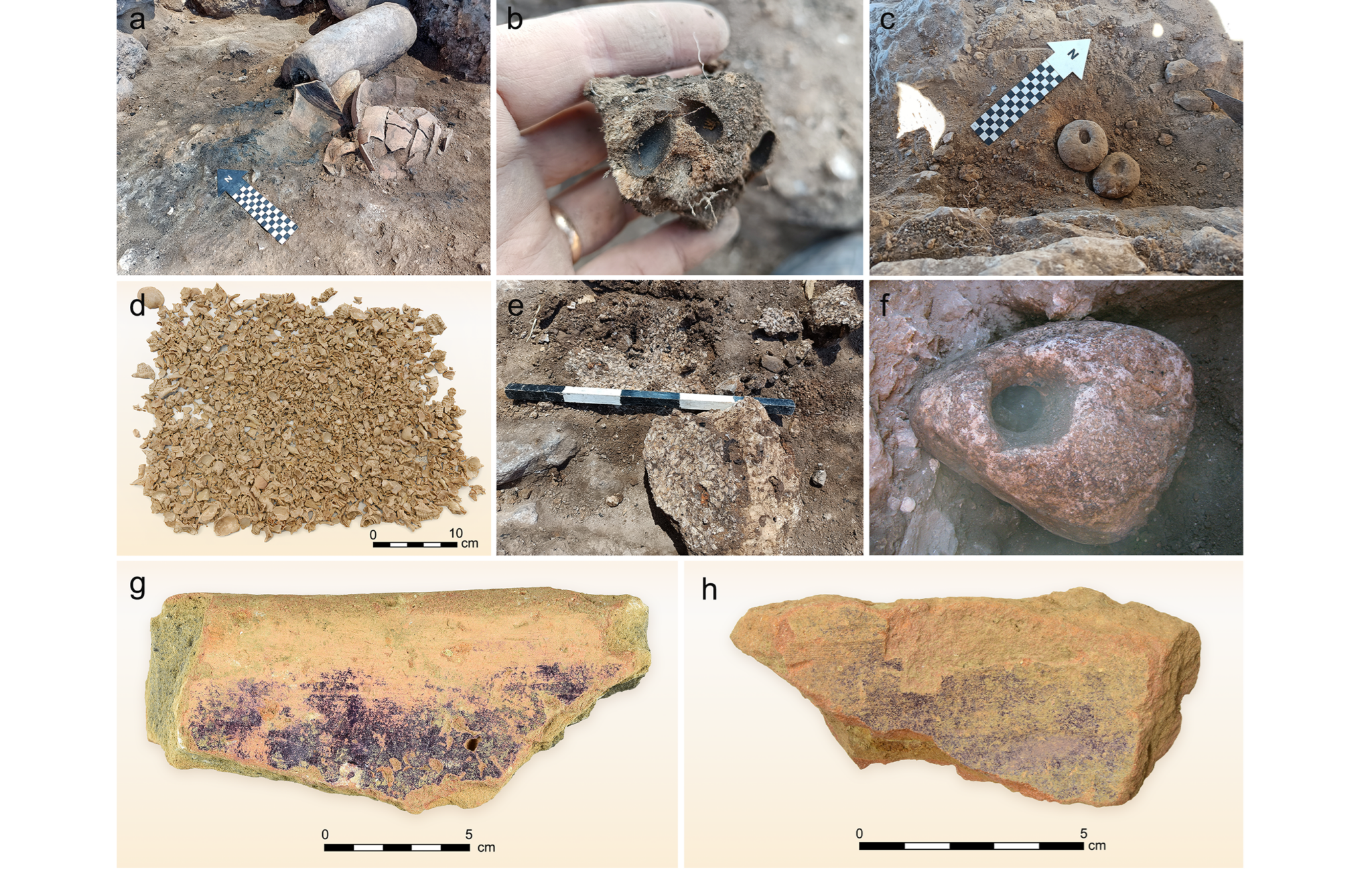
Excavations at Tel Shiqmona have uncovered numerous installations connected with the industry, including at least 16 dyeing vats, each capable of holding about 350 liters. More than 40 artifacts from one period were associated with purple-dye production, with more than half bearing traces of the dye, according to the PLOS One report.

Remains of other industries
Alongside these artifacts, archaeologists have also found evidence of other activities at the site, including olive-oil production and textile manufacture.
One particularly well-preserved building contained an olive press, purple-stained pottery and a cluster of 16 loom weights likely used in the production of textiles. The three activities were therefore clearly present in the same architectural space.
University of Haifa researchers sought to understand whether these activities all took place at the same time or whether the facility changed functions over the course of its life.
The team excavating the site — which included Golan Shalvi, Sonia Pinsky, and Prof. Ayelet Gilboa of the Zinman Institute of Archaeology at the University of Haifa — enlisted the help of the university’s Environmental Microhistory Laboratory in the Department of Maritime Civilizations, led by Prof. David Friesem and Roni Zuckerman-Cooper.
To do so, they used microscopic analysis of soil and sediment to reconstruct activities that are difficult or impossible to identify from ordinary archaeological excavation. Isaac Ogloblin-Ramírez, together with Madeline Jacobson from the school’s Leon Recanati Institute for Maritime Studies, analyzed the residues in the laboratory.
The team collected 28 bulk sediment samples and three blocks of undisturbed sediment from two adjoining spaces dating to roughly 790–740 BCE, a period corresponding with the reign of the Israelite king Jeroboam II.

Samples were analyzed using several techniques, including Fourier Transform Infrared spectroscopy, microscopic examination of sediment, and the identification of microscopic plant, ash, and animal-waste remains.
The dung remains provided a particularly useful clue. In one of the rooms, the sediment contained large concentrations of dung spherulite particles, which form in animal manure and can survive for thousands of years. These, along with evidence that organic material had been trampled into the floor, point to animals being kept in the space, the researchers wrote.
Scientists also found alternating layers rich in animal dung and layers containing wood ash, which researchers believe was deliberately spread to sanitize and maintain the space. Ash is alkaline and could have helped neutralize odors and control pests, effectively cleaning the space after it had been used to shelter animals.
What this indicates, researchers concluded, was that the space was treated with ash after livestock use, helping prepare it for subsequent activities.
An emerging timeline
The evidence does not provide a clear timeline showing what happened in each month of the year. Instead, the researchers combined the archaeological evidence with what is known about the seasonal timing of the various activities.
Olive harvesting and pressing generally take place in late autumn, roughly October through December. Textile production likely followed the spring shearing of sheep.
The researchers propose a cycle in which olives were pressed in late autumn, textiles were produced in spring, and livestock was sheltered during periods when the industrial spaces were not being used for production. It is not clear when purple-dye production fit into this cycle, the researchers noted.
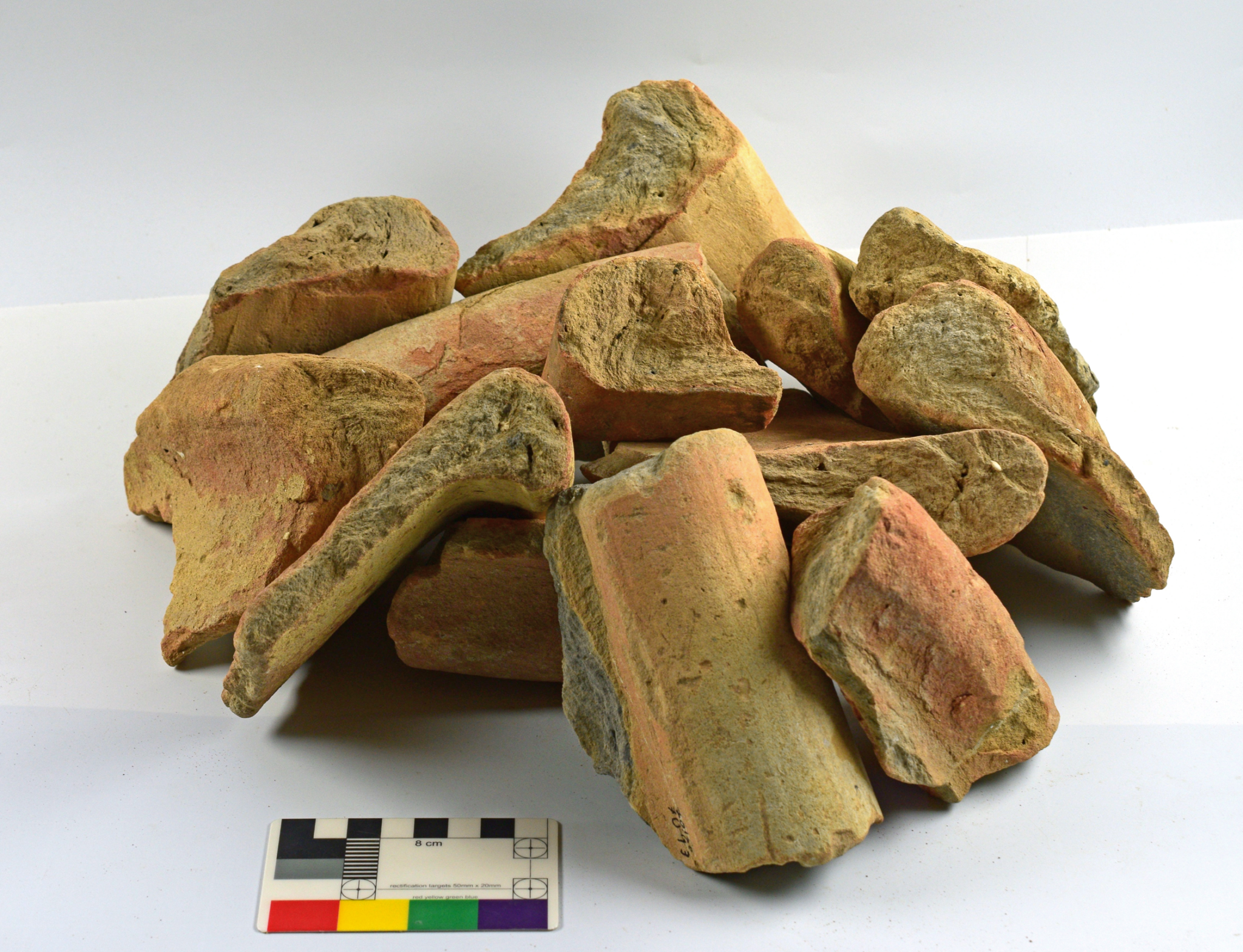
There were practical reasons why the dye industry may not have operated continuously, the study said. Producing purple dye required huge numbers of marine snails, making constant year-round harvesting difficult to sustain.
Sea conditions, the availability of shellfish and the quality of the dye may also have affected when production took place. Historical evidence from the Roman writer Pliny the Elder suggests that the best season for collecting the relevant shellfish was from late summer through late winter, although that does not offer conclusive proof, the study noted.
The picture that emerges from this research, the report concluded, is of an unusually flexible industrial operation. Rather than an improvised response to a shortage of space at the site, it may have been a deliberate form of economic management, allowing the center to make the most of its buildings, workers and resources throughout the year.

The study offers a new way of imagining ancient economies, said David Friesem, head of the University of Haifa’s Laboratory for Environmental Micro-History in the Department of Maritime Civilizations.
“There is no reason why the planned activity and seasonal pattern that we see at Shiqmona should not also be discovered at other sites through integrated research,” Friesem said. “Improving efficiency and maximizing the use of resources and space was clearly a feature of ancient societies, no less than it is of our own.”
KioskNews shows a cleaned-up reading view extracted from the publisher’s page — the original always lives on their site, not ours.