This doco was supposed to be a one-off. Six decades later, it’s coming to an end
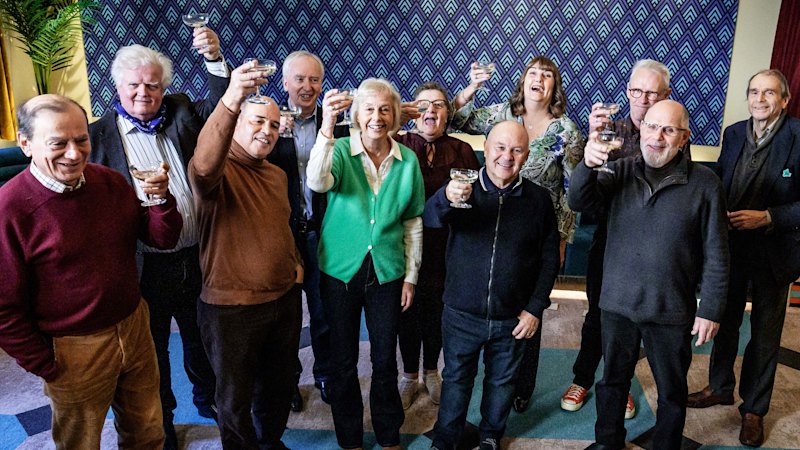
It’s been 42 years since journalist and teacher Claire Lewis became a researcher on the Up documentary series. “I knew right from the day I was given the gig … that it was going to change my world and my life,” she recalls today.
What started in 1964 as Seven Up!, a documentary following 14 English children, had already produced three follow-up films in which a film crew revisited the group. The children become teenagers, then young adults. Some started families, others remained single. They talked about their lives, hopes, expectations, dreams and disappointments.
With a new film every seven years, Up has become one of the most treasured and beloved programs in history – “a piece of tele that belongs to the whole nation”, as a TV executive said in a recent panel discussion in London to launch the 10th and final instalment, 70 Up.
But when Lewis joined all those years ago, the show was at a critical juncture. In the hiatus between 21 Up and 28 Up, no one had kept track of the participants. The show’s director and interviewer-in-chief Michael Apted had moved to Los Angeles. Some of the young women had married and changed their names. One participant was homeless. Another went to ground. It was an era before mobile phones and digital data and the kinds of protocols around consent that are now commonplace in TV production.
“I vowed I was never going to be in that position again,” says Lewis, who went on to become the program’s producer. “I was always going to know where they all were.”
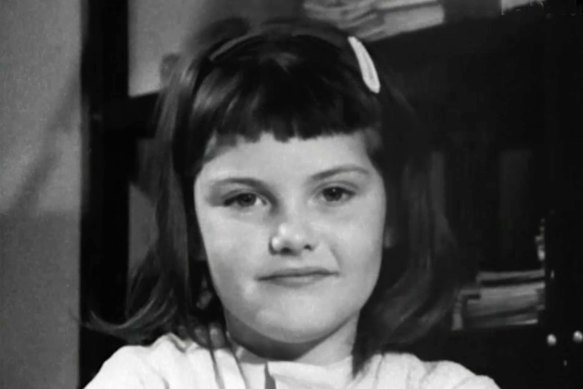
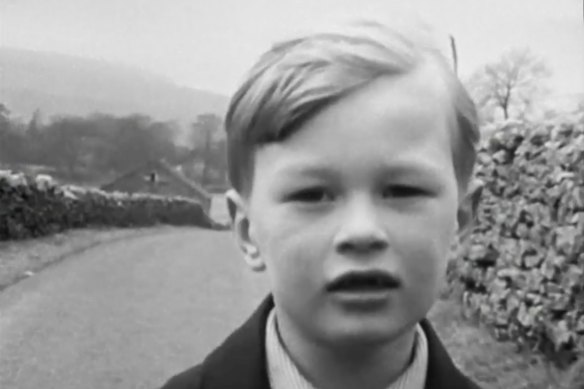
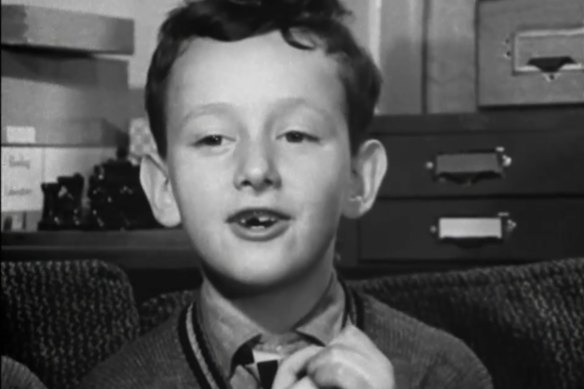
Among the reasons that Up survived the many upheavals that have happened in television and beyond in the decades since she joined, were the unique relationships that had formed in front of and behind the camera.
“By that stage [28 Up], we were a proper team, and we continued as that team right until the end of 63 Up,” Lewis says. “It wasn’t like a bunch of strangers was walking into their living rooms every seven years. It was family. It sounds like a real cliche, but it really was a genuine, proper relationship, and that’s why it survived. They’d known [Michael] since they were seven, and they’d known me since 28 Up, and we were the same group of people every seven years.”
When Apted died in 2021, it was uncertain if the show would continue. But when the question arose, the consensus among the remaining participants was to do one more and “close the book”.
“It’s a proper retrospective examining the series … and what [the cast] felt about it. I think that’s important in terms of film history.”
Claire Lewis, producer of 70 Up
Lewis felt that 70 Up needed to be different to the previous films. She knew that some participants were unhappy with the way they had been represented, for instance, while others had become noticeably angry with Apted’s inflexible and occasionally insensitive questions.
“Those issues were always there,” Lewis says. “They never got raised [on camera], but they were important. The whole issue of people appearing in documentaries, what is reality TV, what is real and what is fake, what is honest, what is not ... It’s very important for documentary filmmakers to discuss these things, and for people to have a voice about how they felt about it. That was really important for me.
“This is the retrospective of the whole series. It’s not just a fanfare goodbye; ‘aren’t we wonderful?’ It’s a proper retrospective examining the series: why it happened, the people and what they felt about it. And I think that’s very important in terms of film history.”
Significantly, all participants except Lynn, who died in 2013, took part in 70 Up, including those who had dropped out of previous films.
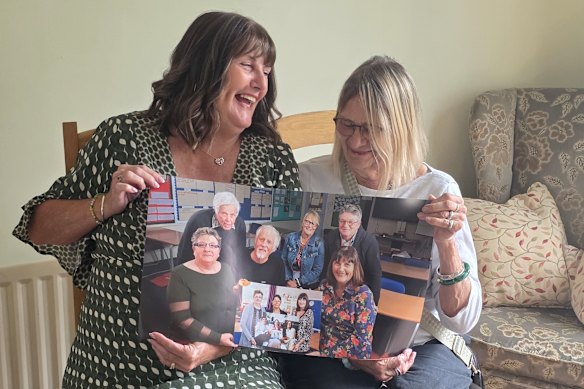
Lewis also wanted to revisit the vast archive of footage from the previous nine films. So she knew that Asif Kapadia, the director of the award-winning archive-based films Amy, Senna and Diego Maradona, was the right person to make it.
Two editors spent a year trawling through the outtakes and rushes of every previous film to find footage that had never been seen. “They looked through every frame. They looked at everything, and that’s why [70 Up] is fresh and new. Where there used to be big blocks of interview, there are short bits of interview and the rest is all pictures, which is how [Kapadia] works.”
At first, she says, the participants were nervous about this stranger walking into their lives.
“He has a completely different style from Michael,” Lewis says. “[But] within 10 minutes of sitting down with our people, they were all relaxed. He didn’t interview them on camera first at all. He did long sessions with them that lasted two hours, long chats, just like a podcast. And at the end of that, I completely understood how he worked. He’s a very, very gentle soul.”
Kapadia asked questions that had never been posed before, prompting revelations that in some cases casts characters in a completely new light. “A lot of stuff we didn’t know because they’d never been asked it,” says Lewis.
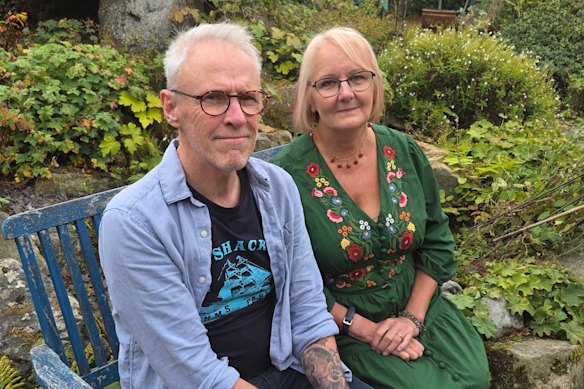
“The fact is, these are normal, ordinary people, and I’m not using ordinary in a patronising way,” she says, of the show’s enduring appeal. “Our people could be somebody who lives next door to you. That’s the secret. They were 14 people who were picked at random, but they actually reflect the reality of what people think and feel across the spectrum in the UK, and people love that.
“It’s basically us talking. And it’s giving people a voice which is not fake or constructed.”
From the outset, the DNA of Up was unconventional. Seven Up was filmed in black and white, and directed in the freewheeling style of a drama rather than a documentary. The seven-year-olds were intended to offer insight into what England would look like in the year 2000.
Interestingly, it was the brainchild of Australian producer and journalist Tim Hewat, a maverick who has been described as “colourful, outlandish, flamboyant, uncouth, un-British”. Lewis, who interviewed Hewat for her book 35 Up, says he commissioned Seven Up as he was so appalled at the rigidity of the British class system.
“We started off with gold dust in Seven Up,” says Lewis. It was intended to be a one-off. But, according to Lewis, the idea of a follow-up took seed when Apted was asked in the cafeteria how his seven-year-olds were doing.
As for 77 Up, Lewis says it’s a hard no.
“There’s only one of our contributors who would go on making it until they were 90, but all the others felt very strongly that they don’t want to see themselves growing old on screen, dying off slowly one by one, getting decrepit. And I think seven to 70 has this beautiful symmetry. You know, three score and 10 is the biblical age people are supposed to live to, right?
“People say to me, ‘Is it sad for you?’ and I say, ‘Well, actually, no.’ Oddly enough, it’s not sad. I wanted to finish making the most beautiful film we could, and I think we have.”
70 Up premieres on SBS and SBS On Demand at 8.30pm Wednesday, October 7.
Want more TV? We’ve got you.
- Newsletter: Find out the next TV, streaming series and movies to add to your must-sees. Get The Watchlist delivered every Thursday.
- Movie guide: More than 200 handpicked hits from all the major streamers.
- October streaming picks: A guide to the best new shows this month.
- Carrie is back: Stephen King didn’t want another remake. This is what convinced him.
- East of Eden review: Is the new Netflix adaptation worth watching?
- 70 Up: TV’s most fascinating experiment comes to an end.
- Watch: Binged The Airport Chaplain? Meet the man who inspired the show.
KioskNews shows a cleaned-up reading view extracted from the publisher’s page — the original always lives on their site, not ours.