‘Hot economics, cold politics’: why China gave nod for expanded Japanese trade trip
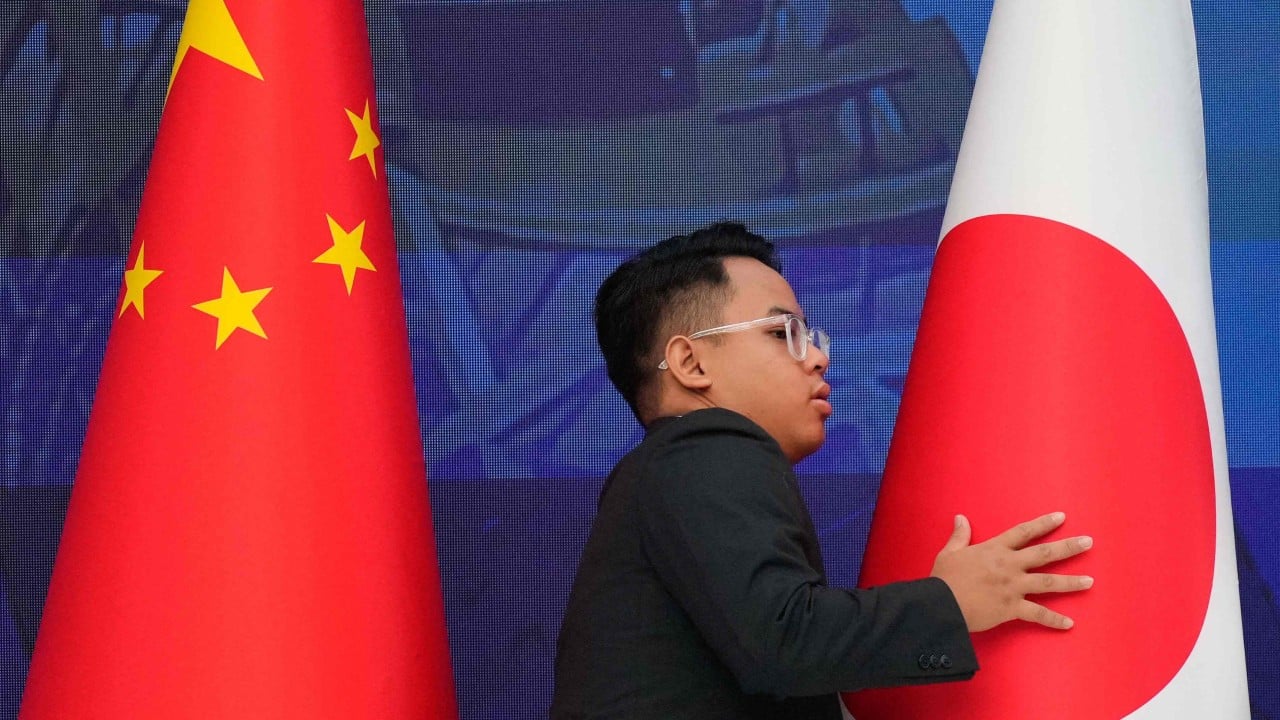
Iwaya met with China’s top diplomat, Wang Yi, and Vice-Premier He Lifeng. The talks were the first publicly disclosed meeting between senior Chinese leaders and a Japanese politician since bilateral ties were rocked in November last year by Japanese Prime Minister Sanae Takaichi’s suggestion that an attack on Taiwan could constitute a “survival-threatening situation” for Japan.
In the aftermath of Takaichi’s comments, all intergovernmental exchanges between Beijing and Tokyo were suspended.
Several legislative and business groups have visited China since then to try to break the diplomatic impasse.
Trump praises Takaichi ahead of Xi’s US visit
But analysts warned that Beijing’s green light for the expanded Keidanren visit may be less about rapprochement and more about applying pressure, suggesting that Beijing was leveraging economic channels to force Tokyo into concessions.
Rintaro Nishimura, a Tokyo-based senior associate at The Asia Group, said Beijing’s selective engagement with business delegations was designed to apply pressure through business interests.
“Engaging in dialogue with business delegations while keeping government dialogue at a minimum is a clear signal that Beijing wants businesses to influence Tokyo’s decision-making on China policy,” Nishimura said.
“It’s clear that Japanese businesses would prefer a stable business environment with Japan’s largest trading partner, and the political situation is not ideal for that.”
Japanese media have reported that the planned Keidanren trip is aimed at building momentum for an even bigger visit to China in March, which could involve three of Japan’s main business groups – Keidanren, the Japan-China Economic Association and the Japan Chamber of Commerce and Industry.
It’s clear that Japanese businesses would prefer a stable business environment with Japan’s largest trading partner
Senior executive figures from Nippon Steel, Nippon Life Insurance and Mitsubishi could join the trip in March, Japanese media reported.
Since 1975, business delegations led by the Japan-China Economic Association have visited China annually, pausing only during the Covid-19 pandemic.
Even when bilateral ties nosedived in 2012 after Tokyo nationalised the disputed Diaoyu Islands, which Japan calls the Senkakus, a scheduled visit was only postponed by a few months.
The association planned a visit at the start of this year, but it was shelved due to challenges in securing enough meetings with Chinese government agencies and leaders.
The parallel tracks of economic pragmatism and political antagonism would continue to underscore the countries’ relationship, with businesses navigating a relationship of increasingly overlapping commercial opportunities and national security concerns, experts added.
“Economic activity has long remained subordinate to political considerations [for Beijing],” Hotaka Machida, a visiting senior research fellow at the Institute of Geoeconomics in Tokyo, said.
He added that economic exchanges could help to improve the atmosphere, but changes in political leaders’ “messages or behaviours” and communication at the political level were necessary to spur a sea change in bilateral ties.
This year, Chinese customs authorities extended processing and inspection windows for Japanese imports – particularly Japanese sake, foodstuffs and general goods – making it more difficult for the products to enter the country.
Beijing also introduced export controls on several rare earth elements earlier this year, resulting in a drop in exports to Japan. Furthermore, it banned the export of dual-use goods, software and technologies to Japan’s military and related entities, while discouraging its citizens from travelling to Japan.
Yet the persistence of business-led outreach reflects economic realities that neither Beijing nor Tokyo can easily ignore.
“Japan and China have developed mutually intertwined economic relations over the previous decades,” Machida said.
“More Chinese companies are getting aware of the importance of cooperation with Japanese companies in the context of going abroad and global, and they are not willing to be affected by the bilateral relationship.
“Without development in the political sphere, it is difficult to foresee substantial results through economic exchange alone.”
04:47
Why have Takaichi’s Taiwan comments sent China-Japan ties into a tailspin?
Nishimura added that a flurry of visits made by Japanese businesses showed that China remained a vital economic partner, and such visits were meaningful in shaping Tokyo’s thinking about China.
“But the diplomatic relationship has shifted to one about managing issues and pursuing mutually beneficial outcomes – something that is becoming increasingly challenging as each side’s concerns overlap with core national security interests.”
Machida said Iwaya’s high-level reception in Beijing was seen by the Chinese counterparts of Keidanren as an indication that Beijing was willing for economic exchanges with Japan to go ahead.
“But this change cannot be regarded as a big change in the Chinese stance on Japan.”
When meeting Iwaya, Wang Yi called for a “correction” rather than a “withdrawal” of Takaichi’s remarks, which has been interpreted by some in Japan as representing a subtle diplomatic opening by Beijing.
Nishimura said Wang’s message could be a “nudge to signal Tokyo” that the ball was in its court to change bilateral relations for the better.
“Given how uncertain geopolitical dynamics are today, it would be better [for Beijing and Tokyo] to have managed peace than a relationship of animosity and tension.”
KioskNews shows a cleaned-up reading view extracted from the publisher’s page — the original always lives on their site, not ours.