Despite a China-India thaw, military relations are stuck in 2020
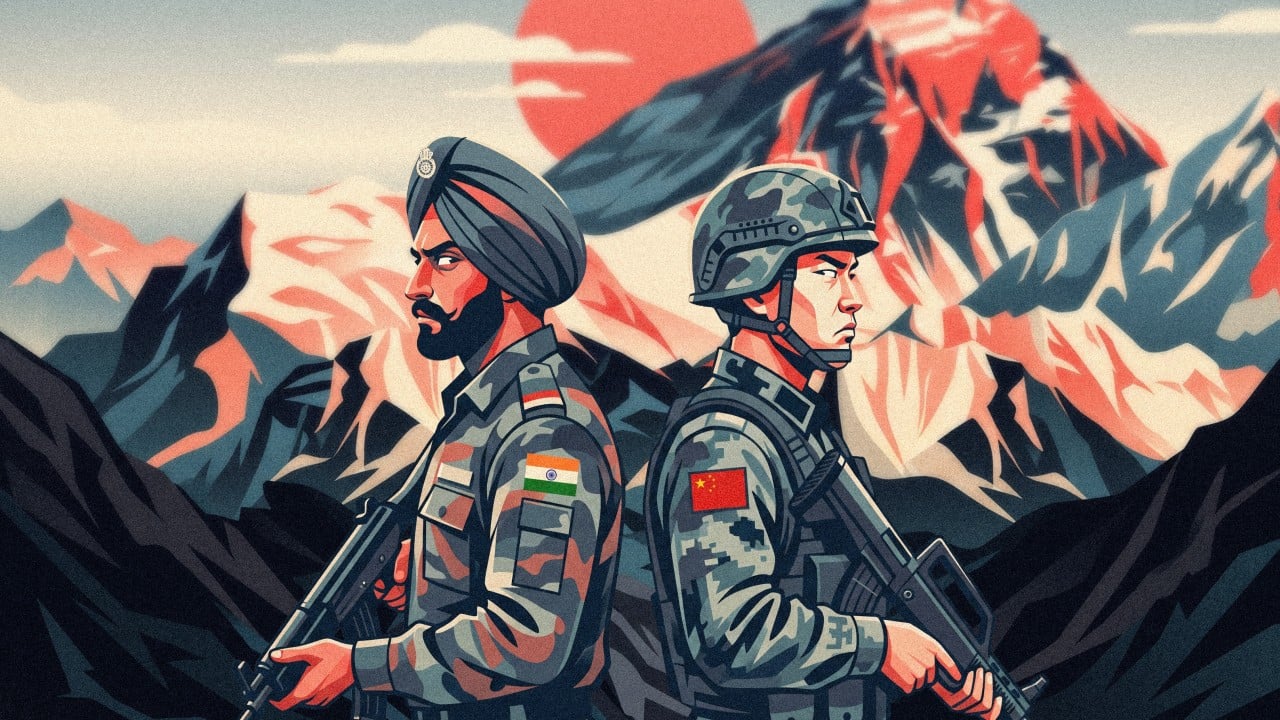
Chinese President Xi Jinping has met Indian Prime Minister Narendra Modi three times in the past three years. Indian pilgrims are back at Kailash, the Tibetan mountain sacred to Hindus and Buddhists. Air China has restarted flights to New Delhi. But can trust grow between two armies that meet only in a crisis?
And why does the Pentagon now talk to the People’s Liberation Army (PLA) more easily than India’s army does?
In September, Xi made his first visit to India in nearly seven years; Beijing says it wants both countries to be “good neighbours and friends”. Later that month, US President Donald Trump hosted Xi at the White House. Two capitals welcomed Xi. But only one lets its army talk properly to China’s.
The Sino-Indian thaw has reached everything except the military. Direct flights have returned after nearly six years. Three border trading points have reopened and trade now stands at more than US$100 billion a year. Leaders, traders and pilgrims cross the Himalayas. Why not soldiers?
Because two of the world’s largest armies, facing each other along a disputed Himalayan border, are still frozen in 2020.
They last trained together in December 2019, at Umroi in Meghalaya, in the eighth round of Hand-in-Hand, a counterterrorism exercise that began in Kunming in 2007. Six months later came the Galwan incident, the first deadly clash on the border in 45 years. Soldiers fought with clubs and stones; 20 Indians and four Chinese died.
This May, Umroi hosted more than 400 troops from 12 Asian countries for the inaugural Pragati exercise. China was not among them. New Delhi’s view is that the PLA must earn its way back. The instinct is understandable. But caution is not a strategy. The question is not whether India should trust China blindly. It is whether India can afford to keep distrusting it by default.
Washington has answered that question for itself. Last November, US defence secretary Pete Hegseth and his Chinese counterpart Dong Jun agreed to build channels to “deconflict and de-escalate”. In May, Hegseth became the first US defence chief since 1972 to accompany a president to China. The Pentagon treats talking to the PLA as risk management. Delhi still treats it as a concession.
Is this thaw a warning that India may be left alone? It is better read as a green light. If the world’s two biggest rivals can compete and keep their generals talking, so can Asia’s two oldest civilisations. India cannot possibly be more hawkish on the PLA than the Pentagon is; yet, awkwardly, that’s what it looks like.
Are the new hotlines not enough? In August, Indian National Security Adviser Ajit Doval and Chinese Foreign Minister Wang Yi agreed to add two military hotlines and two meeting points for senior commanders as well as a pledge of “early and substantial” progress on settling the boundary.
Beijing deserves credit. But a hotline is a fire alarm: it rings only when something is already burning. Weeks earlier, reports of a stand-off at Taksing in Arunachal Pradesh raised the alarm again. Armies that only talk in emergencies will keep having emergencies.
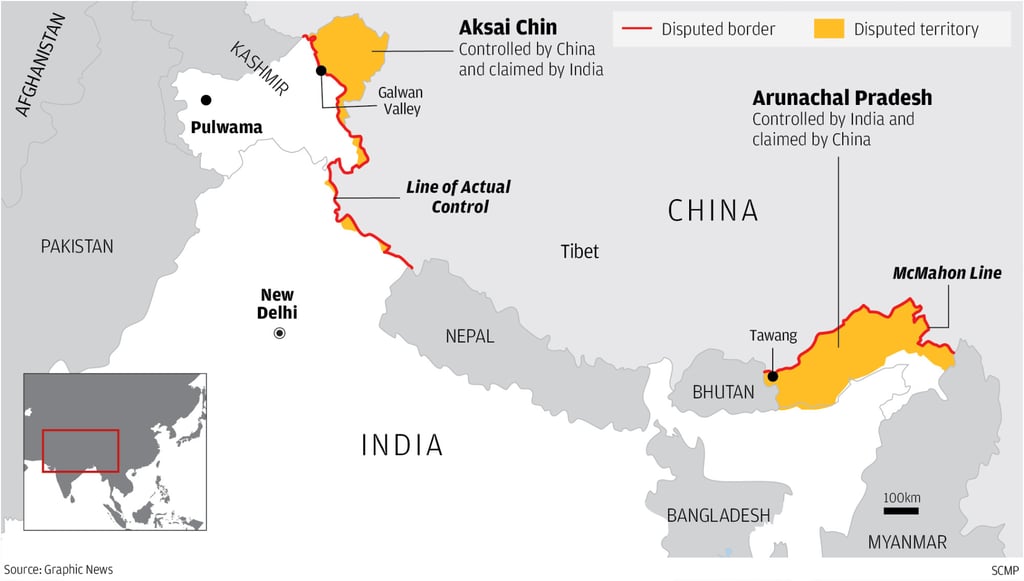
Would engagement reward Beijing for the Galwan clash? No. The incident is the reason to talk, not the reason to avoid it. Along the Line of Actual Control, a de facto border, both armies knew each other’s positions down to the last tent but not each other’s minds. Soldiers on both sides paid for that gap.
The objections are real. Pakistan received live inputs from China during Operation Sindoor, India’s four-day conflict with Pakistan in May last year, and 81 per cent of Pakistan’s recent military hardware imports are Chinese.
So what should be done? First, revive Hand-in-Hand. Over eight rounds and 12 years, it was the only regular occasion where the two armies met as professionals rather than adversaries.
Second, open the staff colleges. India’s Defence Services Staff College in Wellington trains officers from dozens of countries. China’s PLA Army Command College in Nanjing shapes future ground commanders. A few exchanges would let each side study the other’s doctrine first-hand. Would that expose secrets? No more than India’s exchanges with dozens of other armies do. And nothing humanises a rival like discovering that he, too, complains about the mess food.
04:20
Will India and China’s new border deal lead to long-term peace in the disputed Himalayas?
Third, give the hotlines a political spine: an annual defence ministers’ dialogue on a fixed date, whatever the mood on the border.
Fourth, train together for disaster. On August 26, a glacier-rock avalanche on the Nepal-China border sent a flash flood down the Bhote Koshi river. Within days, Indian military personnel and two PLA Air Force Y-20 transport planes had landed in Kathmandu. They worked in the same disaster, but apart. Glacial floods do not recognise borders and the next one may strike between India and China.
What should New Delhi ask in return? Restraint in the buffer zones, advance notice of large exercises and a joint way to investigate incidents. And why should Beijing agree? Because a quiet Himalayan front frees it to focus elsewhere and because an India that trains with everyone except China will be read by Asia as aligned against it.
US Secretary of State Marco Rubio will reportedly visit India later this month ahead of a meeting of the Quadrilateral Security Dialogue, a grouping comprising the United States, Japan, Australia and India. But Asia’s peace will not be settled in Washington.
For Beijing, it means meeting openness with transparency, and having patience with India’s politics. The diplomats of both countries have done their part. Now their soldiers have to talk.
KioskNews shows a cleaned-up reading view extracted from the publisher’s page — the original always lives on their site, not ours.