BCCI Can't Afford To Ignore Gautam Gambhir's Warning Again. Cricket Might Have To Pay A Huge Cost
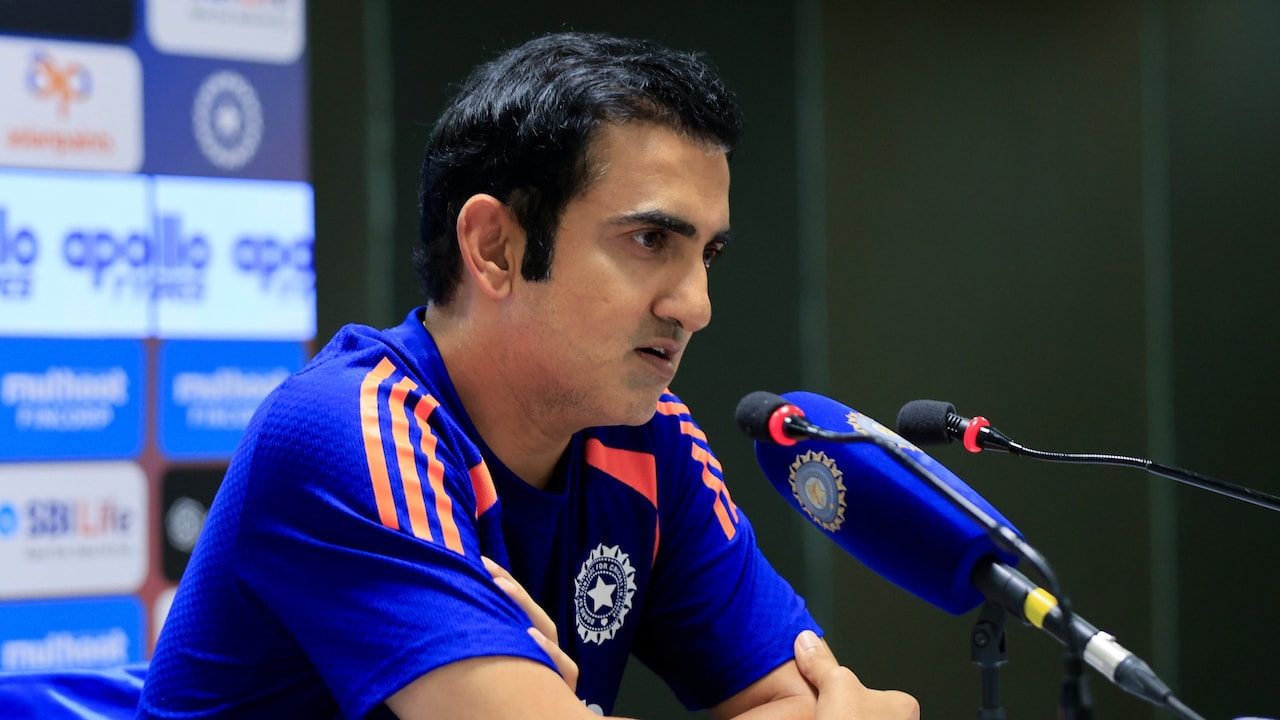
Following the Indian cricket team's disappointing tours of Ireland and England, the Board of Control for Cricket in India (BCCI) has faced the brunt of the criticism. Overseas pitches provided a balanced contest between bat and ball, whereas Indian tracks over the last couple of years have been overwhelmingly stacked in favour of batters. After the West Indies successfully chased down a 250-run target against India in Ranchi, head coach Gautam Gambhir voiced his frustration for the second time since the Caribbean side's arrival in the country, warning that this persistent trend of flat pitches places the future of Indian bowlers in serious jeopardy.
"You don't want a good bat-and-ball competition?" Gambhir asked reporters during the post-match press conference in Ranchi, as reported by ESPNcricinfo. "What you want to see is also what we want to see. We want an even contest."
"These bowlers belong to us, not anyone else. Their careers are at stake; they have worked tirelessly to earn their place in this dressing room. If there is a fair contest, we will witness a far superior game of cricket," he added.
In recent years, a clear pattern has emerged across Indian cricket: state boards preparing pitches that outrightly favour batters, particularly in white-ball formats. Why has this become the norm?
From the perspective of a traditional cricket fan, the modern game has grown increasingly commercialised and data-driven. A higher frequency of sixes and non-stop boundary hitting drives viewership-a fact that is no secret. Consequently, pitch curators and stadium authorities have prioritised producing high-scoring 'entertainment' over quality cricket. While this strategy delivers immediate short-term rewards, it risks undermining the sport's integrity over time.
Gambhir had previously lashed out at organisers after a staggering 800-plus runs were scored during the second ODI between India and West Indies in Guwahati, asserting that what transpired on the field was merely 'batting', not 'cricket'.
"Look, if I have to be absolutely honest, I feel there has to be a fairer contest between bat and ball. You talk about cricket-but this isn't cricket, this is just batting," Gambhir told the host broadcaster, Star Sports, following the Guwahati fixture. "Imagine a young bowler performing on a wicket like this, with the opposition scoring 400 and us chasing it down. Naturally, for the record books, the spectators, and the broadcaster, it is spectacular. But if you ask me as a true cricket lover and as a coach, I must have sympathy for the bowlers as well."
What BCCI Must Do
To safeguard the future of Indian cricket, the Indian board must immediately rethink its pitch preparation policy and move away from flat, single-dimensional surfaces. The board needs to issue strict guidelines to state associations and neutral pitch curators to ensure sporting tracks that offer assistance to both seamers and spinners.
Also, domestic competitions such as the Ranji Trophy and the Vijay Hazare Trophy must prioritise balanced pitches so that young batters are tested under challenging conditions before stepping onto the international stage where pitches on offer would be quite different. By striking a better balance between commercial appeal and genuine athletic competition, the BCCI can protect the development of its bowling talent and preserve the true essence of the game.
Featured Video Of The Day
CWG 2026 Weightlifting Gold Medallist, Mirabai Chanu Get Hero's Welcome in Delhi
KioskNews shows a cleaned-up reading view extracted from the publisher’s page — the original always lives on their site, not ours.