Inside Visakhapatnam spying case: Pakistani women operatives lured, blackmailed naval personnel, probe finds
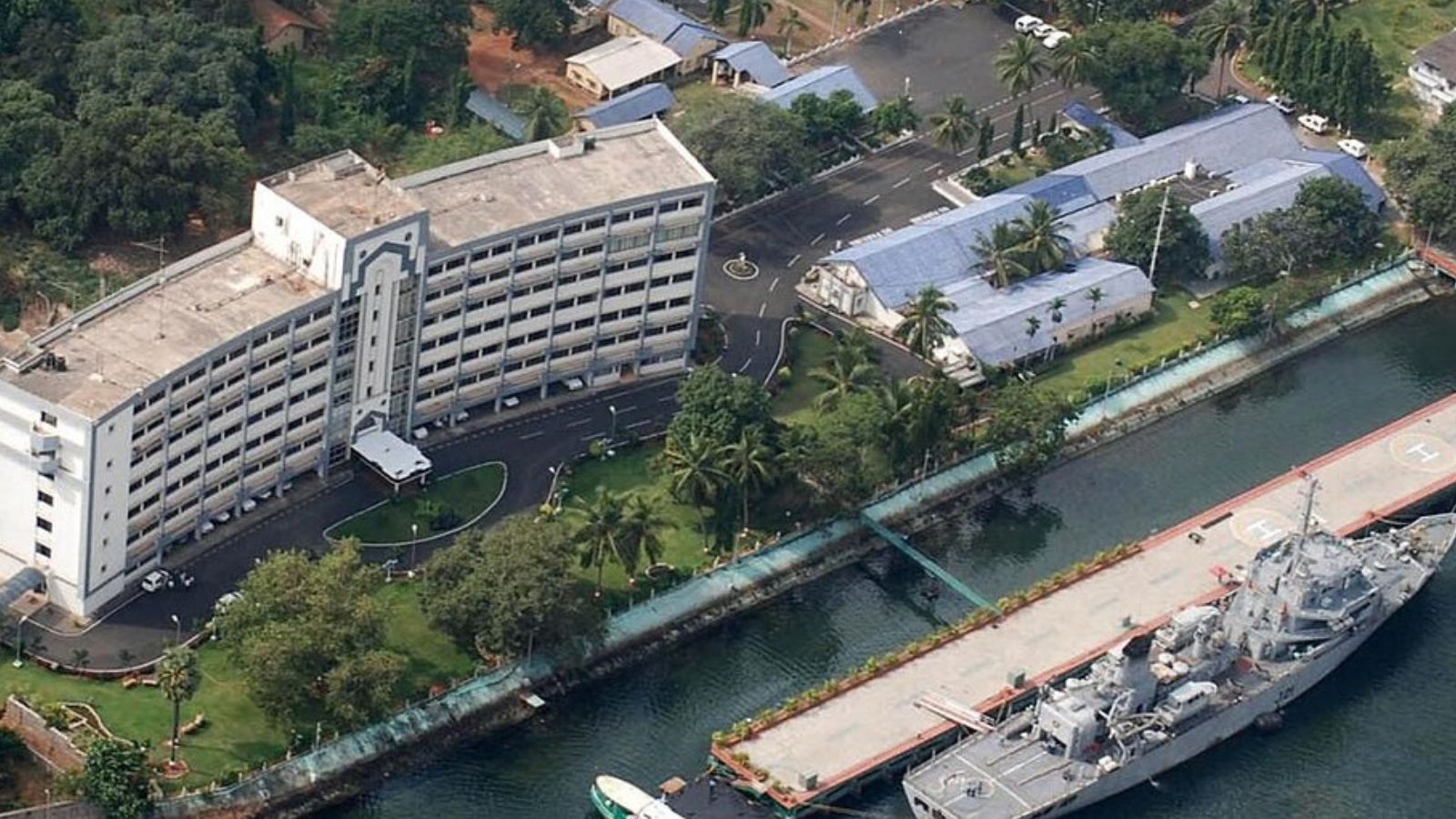
The HQ of the Eastern Naval Command at Visakhapatnam. (Credits: Indian Navy)
Investigators probing allegations of spying in Visakhapatnam claim to have pieced together how intelligence operatives from Pakistan trapped and then blackmailed civilians and navy personnel to gather information about the movement of vessels and submarines.
According to investigators, around six months ago, a woman operative allegedly posed as a shipping firm employee and struck up a conversation with Annam Sai Varaprasad, 28, a civilian hired on a contract basis to drive naval officers’ vehicles at the Visakhapatnam naval base.
The woman messaged him on his social media accounts, investigators said, adding that though he was initially suspicious, he allegedly continued the conversation. She told him she was from a neighbouring state.
At first, the conversation focused on his personal life: where he lived and why he was not married. Then, investigators said, she asked about his work, his salary, and the kind of vehicles he drove. Eventually, the woman allegedly shared sexually explicit content with Varaprasad and promised to visit Visakhapatnam soon to meet him.
As the conversation progressed, she allegedly managed to extract information about the officials he drove. From then on, he was threatened that he would be reported to his employers and arrested. Investigators said what followed was blackmail to provide information about the locations of various naval assets, the deployment of officials, etc.
The platform for their communication shifted from social media to WhatsApp. However, Varaprasad had basic security clearance and lacked access to observe and report on classified assets, naval ships docking, and submarines arriving or leaving, investigators said.
The Andhra Pradesh Police’s Counter Intelligence Cell and naval officials monitored him for over a month before his arrest on October 6. Officials are also examining his phone to check if he received payments through cryptocurrency, investigators said.
Story continues below this ad
According to investigators, Varaprasad allegedly shared details of a trainee sailor, Pradeep Mukharjee, 31, whom he previously met at the Visakhapatnam base. He too was allegedly trapped by a Pakistan-based intelligence operative, who posed as a medical professional.
Threatened with arrest and legal complications after they allegedly exchanged sexually explicit messages, he too shared information about the Vizag and Coimbatore facilities, where he was attending a training course, investigators said. He was allegedly forced to share OTPs to activate WhatsApp accounts of Pakistani operatives, and was threatened with dire consequences on a voice call if he stopped cooperating, investigators said.
These WhatsApp numbers were then used to lure and trap at least 16 others, using a similar modus operandi. They targeted employees posted in Kerala, Maharashtra, Karnataka, Gujarat, Goa, Delhi, Tamil Nadu, Chhattisgarh and Bihar, investigators said, and information sought included movement of naval ships and submarines arriving and leaving.
Andhra Pradesh Counter-Intelligence Cell officials said that after it was established that Varaprasad and Mukherjea allegedly shared information and helped operatives trap others, they registered a case against them on September 2 and put them under surveillance. On October 1, simultaneous raids at the homes and residences of 18 persons, including 13 naval personnel, were conducted in an operation named “Operation Firewall 2026”, and 12 teams supported by officials of the anti-terrorist squads of several states, navy intelligence officers, and local police seized phones, electronic devices, and documents. Authorities are investigating the 16 people to determine their level of involvement and have arrested Varaprasad from Visakhapatnam and Mukherjea from Coimbatore.

Sreenivas Janyala is a Deputy Associate Editor at The Indian Express, where he serves as one of the most authoritative voices on the socio-political and economic landscape of Telangana and Andhra Pradesh. With a career spanning over two decades in mainstream journalism, he provides deep-dive analysis and frontline reporting on the intricate dynamics of South Indian governance. Expertise and Experience Regional Specialization: Based in Hyderabad, Sreenivas has spent more than 20 years documenting the evolution of the Telugu-speaking states. His reporting was foundational during the historic Telangana statehood movement and continues to track the post-bifurcation development of both Telangana and Andhra Pradesh. Key Coverage Beats: His extensive portfolio covers a vast spectrum of critical issues: High-Stakes Politics: Comprehensive tracking of regional powerhouses (BRS, TDP, YSRCP, and Congress), electoral shifts, and the political careers of figures like K. Chandrashekar Rao, Chandrababu Naidu, and Jagan Mohan Reddy. Internal Security & Conflict: Authoritative reporting on Left-Wing Extremism (LWE), the decline of the Maoist movement in former hotbeds, and intelligence-led investigations into regional security modules. Governance & Infrastructure: Detailed analysis of massive irrigation projects (like Kaleshwaram and Polavaram), capital city developments (Amaravati), and the implementation of state welfare schemes. Crisis & Health Reporting: Led the publication's ground-level coverage of the Covid-19 pandemic in South India and major industrial incidents, such as the Vizag gas leak. Analytical Depth: Beyond daily news, Sreenivas is known for his "Explained" pieces that demystify complex regional disputes, such as river water sharing and judicial allocations between the sister states. ... Read More
KioskNews shows a cleaned-up reading view extracted from the publisher’s page — the original always lives on their site, not ours.