Australia-Philippine deal exposes where Asean’s architecture is weakest
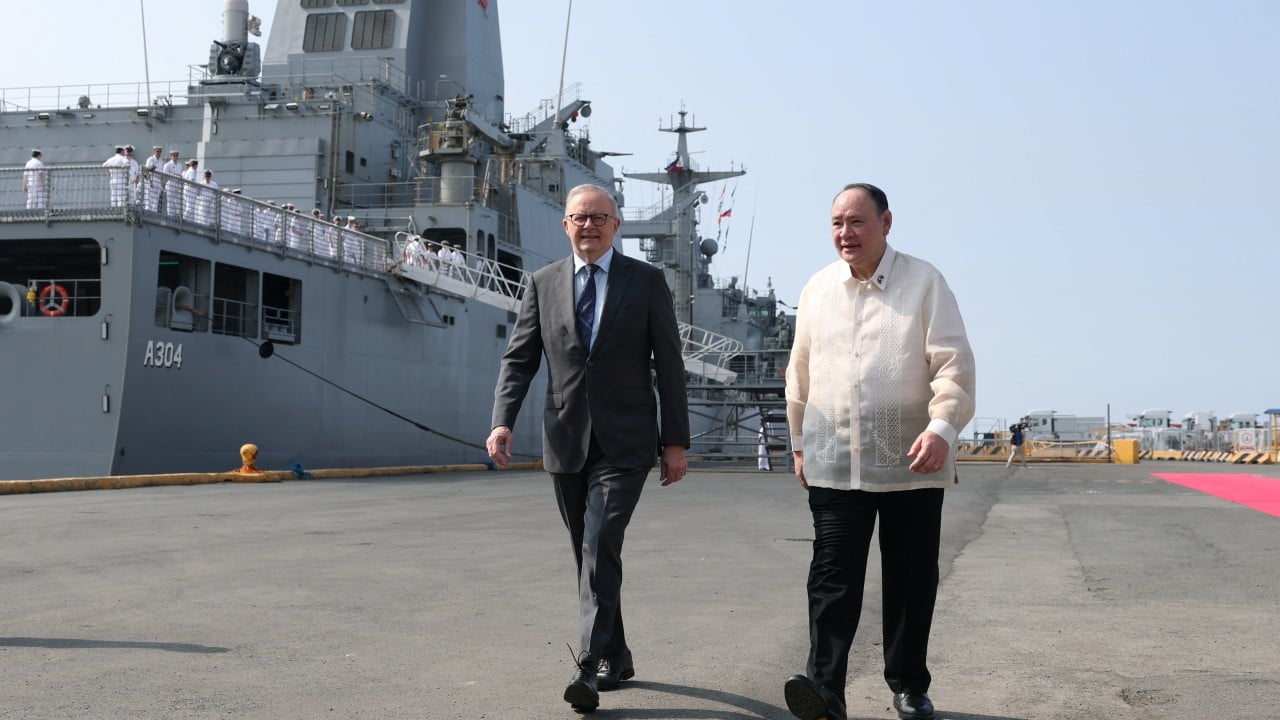
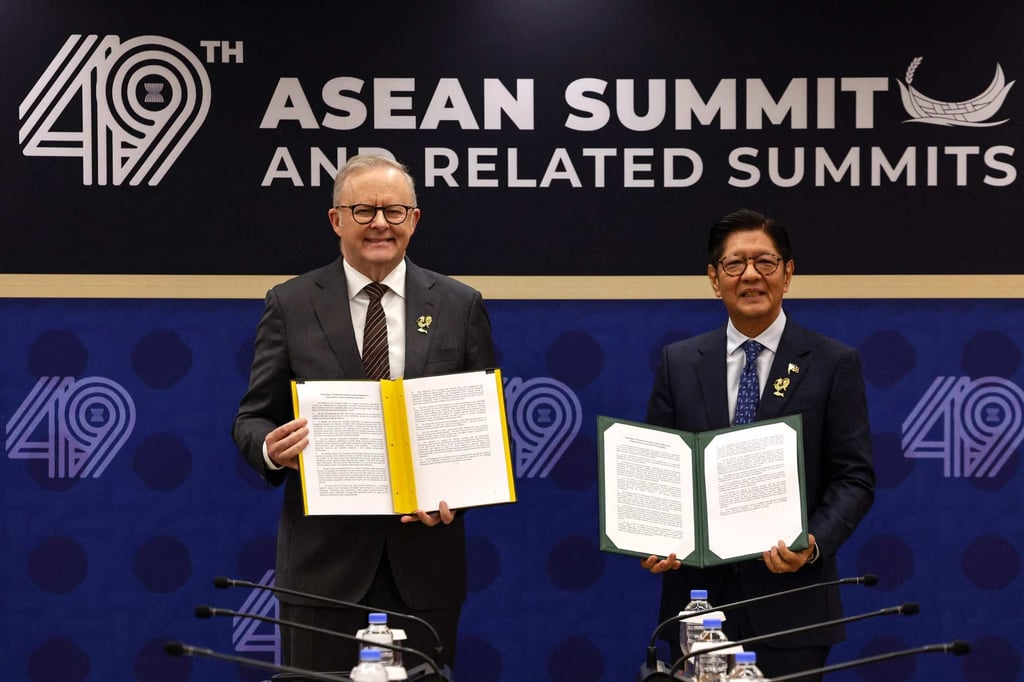
The most revealing moment of the 49th Asean summit in Manila might have occurred beyond the plenary hall. On November 15, as Southeast Asian governments gathered to reaffirm regional cooperation, Australia and the Philippines signed a new defence cooperation arrangement intended to make their military partnership more practical.
The timing was striking: the Association of Southeast Asian Nations (Asean) was celebrating its central role even as two partners were building security mechanisms outside its institutional framework. This is not a mutual defence treaty between Australia and the Philippines, but it gives their partnership greater strategic depth.
The move sits within a wider pattern. On October 28, defence ministers from Australia, Japan, the Philippines and the United States met in Cebu on the sidelines of the Asean Defence Ministers’ Meeting-Plus. They agreed to establish a combined coordination centre in the Philippines, coordinate defence investment and expand joint exercises.
Neither Canberra nor Manila intends to abandon Asean. Their Kasandigan statement explicitly reaffirmed Asean centrality and the Asean-led regional architecture. That is precisely what makes the development significant: governments can endorse Asean’s diplomatic leadership while relying on smaller partnerships to deliver capabilities that regional institutions do not provide. The question is whether Asean centrality extends beyond convening meetings and articulating principles to shaping the practical priorities and capabilities of regional security.
Asean centrality has long rested on its ability to convene major powers, sustain dialogue and provide an inclusive diplomatic framework. Through the Asean Regional Forum, the East Asia Summit and the Asean Defence Ministers’ Meeting-Plus, it has brought countries with competing interests into the same institutional space. Its value lies not in commanding armies but in preventing the strongest powers from dictating regional order.
However, convening power is not the same as strategic agency. Asean has no collective defence obligation, standing military command or integrated force structure. Its consensus-based decision-making protects the equality of members, but it also makes common responses difficult when threat perceptions diverge.
The demand for more focused cooperation is therefore understandable. Lowy Institute research published in 2025 found that Australia, India and Japan collectively concluded 38 new defence agreements with Southeast Asian countries between 2017 and 2024, compared with 22 by the US and China combined. More than 80 per cent of 51 new defence dialogue mechanisms established since 2017 involved maritime Southeast Asia and Vietnam. These figures point to a geography of security engagement increasingly shaped by states most exposed to maritime competition.
Australia’s role deserves particular attention. It is not simply an auxiliary to Washington’s regional strategy. Canberra has its own interests in secure sea lanes, stable supply chains and a predictable maritime order. Its expanding defence relationship with Manila deepens Australia’s defence coordination with a strategically positioned partner while helping the Philippines develop surveillance, logistics and operational capabilities. For Manila, the arrangement diversifies external support without requiring it to place every security need within a single alliance.
The wider environment adds urgency. The Stockholm International Peace Research Institute estimates military spending in Asia and Oceania reached US$681 billion in 2025, an 8.1 per cent real increase. China’s spending rose 7.4 per cent to US$336 billion, while Japan’s reached US$62.2 billion.
Meanwhile, the ISEAS-Yusof Ishak Institute’s latest State of Southeast Asia survey found 51.7 per cent of regional respondents were concerned about encroachments into Southeast Asian coastal states’ exclusive economic zones and continental shelves while 45.2 per cent feared an accidental clash between an Asean member and China. The figures do not prove minilateralism is the answer but help explain the demand for faster, specialised cooperation.
09:58
Will Batanes become the next South China Sea flashpoint?
The danger for Asean is not that Australia and the Philippines are cooperating more closely. Their partnership can contribute to maritime stability, disaster response and deterrence. The deeper risk is that operational standards, information-sharing and crisis coordination develop through exclusive arrangements beyond Asean’s influence. If that happens, Asean could retain the language of centrality while losing influence over the substance of regional security.
Bilateral and minilateral exercises need not be absorbed into Asean, but their lessons and standards can be shared. Indonesia has a particular stake in this effort. Its geography around the Natuna waters and the Malacca, Sunda and Lombok straits makes maritime stability a direct national concern. Jakarta has defence relationships of its own, but it must ensure these partnerships strengthen both national readiness and regional confidence. Indonesia can combine better maritime surveillance with efforts to make Asean-led mechanisms more useful in preventing incidents and managing crises.
Asean does not need to monopolise regional security cooperation to remain central. It must, however, retain a meaningful role in setting the agenda, shaping norms and connecting the networks that are emerging around it. Australia and the Philippines are not dismantling Asean’s architecture; they are exposing where it is weakest. The test of Asean centrality will be whether the organisation can influence what happens beyond its meeting rooms.
KioskNews shows a cleaned-up reading view extracted from the publisher’s page — the original always lives on their site, not ours.