Will political distrust upend South Korea’s bid to tame its ‘imperial presidency’?
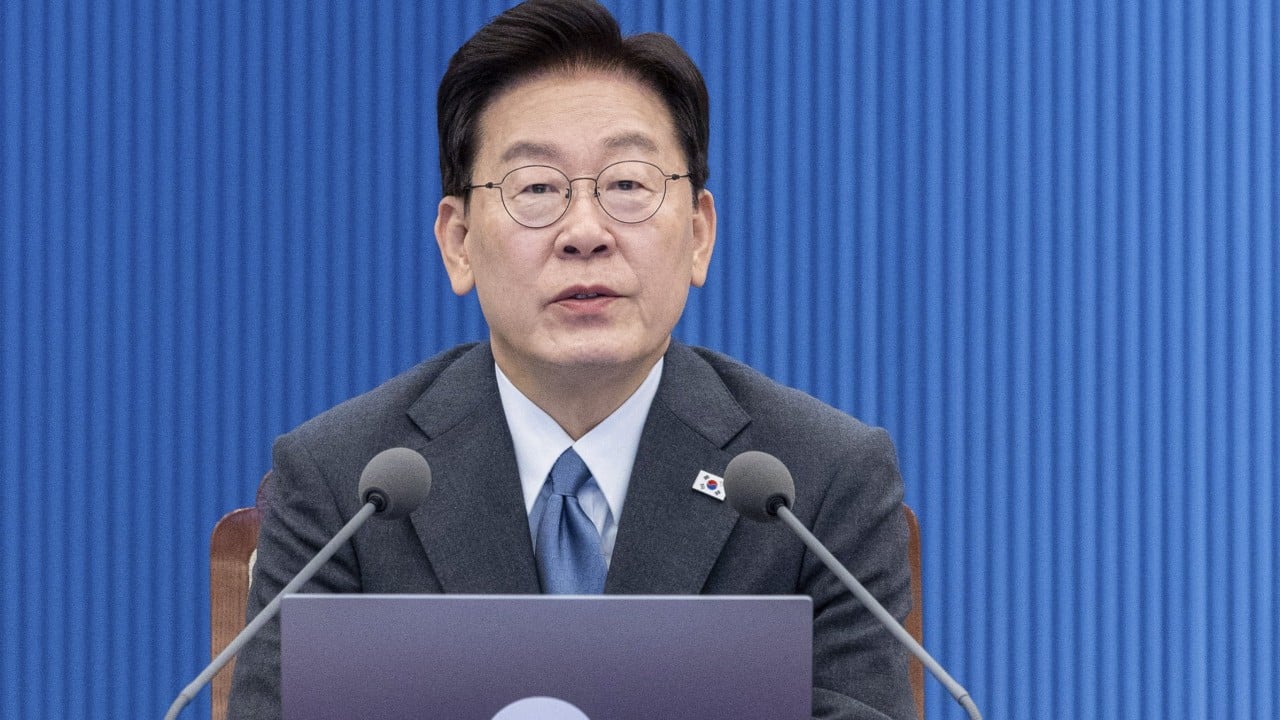
A proposed reform to South Korea’s constitution could tame the country’s “imperial presidency”, but growing distrust between the ruling Democratic Party and the opposition People Power Party (PPP) could jeopardise President Lee Jae Myung’s latest attempt.
The push gained urgency after former president Yoon Suk-yeol’s short-lived declaration of martial law in December 2024, which exposed the dangers of concentrating sweeping powers in the hands of one leader.
Lee has proposed replacing the country’s single five-year presidential term with a four-year stint renewable once, while transferring some presidential powers to the National Assembly, including greater control over emergency decrees.
He said in August the current constitution – unchanged since 1987 – “no longer suited the times” and should be revised.
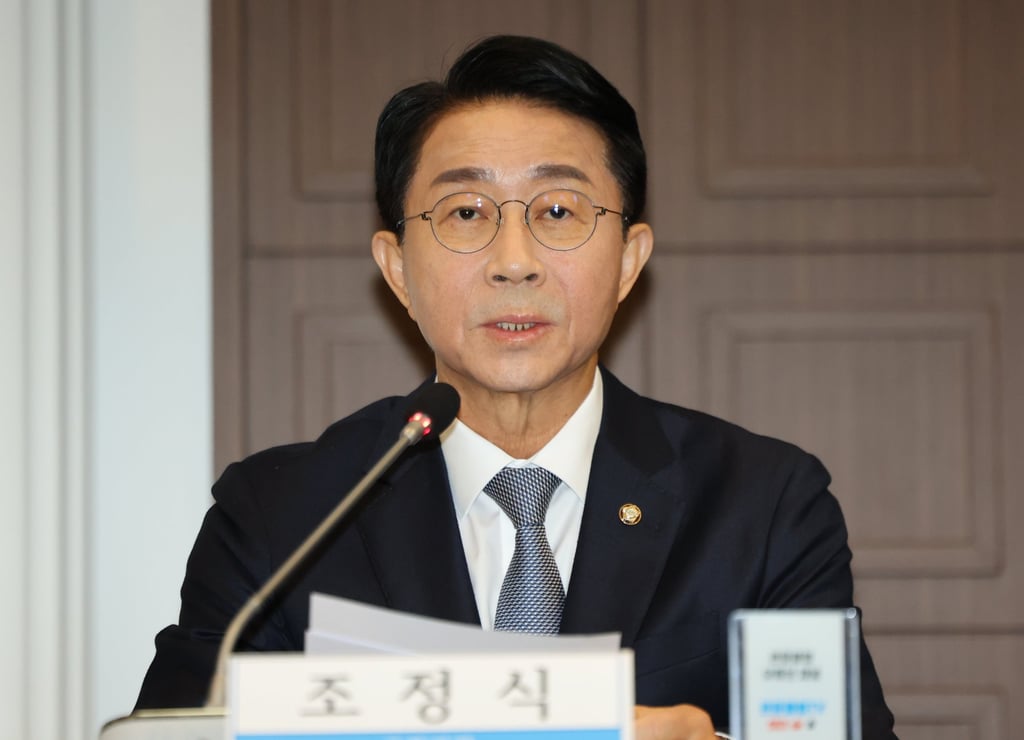
On Monday, National Assembly Speaker Cho Jeong-sik said the legislature would lead efforts to change the constitution through bipartisan consensus and public consent. However, the PPP’s antipathy towards the prospect of Lee seeking another term remains the key obstacle for any reform talks, even though the presidential office, Cheong Wa Dae, has ruled out such a possibility.
Under the current constitution, South Korea’s presidency is limited to a single five-year term, while the National Assembly election is held every four years.
The presidency holds vast executive power over state affairs. Often dubbed an “imperial presidency”, it has authority over both domestic and foreign policies, appointments, law enforcement and the budget. The president may also directly propose bills to the legislature, and has extensive authority over the military.
“The single five-year term was an insurance policy against presidents perpetuating their rule, but it has produced presidents who are overpowering early and lame ducks later,” said Hannes Mosler, chair professor of East Asian social sciences at the University of Duisburg-Essen specialising in South Korean politics and society.
“They never face voters again, and their terms run out of sync with the four-year parliamentary cycle.”
In December 2024, Yoon shocked South Korea and the world by declaring martial law late at night – the first of its kind since the country’s democratisation in 1987. The decree lasted for about six hours before the National Assembly broke through barricades and swiftly voted unanimously to nullify it.
Yoon was impeached later that month and removed from office in April 2025.
02:23
South Korea’s ex-president Yoon Suk-yeol sentenced to life in prison for insurrection
“Specifically for Lee Jae Myung, as he was elected in the 2025 special election held as a result of Yoon’s impeachment, Lee promised during the presidential campaign to introduce constitutional reform, stating that constitutional changes would prevent the recurrence of the president’s abuse of power,” said Lee Jong-eun, assistant professor of political science at North Greenville University.
The president’s ruling Democratic Party currently holds 161 seats in the legislature – dozens short of the 190 out of 299 sitting lawmakers needed to pass a constitutional amendment. That means support from the opposition is essential.
PPP has opposed Cho’s proposal, accusing Lee Jae Myung of attempting to seek another term to extend his presidential immunity, as reported by The Korea Herald.
PPP’s floor leader Jeong Jeom-sig said on Monday his party would not agree to a constitutional amendment while Lee Jae Myung remained in office, even though negotiations were now led by the Assembly, The Korea Herald reported.
Lee Jae Myung was effectively found guilty of falsifying claims during the 2022 presidential campaign, a month before he won the snap election in 2025. He was also indicted in 2024 over misuse of public funds, and faces trials over election law violations and corruption, Yonhap reported.
The president has said he has no intention of seeking a second term. Under the current constitution, any changes to the presidential term limit will not apply to the incumbent.
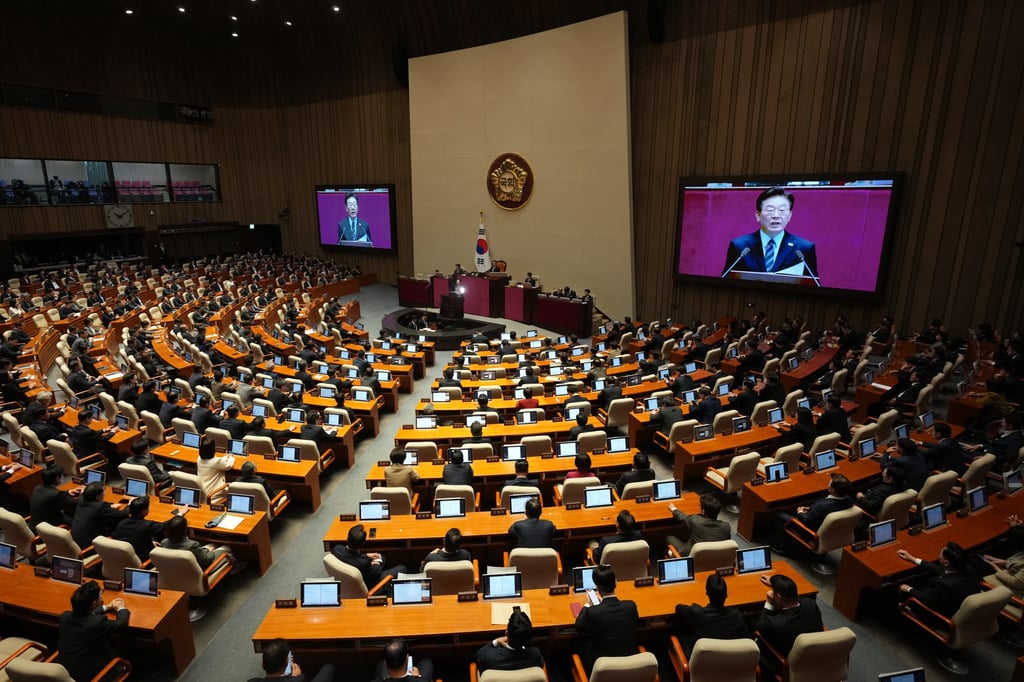
On Tuesday, the Democratic Party’s floor leader Han Byung-do described constitutional reform as “a calling of the times and a mandate from the people” and criticised the PPP for not cooperating to deliver the reform, according to Seoul Economic Daily.
Jung Kim, professor at the University of North Korean Studies in Seoul, said political distrust was the central obstacle to constitutional reform.
“The PPP has portrayed reform as a distraction from controversies surrounding Lee,” Kim said. “These are the opposition’s stated claims, rather than established government intentions. The controversy therefore reflects distrust as much as disagreement over constitutional provisions.”
Mosler warned that Lee Jae Myung’s proposed reforms might not prevent another constitutional crisis.
“The December 2024 crisis was not caused by a single term. It was caused by a president who illegally turned emergency powers against the legislature by breaching the constitution,” Mosler said.
Aligning presidential and National Assembly terms could improve presidential accountability, but was unlikely to resolve the executive-legislative deadlock, Mosler added.
“Holding presidential and parliamentary elections together makes a unified government more likely but risks a dominant president,” he said. “A general election in the middle of the presidential term improves accountability but invites a divided government and the zero-sum confrontation seen under Yoon.”
Cho has targeted completing the constitutional amendment by next year, noting that no election is scheduled for 2027, which will mark the 40th anniversary of the current constitution, according to The Korea Times.
But Lee Jong-eun said Cho’s 2027 target was unlikely to be met unless the PPP felt reassured that it would not be sidelined in the legislature.
“I think the best chance for a constitutional revision would be if the 2028 election ends with a hung parliament outcome, in which neither party wins a majority,” Lee Jong-eun said.
“Such an outcome would then make both parties nervous about losing the next presidential election and be more open to constitutional revision to limit presidential powers.”
South Korea will hold a National Assembly election in 2028, while the next presidential race is set for 2030.
“Without electoral, party reform, and institutional forbearance, the [executive-legislative] deadlock will persist,” Mosler said. “A constitution both camps can call their own would be the first genuine renewal of the 1987 settlement.”
KioskNews shows a cleaned-up reading view extracted from the publisher’s page — the original always lives on their site, not ours.