Beyond the Degree: How EdUHK’s Honours College Prepares Students for What’s Next

[The content of this article has been produced by our advertising partner.]
As artificial intelligence reshapes classrooms and workplaces, universities must prepare graduates not only to use technology, but to question it, adapt to change and apply knowledge responsibly. At The Education University of Hong Kong (EdUHK), the Honours College advances this mission by connecting the University’s educational expertise with research, emerging technologies and professional experience.
The College embodies EdUHK’s “Education Futures” vision and its strategic commitment to “Nurturing Future-ready Educators and Talents”. Its three pathways - PRIDE, ELITE AI and PATH Academy - extend students’ learning beyond their core degrees, allowing them to explore how knowledge can improve education, professional practice and society.
Education remains the anchor of EdUHK’s identity, but its role increasingly extends beyond traditional teacher education.
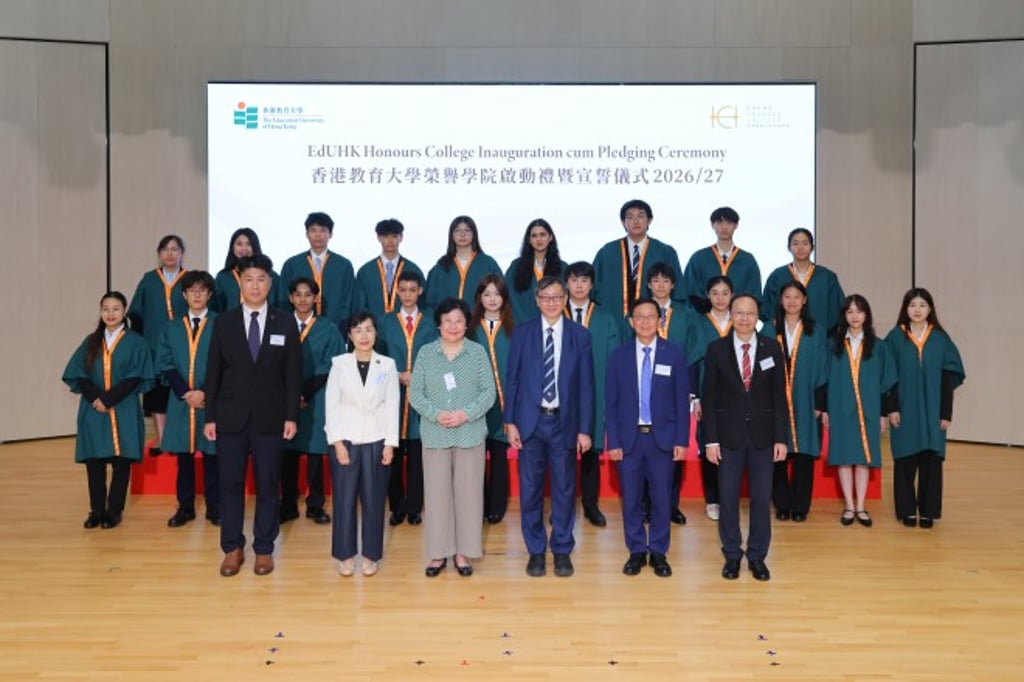
“Education is, at heart, about helping young people discover who they can become with a positive mind and heart, not just what they can achieve,” said Professor John Lee Chi-Kin, President of EdUHK, who supported the Honours College led by Vice President (Academic) Professor May Cheng May-hung. “We envision the College as a home for visionary minds and bold ideas underpinned by proper values, where students of diverse talents grow into lifelong learners and future-ready leaders, in education and far beyond, who lead with integrity and serve society in a rapidly changing world.” Professor May Cheng May-hung, a key architect of the College, has turned that vision into a platform that systematically nurtures talent.
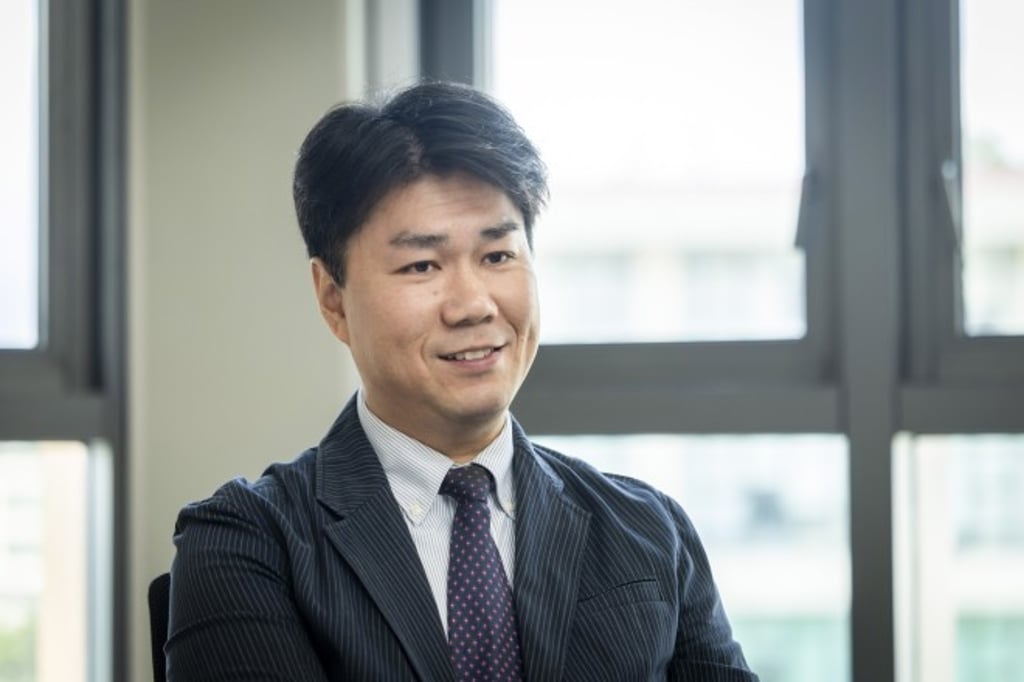
“Multidisciplinary is not just about having many disciplines,” said Dr Li Wai-chin, Head of the Honours College. “It is about enabling students to connect different forms of knowledge and apply them to real-world challenges.”
That philosophy comes to life through the College’s interdisciplinary structure, which encourages students to look beyond single-subject boundaries.
From knowledge consumers to creators
For Ashley Lo Ting-kei, a psychology student in the PRIDE Pathway, access to research has changed her understanding of learning.
“Before I joined the Honours College, I was primarily focused on how to get good grades,” she said. “Now, I have shifted from being a passive knowledge receiver to an active problem solver.”
Supported by the Honours College, Lo attended a summer school at University College London (UCL), where she gained exposure to brain sciences, mental health and international research.
Through the Honours College, she also appreciates the personalised supervision from distinguished scholar Professor Kevin Chan and the opportunity to learn about his research on mindfulness and stigma. Her interests now include digital wellbeing and AI-powered career counselling. The work of her mentor, Dr Lam Ching-choi, on a mental-health chatbot further highlighted the evidence underpinning technological tools while also inspiring her interest in mental health policy-making and broader systemic support.
“Behind the AI chatbot, there is a lot of research that provides the empirical evidence for why it works,” she said.

For fellow PRIDE student Hu Jiayu, a BEd double-degree English language student, research similarly brings together technology, human experience and classroom practice. Working with her supervisor Dr Lee Ju-seong on an AI-powered toy project, she examines how learners’ emotions and interactions with technology may influence English language learning.
“Language learning is deeply emotional,” Hu said. Anxiety, enjoyment and willingness to communicate can all influence students’ performance.
Working on this project has highlighted an important nuance for her as a future teacher. Teachers must balance emotional support with evidence-informed approaches.
“We need to listen to students’ needs, but also use data to assess whether our teaching is working,” she said.
Mentored by Ms Christina Lee, Hu visited a local primary school, where the English panel showed how "vibe coding" helps students build digital games—revealing how digital literacy can blend with language learning.
Learning to question AI
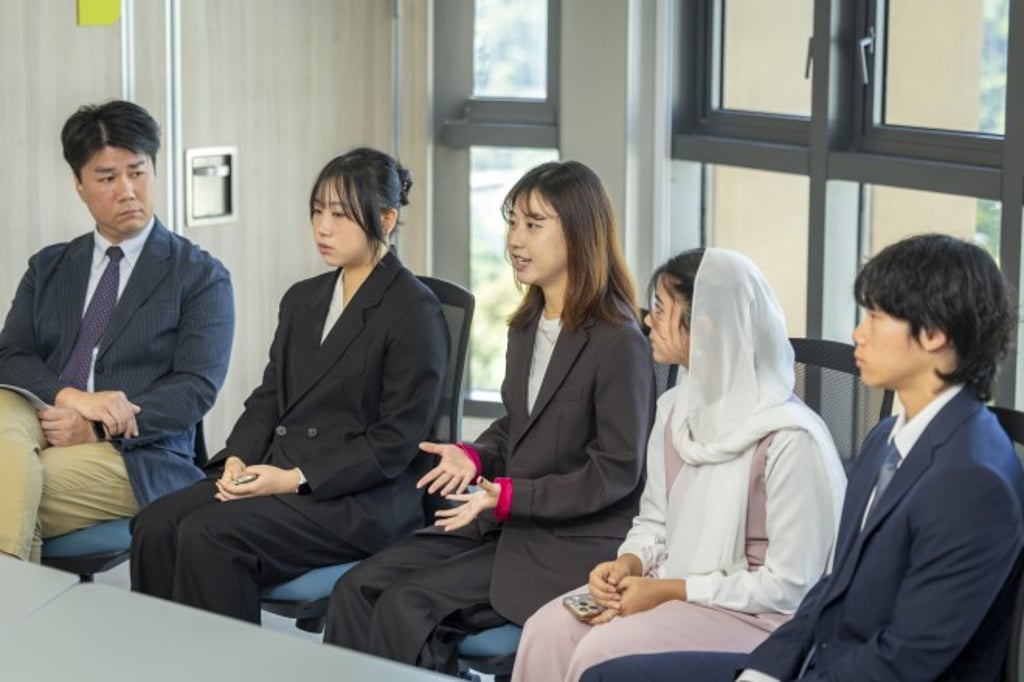
For Eman Qaiser Sheikh, an Artificial Intelligence and Educational Technology student in the ELITE-AI Pathway, preparation for the digital economy means understanding technology’s limitations as well as its possibilities.
“I know how to code, but the AI literacy course taught me how to handle AI more ethically,” she said. “If you are studying education, you cannot miss the ethical part, because you will be teaching the younger generation.”
Her research alongside her supervisor Dr Gary Cheng examines whether AI-assisted outputs genuinely reflect student learning.
“Good output does not always correlate with good learning,” she said.
Her experience illustrates EdUHK’s distinctive contribution: developing technological capability that is grounded in pedagogy, ethics and evidence about how students learn. She was recently named one of the Top 10 Outstanding International Students 2026 by the Young Expats Association, in recognition of both her outstanding academic achievements and technological innovation.
Lessons beyond performance
For PATH Academy student Lei Yutian, sport science and coaching provide a foundation for practical experience in performance analysis.
“My degree gives me a strong base in anatomy, coaching studies and exercise physiology,” Lei said. “But PATH Academy gives me the hands-on experience I need.”
A workshop with international athletes offered lessons in resilience. Gymnast Li Xiaopeng’s message about learning from setbacks proved particularly influential.
“Real resilience is not simply not giving up,” Lei said. “It is about your relationship with failure. Can you treat failure as a friend and learn from it?”
An opportunity arranged by his supervisor, Professor Kuo Chia-hua, to participate in an RTHK programme further demonstrated how specialist expertise can benefit communities through accessible health advice.
“It is important to share health knowledge in a simple and practical way,” he said.
Connecting learning with purpose
What is clear amongst the students is that EdUHK’s dual-mentorship model connects academic inquiry with professional practice. Academic supervisors guide intellectual development, while external mentors, who are prominent community leaders, help students understand how knowledge creates meaningful impact.
“Future readiness is not only about what students know,” Dr Li said. “It is about whether they can use what they know in unfamiliar situations, with different people, and for meaningful purposes.”
KioskNews shows a cleaned-up reading view extracted from the publisher’s page — the original always lives on their site, not ours.