Relief for Japan’s Takaichi as scandal-hit education chief survives censure motion

Japan’s Senate on Friday narrowly rejected a censure motion against Education Minister Yoshihiro Seki over his controversial fundraising events attended by bureaucrats, easing pressure on him to resign and potentially providing a temporary reprieve for Prime Minister Sanae Takaichi’s government.
The motion, which is nonbinding, was defeated by 124 votes to 120 in a plenary session of the 248-seat upper house after being jointly submitted by opposition parties a day earlier, amid uncertainty over deliberations on a key consumption tax-cut bill due to the Seki scandal.
As opposition forces that backed the motion hold nearly as many upper house seats as the ruling bloc, which lacks a majority in the chamber, several independents and a small right-wing party are believed to have been decisive in determining the outcome.
The result was a setback for major opposition parties that had intensified their calls for the resignation of Seki, a lawmaker of Takaichi’s ruling Liberal Democratic Party, but they are expected to continue pursuing Seki’s accountability given the narrow vote.
The Constitutional Democratic Party of Japan and others had said they would boycott parliamentary deliberations if the motion was passed and Seki did not step down.
The vote came as Takaichi’s government is rushing to push through a bill to cut the consumption tax on food and drinks for two years starting April, which has already passed the House of Representatives, to help households cope with inflation.
Ahead of voting on the motion, Seki reiterated his intention to stay on. “I will straighten up and give my all to fulfilling my duties,” he told a press conference, while declining to comment on what he would do if the upper house passed the motion.
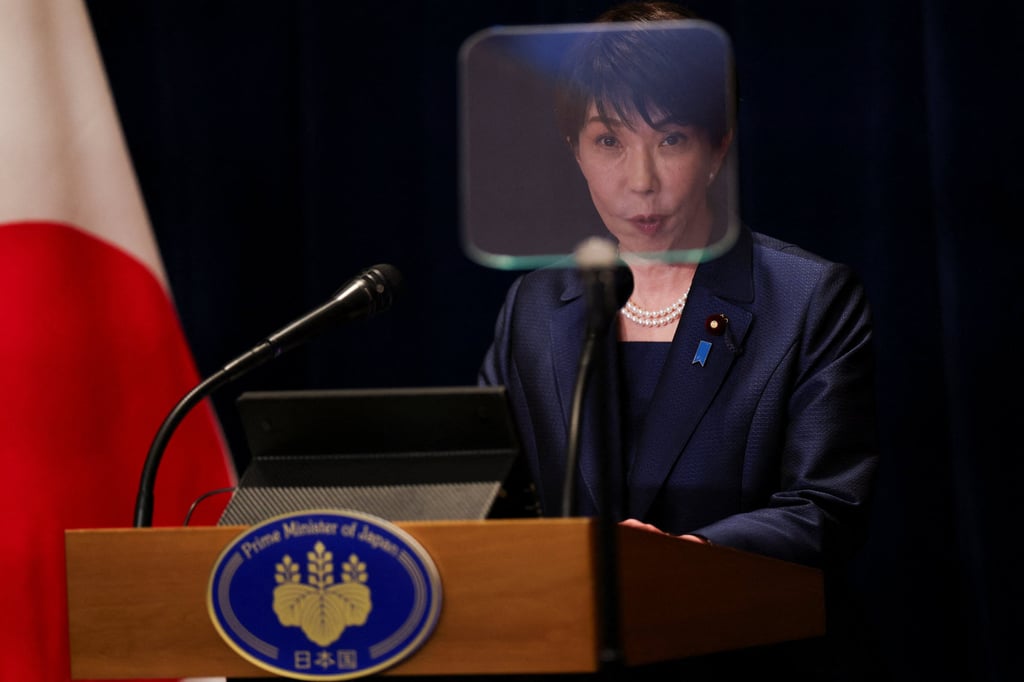
Named as education minister in a cabinet reshuffle in September, Seki has faced criticism for inviting senior government officials to give presentations to businesspeople at five fundraising parties in 2024 and collecting high admission fees.
In the censure motion submitted on Thursday, seven parties and a political group said that involving officials in fundraising “undermines public trust in the neutrality of public administration” and “risks compromising the fairness of public administration”.
They also accused Seki of making statements “contrary to the facts” in parliament, as he had initially acknowledged in the Diet that he held only two such fundraising events but later revealed three other similar cases.
Takaichi has said Seki has “fulfilled his responsibility to explain” the matter, while senior government officials see no need for him to resign, saying there was nothing illegal in Seki’s conduct.
In addition to the eight opposition forces, the tech-advocacy party Team Mirai has shown support for the motion, bringing the expected vote tally to at least 118. The LDP led by Takaichi and its junior ally, the Japan Innovation Party, hold a combined 119 seats.
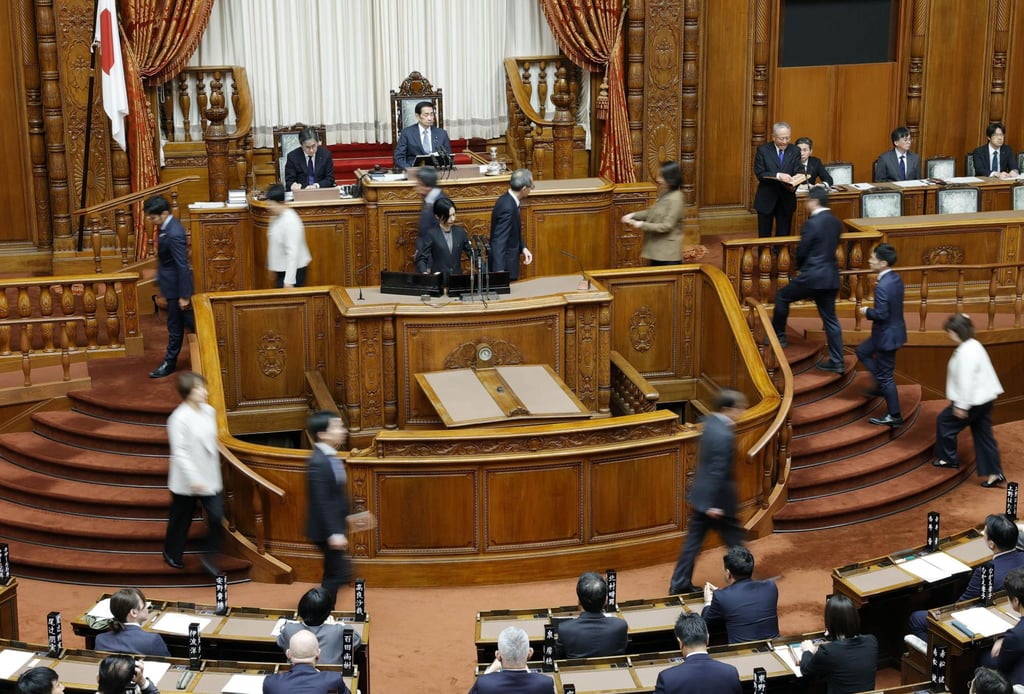
The Senate currently has two vacant seats. Excluding the Senate president, who did not vote, the censure motion needed 123 votes to pass. How two members of the Conservative Party of Japan and six independents voted was not immediately known.
The ruling camp, which holds a two-thirds majority in the more powerful, 465-member lower chamber, also aims to secure the enactment of legislation to reduce the number of seats there by 31 during the ongoing 69-day extraordinary Diet session through December 12.
The seat-cut bill was jointly submitted by the two ruling parties and the major opposition Democratic Party for the People, one of the cosponsors of the censure motion.
The last censure motion approved by the upper house was in June 2013 against then prime minister Shinzo Abe under a divided parliament in which the ruling bloc lacked a majority in the Senate, though it did not lead to his resignation.
KioskNews shows a cleaned-up reading view extracted from the publisher’s page — the original always lives on their site, not ours.