‘Fake democracy’ or a plus for Beijing? Chinese internet users on the US midterms
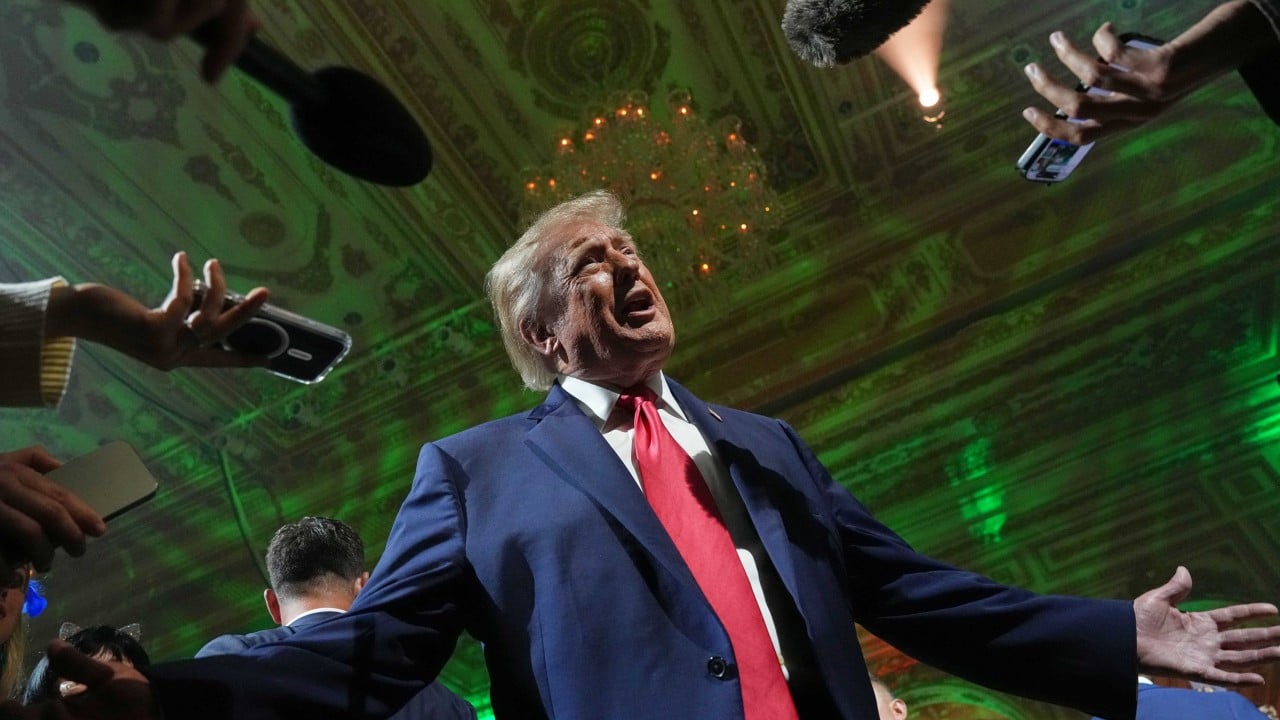
Chinese social media users have voiced mixed views on the US midterm elections, criticising American politics while debating the implications of President Donald Trump’s political future for China.
Held on Tuesday, the midterm elections saw Democrats win control of both chambers of the US Congress, taking the House of Representatives and the Senate from the Republicans.
Democrats reached the 218-seat threshold needed for a House majority and also secured enough victories to regain control of the Senate, according to Associated Press.
All 435 seats in the House of Representatives and 35 Senate seats were being contested, and the final results are expected to become clear in the coming days.
The results mean Trump will face an opposition Congress during the final two years of his second term, potentially constraining his ability to advance his legislative agenda and increasing scrutiny of his administration.
But some Chinese internet users questioned whether the midterm elections could bring about change, with some describing the American system as “fake democracy”.
“Everyone believes that a particular person or political party is the problem, but no one believes the fundamental cause is the flaws in the political system itself,” one user wrote on a leading Chinese social media platform.
“Capitalists have made a complete mess of America, leaving ordinary people at the bottom struggling,” another commented.
The US is generally classified as a capitalist market economy, while China describes its own economic system as a socialist market economy.
Chinese state media have repeatedly criticised what they call the inequalities of wealth associated with capitalism.
In a 2021 commentary, the official Communist Party newspaper People’s Daily said US policymakers had taken no substantive action to promote common prosperity, adding that democratic governance had become a “mirage”.
The term zhan sha xian, or “kill line”, gained traction on Chinese social media at the end of 2025. Borrowed from video games, it has been used to describe the financial vulnerability of ordinary Americans facing unexpected expenses or losing their livelihoods.
06:54
What is a ‘kill line’ and why are Chinese netizens using it to describe living in the US?
In a January commentary, People’s Daily criticised what it described as a capitalist system in which the government and market served capital rather than people, contrasting it with China’s emphasis on safeguarding people’s livelihoods.
SCMP Plus is a new premium news platform that gives you an
all-inclusive edge to stay ahead on China news.
To access our exclusive content you’ll need to subscribe.
Already a subscriber?
LOG IN
Some users also criticised Trump’s military actions against Iran, while mocking what they called his unpredictability on foreign policy.
03:00
The global impact of the coming US midterm elections under Donald Trump
Several referred to the United States as a “big beautiful country”, a sarcastic nickname given by Chinese internet users.
The phrase gained prominence in 2021 after state broadcaster CCTV used the line “the beautiful country loves to make beautiful promises” in a commentary on the US government’s withdrawal from Afghanistan, which ended America’s nearly 20-year military presence there and led to the Taliban’s return to power.
It plays on the Chinese name for the US, Meiguo, which translates as “beautiful country”.
“If the world did not have the United States, a country that wages wars, the world would be peaceful,” another social media user wrote.
Views on Trump’s impact on China, however, were not uniformly negative, with some users hoping he would retain his political influence and saying that this could serve Beijing’s interests.
Some invoked the nickname Chuan Jianguo – “nation-builder Trump” – a long-running Chinese internet joke suggesting that Trump’s actions have inadvertently benefited China.
“When Trump was first elected president, many of our pro-American people thought he would be bad for China-US relations,” a Chinese social media user wrote. “In fact, Trump was still better for us than the old [former US president Joe] Biden.”
Some Chinese social media users saw Biden, whose presidency came between Trump’s two terms, as pursuing a more alliance-based approach to countering China.
In contrast, Trump has placed greater emphasis on trade negotiations and direct engagement with Chinese President Xi Jinping.
Despite continued competition over trade, technology and security, Beijing and Washington have sought to keep bilateral ties stable, with Trump visiting China in May and Xi travelling to the US in September.
KioskNews shows a cleaned-up reading view extracted from the publisher’s page — the original always lives on their site, not ours.