RM510b Budget: Who really wins? — Tengku Zafrul Abdul Aziz
OCTOBER 11 — Every national budget is a tightrope walk above a storm. I know this not from textbooks, but from long nights at the Ministry of Finance when I was the Minister, staring at numbers that never quite add up to everything the nation needs.
Every ringgit is debated and fought over. The relief a struggling family desperately needs now must be weighed, painfully, against the discipline that protects their children’s future.
Budget Madani 2027 walks that tightrope with remarkable steadiness. The total budget leaps to RM510 billion, up from RM470 billion, yet the fiscal deficit is targeted at 3.3 per cent, down from 5.5 per cent in 2022. That is not luck. It is the fruit of courage, of hard choices made when it would have been far easier to spend now and let future generations pay.
But numbers alone do not move hearts. The real worth of an investment is not the dazzling figure announced at a press conference. It is the salary a mother brings home at the end of the month. It is relieving the dilemma of choosing between paying the rent and buying food for the family.
Reform builds confidence, confidence attracts investment, and investment must, at long last, end in better jobs and higher wages for the rakyat.
Raising the floor beneath every worker
For far too long, Malaysian wages have not kept pace with prices. Workers’ pay makes up only 33.9 per cent of GDP, a situation now exacerbated by the West Asia crisis.
Hence, I wholeheartedly welcome the minimum wage rise from RM1,700 to RM2,000 a month from June 2027. More than four million workers will feel the difference, while smaller firms are given room to adjust. I have repeatedly advocated for a higher minimum wage, while calling out highly profitable companies to share their earnings more equitably with their workers.
Even more historic, a minimum wage of RM2,500 will be introduced for graduates and semi-skilled workers for the first time. Think of the young graduate whose parents sacrificed everything, only to be offered a wage not matching their effort. That era is ending. GLICs and GLCs have led this noble effort, raising their living-wage benchmark to RM3,400 for 230,000 workers. Now the private sector must also rise to contribute to nation-building.
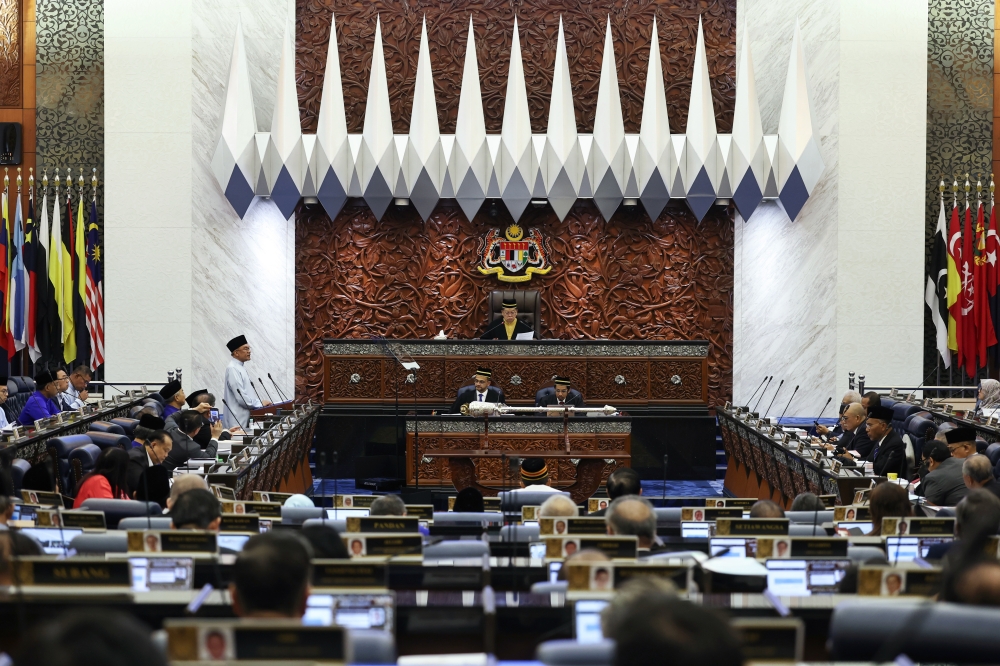
Prime Minister Datuk Seri Anwar Ibrahim, who is also Finance Minister, tables Budget 2027 in the Dewan Rakyat in Kuala Lumpur on October 9, 2026. — Bernama pic
A lifeline against the rising tide of prices
For many Malaysians, what keeps them awake at night is almost always the cost of living. This Budget answers that fear head-on. STR and SARA cash aid surges to RM16 billion, double the RM8 billion of 2022. Up to nine million STR recipients will receive up to RM1,800 a year in SARA, and some 13 million other adults, including the long-overlooked M40, will receive RM100 twice in 2027: before Hari Raya and on the eve of Merdeka.
Targeted subsidies have haunted policymakers for decades. Everyone knew they were necessary; few dared to act. Now billions that once leaked away to those who never needed them are flowing back to the people who do.
Justice for the squeezed middle
This Budget also hears the middle class, which has commendably carried this country on its shoulders. For the first time since 2010, the individual tax relief rises from RM9,000 to RM12,000, and income tax on chargeable income of RM70,000–RM150,000 is cut by a full percentage point.
Reliefs now stretch to postnatal care, and all care costs (not just medical bills) for parents and grandparents, and children’s tuition. Around five million taxpayers could gain up to RM1,600 a year: school shoes, a few months of groceries, a welcome breathing room, at last.
A safety net and affordable housing for those who had none
Some 600,000 Malaysians brave traffic, rain and exhaustion to deliver our meals and carry us home, often with no social safety net. This Budget finally institutionalises support for them. A Gig Consultative Council will set minimum income and social protection standards in early 2027. Until then, the government and Grab will co-fund a RM160 million package that could lift median e-hailing earnings by up to RM227 a month. Perkeso will match 35 per cent of gig workers’ contributions, rising to 50 per cent if platforms also contribute, and every citizen will be automatically enrolled in EPF at 18.
For families drowning in debt, Alliance Bank, Maybank and CIMB now offer a basic credit card with interest capped at 14 per cent per annum. The bankruptcy threshold rises to RM150,000, and PTPTN repayments are deferred for over 400,000 borrowers earning up to RM2,500 a month, with a RM50 minimum for those earning up to RM3,000. These are not mere statistics. They are lifelines thrown to people who were quietly managing their respective cost-of-living issues.
A home is where a family’s dreams take root, yet for too many young Malaysians that dream has felt cruelly out of reach. Nearly RM1 billion goes to affordable housing nationwide.
As for first-time buyers, there is no stamp duty on homes up to RM500,000. SJKP will also guarantee up to RM20 billion in home financing, to support 80,000 first-time home buyers, especially the self-employed whom banks often deem non-creditworthy.
Healing and teaching the nation
The long saga of contract doctors is finally ending, with more than 9,000 offered permanent posts in 2027. Those who healed us through our darkest days deserve nothing less. Funding for school repairs doubles to RM2 billion, and every pupil’s school-start aid rises to RM200.
The author, Datuk Seri Tengku Zafrul Abdul Aziz, argues that Budget Madani 2027 strikes a balance between fiscal discipline and improving Malaysians’ livelihoods through higher wages, targeted aid, tax relief, affordable housing and stronger social protection. — Picture by Firdaus Latif
A nation pulling together
What makes this Budget truly extraordinary is that the government is not carrying the load alone. GLICs will mobilise RM25 billion in domestic investment, joined by RM11 billion in public-private partnerships. Bakat Madani aims for 30,000 new jobs with the private sector at its side. Banks offer fairer credit and platforms share the cost of protecting their workers. All these clearly reflect a whole-of-nation effort.
The confidence this has built is undeniable. Approved investments reached RM218.5 billion in 1H2026, a fresh record for the fourth consecutive year, and Malaysia has soared to 15th in world competitiveness. But every project must be judged by the skilled jobs it creates, the wages it pays and the local firms it uplifts. That confidence is already reaching pay packets: the median manufacturing wage rose from RM3,200 in 2023 to RM3,422 in 2025.
A government with a heart
Taken together, these measures reveal something rare and precious: a government that does not merely count the ringgit flowing in, but cares deeply about the lives those investments must touch.
In a world growing more uncertain by the day, this is the leadership Malaysia needs. Confidence must find its way home, into the pay packets, the dinner tables and the dreams of ordinary Malaysians. That is the true measure of this Madani Budget, and it is a measure worth fighting for.
* Tengku Datuk Seri Zafrul Aziz is chairman of the Malaysian Investment Development Authority (Mida) and a former finance minister and investment, trade and industry minister.
** This is the personal opinion of the writer or publication and does not necessarily represent the views of Malay Mail.
KioskNews shows a cleaned-up reading view extracted from the publisher’s page — the original always lives on their site, not ours.