Labor and the Coalition need the Indian diaspora vote, but the immigration debate has many feeling bruised

Melbourne-based high school teacher Kusum Mirchandani has called Australia home for more than two decades.
So when the nationwide anti-immigration March for Australia rallies were first held last year – using promotional material that singled out Indian migrants – Mirchandani noticed a distinct shift.
“The migration rallies, they’re targeting the Indian community because now we are the largest migrant population here. I think that’s a bit unfair,” she says.
“It does make me feel hurt and upset … we’ve been here 21 years, and it’s only lately that these things are coming up.”
Since then, the immigration debate dominating the political agenda has only grown louder, with Labor, the Coalition and One Nation all unveiling their party’s plans to cut the country’s net overseas migration intake.
The ramped-up focus on immigration, alongside the rise of One Nation, has coincided with Australia’s Indian-born population last year overtaking British-born residents to become the country’s largest migrant group.
Ahead of the Victorian election next month, Redbridge polling shows state Labor has a marginal lead against the Liberal party among Indian Australian, which widens when voters must choose between the incumbent party and One Nation.
Mirchandani, who describes herself as a Labor supporter, says she is leaning towards voting for the party in next month’s state election, labelling education and healthcare as the most important issues.
While she is undecided about who to vote for in the 2028 federal election, she has ruled out One Nation because of the party’s hardline immigration policy, which targets family members of skilled migrants.
“It would make it harder for us [Indian Australians] because we have family back home, especially with ageing parents,” she says.
Satish Devarakonda, a 49-year-old technology consultant living in Melbourne’s east, shrugs off the immigration debate, describing it as a short-term kneejerk reaction. As he turns to discuss the prospects of Victoria’s future, he expresses pessimism.
“We have not recovered from the whole Covid slump. It’s been six years and counting and other economies around the globe have rebounded,” he says.
“Any government that comes in has a big, long laundry list.”
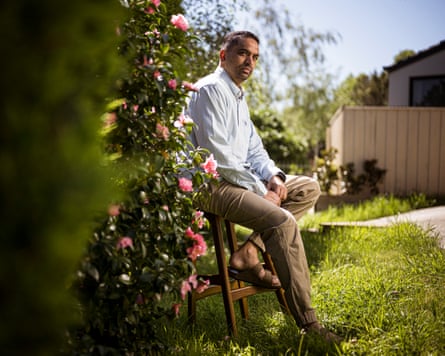
For Devarakonda, cost of living and the state of the Victorian economy are some of the dominant issues. Travelling back to India to visit his parents is a priority that has had to take a back seat in recent years.
This December, his family are planning to travel to India together for the first time in almost two years to attend a wedding. “Travel is not a luxury for a migrant. Travel is a necessity to go and see family, and that’s taken a bit of a beating,” he says.
Devarakonda, who has typically voted for the Liberal party, says he is yet to decide who he will vote for in the state election.
Kos Samaras, a former Labor strategist who is now a director of polling group Redbridge, says multiple surveys conducted this year show the party has a marginal lead against the Liberals ranging from about 53 to 56% on a two-party preferred basis among Victorians of Indian ancestry.
“Indian Australians provide a base which will enable Labor to protect their safest seats,” he says.
“If you look at the electorates where Labor is doing better, it’s doing better in electorates where there [are] significant Indian voters.”
Labor’s lead widens to 70-30 among Indian Australian voters on a two-party preferred basis against One Nation, Samaras says.
“I suspect it’s largely driven by the national debate at the moment,” he says.
Samaras points to federal Coalition senator Jacinta Nampijinpa Price’s controversial comments – claiming that federal Labor was promoting migration by specific ethnic groups, including Indians, to grow its electoral support – as sending a “very strong signal” to the Indian Australian community that they are “not welcome here.”
“When we speak to them, they tell us, ‘Yep, I’m socially conservative. I’m aspirational. I should be thinking of voting Liberal, but I’m not doing that because they just don’t like people like me’,” Samaras says.
In Victoria, the state Liberal party’s relationship with the Indian Australian community has had its own fractures. Earlier this year, Dinesh Gourisetty was preselected to replace Liberal MP Moira Deeming on the party’s upper house ticket for the Western Metropolitan region, but was later dumped after it emerged he wrote a court character reference for a friend who was later convicted of grooming a 15-year-old girl. Gourisetty said he had been “led to believe” Patel was “contesting the charges and maintaining his innocence” at the time he signed the reference letter, which he added was “drafted by a lawyer and reflected only my personal experience of him as a party member and volunteer”.
But Samaras said the Victorian Coalition’s recent announcement to expand the state’s select-entry high schools in the outer suburbs was “absolutely targeted to the Indian constituency”, which he describes as an over-subscriber of private healthcare who, given the opportunity, would send their children to these schools.
“That’s a sign that they understand the challenge and understand the constituency culturally. I would argue [they] caught the Labor side flat-footed,” he says.
Ahead of the 2028 federal, Samaras says the federal Liberal party could “learn a thing or two” from their state counterparts.
“The template is clearly pivoting into the aspiration of these constituencies. The Victorian Liberals have done this through education. There are a number of levers you can pull there,” he says.
Samaras says support for One Nation among Indian Australians is a minority and “not significant”.
Pawan Luthra, chief executive of the India Link newspaper, says he has observed a small cohort of Indian Australians in the more recent wave of migration – those who have arrived within the past decade, who believe the country’s migration intake needs to be reviewed. He says they often link this to their own struggle to find affordable housing.
“Connecting housing problems to migration numbers seems to be working for the parties who are making that argument,” he says.
“They’re obviously uncomfortable with the more radical policies which One Nation has.”
Since the 2022 federal election, the major parties have heavily courted the Indian Australian vote during the campaign trail. The former Victorian premier Jacinta Allan travelled to India as her first international trip as state leader in 2024.
India’s prime minister, Narendra Modi, visited Melbourne – home to more Indian Australians than any other capital city – in July after more than a decade, with about 25,000 diaspora members flocking to the stadium rally. Anthony Albanese and the then premier Allan joined Modi – who entered the stadium to feverish chants – to deliver speeches.
In recent weeks, the premier, Ben Carroll and the opposition leader, Jess Wilson spoke at the state’s annual Diwali celebration, delivering their pitches directly to voters.
Luthra says all political parties have had a tendency to attend Indian Australian community functions and deliver platitudes but fail to promote messages about the value Indian migrants have added to Australia beyond these rooms.
“They say how wonderful you are. We will back you. We think you’re great migrants. So all the right noises are made, but we know that,” he says.
“The feedback from the community is that the politicians need to go out and say it a little bit more loudly and clearly, the value of migration and why it’s important.”
KioskNews shows a cleaned-up reading view extracted from the publisher’s page — the original always lives on their site, not ours.