‘No one in your corner’: Sarah fears for what Sydney’s alleged sexual assault victims are about to endure
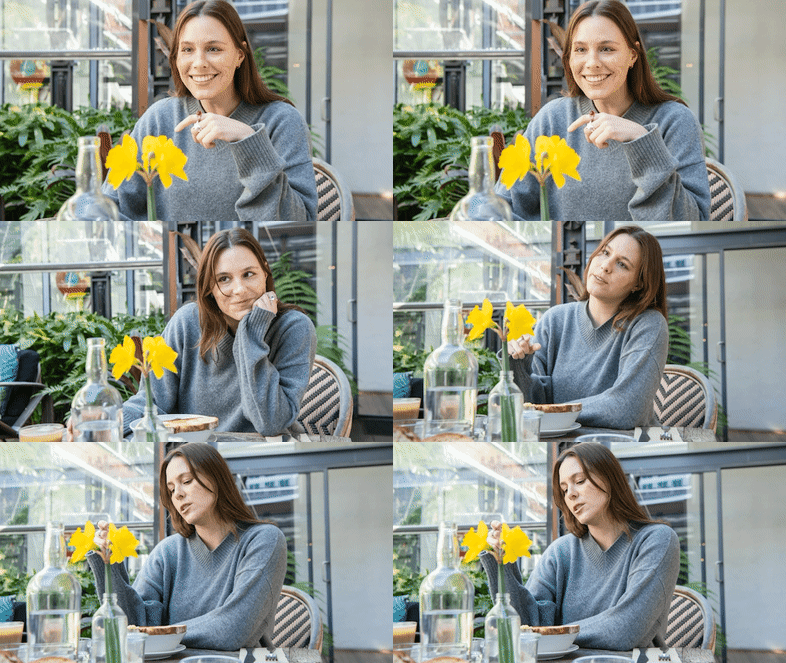
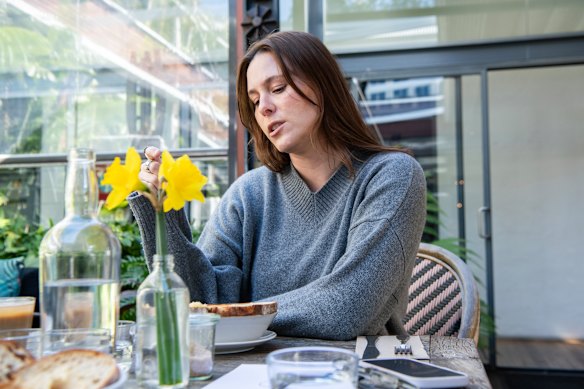
When I meet founder and advocate Sarah Rosenberg at the Bonython Cafe in Paddington for lunch, it is an unseasonably warm winter’s day. The cafe has a retractable roof. When the sun shines, it can be rolled back, so patrons can bask in the warmth while they eat, work or talk. On this day it is open, and leaves half our table in sunlight and half in shade. It is apt for the conversation we are about to have: one that spans the light and the dark.
Very early in our lunch it becomes clear that Rosenberg has grown accustomed to lightening dark subjects. As a young woman who was almost crushed by the criminal justice system after reporting a rape to police, but who is determined to generate support for change, she has become an expert in putting people at ease with humour and a natural vivacity.
She says striking that balance – the light, the shade – is a defining feature of her adult life. “I think the people around me would tell you I’m the happiest person they know. It’s like everything is a joke. Like there’s humour all day, every day. I’m making friends wherever I go, I’m patting all the animals, feeling the sun on my face. I’m so grateful for it. It’s also super contradictory.”
Our lunch falls in the same week three Scots College students were charged with aggravated sexual assault after allegedly raping a 14-year-old girl in an eastern suburbs alley, and five Sydney Swans players were stood down from the club for the remainder of their playing season for breaching club standards. Allegations of sexual assault are being investigated by Victoria Police. No arrests have been made nor charges laid.
The day after we meet, news breaks of another alleged gang rape of a 17-year-old girl by three 17-year-old boys, two of whom are students from St Gregory’s College. Police will allege they abused the girl in a multi-hour assault at a home near Campbelltown after a football match.
As Rosenberg watched the headlines she was most concerned about what the coverage obscured. Calls to action abounded: for institutional change, for prevention, to address misogynistic rape culture. But advice on how to guide vulnerable complainants through the confronting and traumatising criminal legal process – the help Rosenberg so desperately needed – was glaringly absent.
“I’ve just seen nothing about the multiple hers in this instance. It’s all just been like: ‘we have to stop the next generation of misogynists’. What about the harm they’ve already [allegedly] created right now? The [complainants] … that are already here, that’s just missing … And we can hold both.”
The girls and, potentially, the women in those cases are “about to go through the worst process ever”, she says. “Prevention and justice are not competing priorities. We have to care about what happens once violence has already [allegedly] occurred, not just about preventing it from happening in the first place.”

The Bonython is a quiet spot with a hanging garden and an entrance you’d easily miss if you weren’t paying attention. Aside from the kind waiter, who introduces himself as Jack, and a couple of workers tapping away at their laptops, we’re alone. I am grateful for the quiet environment. Rosenberg is a fast talker, so it allows me to pick up on every word.
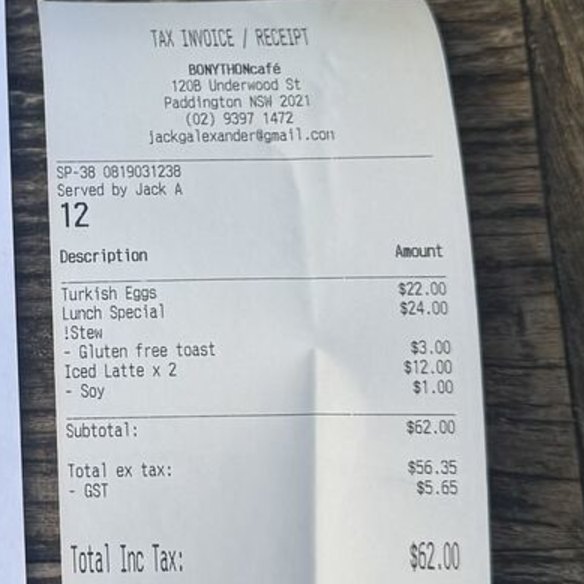
Bonython has a seasonal menu: Rosenberg orders a chicken chorizo stew, while I opt for Turkish eggs with sourdough toast. The midday sun is still warm, so we each order an iced latte.
Not to be deprived of small joys, she asks the barista: “Is there a way you can, like, add chocolate powder to make my iced latte kind of like a cappuccino?”
Rosenberg’s experience of being used “like a prop” in her journey through the justice system was the genesis of With You We Can – the not-for-profit she founded, which provides information about a complainant’s options after allegations of sexual violence are made.
At age 23 she was scrambling to finalise a formal police complaint of rape as Sydney’s COVID lockdown was looming. “It took three police stations and five detectives to finalise a statement, which took 24 hours over three months.” While others were complaining about the impact lockdown would have on their social lives, her issue was less prosaic. “I was like, ‘my [alleged] rapist is on the loose because NSW Police doesn’t have Zoom’.”
In the two years she waited in a queue for the Director of Public Prosecutions to verify the six charges laid against the man she alleged raped, strangled and smothered her, she cycled through three prosecutors, three witness assistance officers and three solicitors.

Police prosecutors, who are tasked with keeping a complainant informed about the progression of their case, would contact Rosenberg via unknown numbers. She had no idea when these calls might come, and said a different prosecutor called “almost every time”.
Prosecutors represent the state but the interests of the state and the person alleging the sexual assault are not necessarily the same thing. From the first time they contact police with a complaint, until the end of the defendant’s trial, there is no one in the legal process to consistently put their interests first, she says. Rosenberg discovered the hard way that this meant she had no way to request updates on her case.
“There’s no one in your corner from start to finish, you are not legally represented. There’s no continuity of care … While you’re in the queue, good luck to you trying to get updates about a case that supposedly revolves around you.
“You’re not a participant. You’re not a party. You literally have no rights, no say, no voice. I think people think that phrase has come out of literature or theory or something. It’s like no – literally, you have no voice. Nothing. Legally, structurally, you are peripheral. You are a prop. You’re just there, even though the case wouldn’t exist without you.”
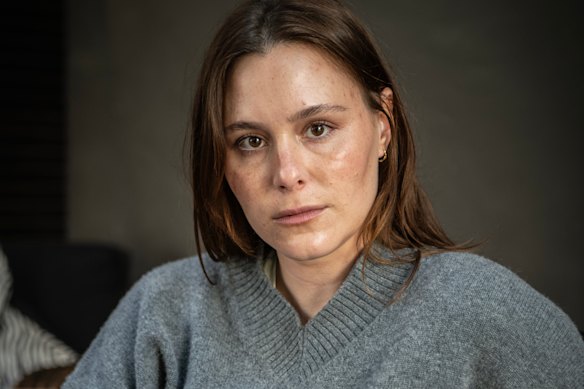
While awaiting her trial date, Rosenberg was living with her parents. Because they were witnesses to the trial, she was legally barred from speaking to them about anything related to her case. It compounded her profound sense of isolation.
When I ask what that was like for her – a two-year wait with little to no communication about the progression of her case, and virtually no support system – she says: “Every day, wake up and think about killing myself.” She laughs. Then she is quiet for a few seconds before she says, “It was the worst time of my life.”
As she stared down the abyss of those long days and nights alone, she began creating With You We Can.
When her case finally went to trial in 2022, Rosenberg felt the imbalance of the legal process even more acutely. As she sat inside a closed room in court, alone, the man she had accused had employed multiple defence barristers, who were crafting a narrative that painted her as unstable, hysterical, unreliable and a liar.
“The [waiting room] door was shut behind me, I’m alone. And, meanwhile, the defence barristers and the prosecutor are all joking together.”
Lawyers accessed everything that might have helped them mount a case against her: her school counselling documents, her medical history and everything on her personal mobile phone.
“People don’t realise it’s not just text messages. It’s search history, encrypted apps, deleted apps, like, everything on your phone. Voice memos, every picture … It all just distracts the jury … in line with rape myths.” In the end he was declared not guilty.
The ultimate goal of With You We Can is to change the legal system to introduce independent legal representation for complainants in sexual violence cases, but in the meantime it aims to give them the knowledge they need to have some agency as they navigate what is likely to be one of the most daunting and gruelling experiences of their lives.
Just last month the Minns government announced it would examine stronger protections for sexual assault complainants, including commissioning research on how to better protect counselling notes from being subpoenaed by defendants.
Underneath her very chic outfit – mid-wash denim jeans and a grey Venroy sweater – Rosenberg wears an abdominal binder and compression stockings to manage the pain caused by an autoimmune disease known as myalgic encephalomyelitis (ME).
She also suffers from total dysautonomia, a condition that causes broad malfunctioning of the autonomic nervous system and affects functions such as her heart rate, blood pressure, digestion and temperature regulation.
She is certain her work is making her sicker. “I just spent a week in Canberra, meeting with politicians, and as soon as I got home I just collapsed in a heap. I was so sick.”
But she dismisses the idea that advocacy is a pathway to healing. “The problem is that the expertise of lived experience is just unmatched.”
“But I don’t want to still be doing this in 10 years. It will kill me if I stay. It’s not healthy for anyone. Healing is not a shared group project and I don’t think my healing will ever actually begin until I stop doing this.”
Next month Rosenberg will head to Britain to undertake her master’s in public policy at Oxford, and thinks this could help her forge a new career in the human rights space. But she also imagines she might be a great doctor, and has considered medical school.
What legacy does she want to leave behind? The question takes her a long time to answer. “When I started doing this [work], everyone was just desperate to tell me, ‘don’t let this define you’. What do you mean? It is the single most defining thing that has ever happened to me. And at the same time it’s not all I am.”
If you or anyone you know needs support, call Lifeline on 13 11 14, or Beyond Blue on 1300 22 4636.
National Sexual Assault, Domestic Family Violence Counselling Service: 1800RESPECT (1800 737 732).
For more conversations over lunch
- Margot Saville laughs with Kathy Lette: Kathy Lette on ageing fabulously … and giving cheek to the King
- Louise Rugendyke lunches with actor Sam Reid aka the vampire Lestat: Sam nearly chucked it all in to become a farmer. Now fans are screaming for his shows
- Debbie Millgate on knowing when to stop with Caitlin Fitzsimmons: ‘You’re terrible, Muriel’ made Gabby a minor celebrity. Her new career is making her happy
- Melanie Kembrey sits down with Richard Flanagan: Richard Flanagan on why he thought he might never write again
Start the day with a summary of the day’s most important and interesting stories, analysis and insights. Sign up for our Morning Edition newsletter.
KioskNews shows a cleaned-up reading view extracted from the publisher’s page — the original always lives on their site, not ours.