Bose Lifestyle Ultra Soundbar review: A great home theater option all by itself
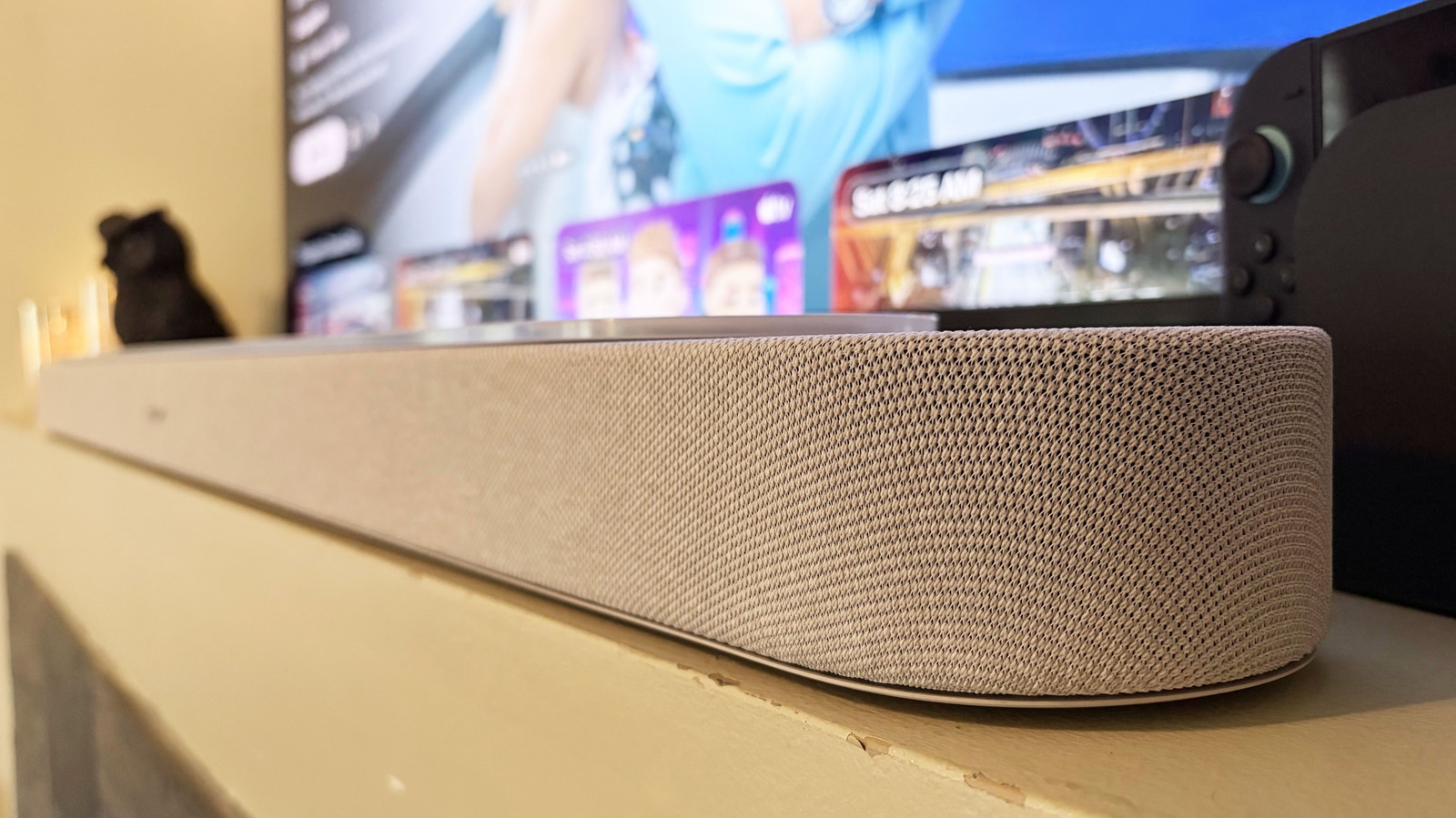
You won’t feel the need to immediately add a subwoofer to this one.
Billy Steele for Engadget
RATING : 8.6 / 10
- Refined, modern design
- Great bass performance without a subwoofer
- Unique top-mounted controls
- A single HDMI port might not be enough for everyone
- Expansion gets pricey
We may receive a commission on purchases made from links.
When Bose proclaimed that the Lifestyle Ultra Soundbar was its "loudest, deepest and most immersive" model yet, I still assumed it would need a subwoofer." Yet when I first connected the company's latest soundbar to my TV, I quickly realized it didn't need the extra bass boost. The combination of CleanBass tech and QuietPort acoustics provide enough low-end tone that you aren't likely to crave an additional, pricey sub. Since the soundbar alone is already $1,099, that was a welcome surprise.
Design
I get it: There's not a ton of room for innovation when it comes to the design of soundbars. They all have to be elongated and rectangular to be able to contain a collection of drivers without blocking your TV. But there is room for improvement when it comes to the general look of soundbars, and that's where Bose stepped up its game on the Lifestyle Ultra.
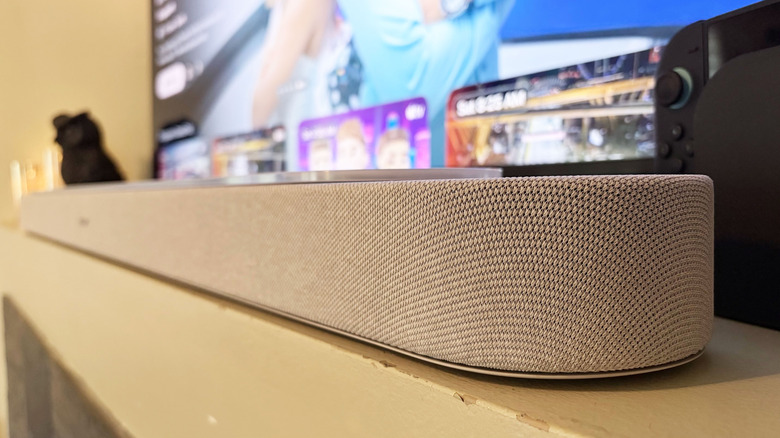
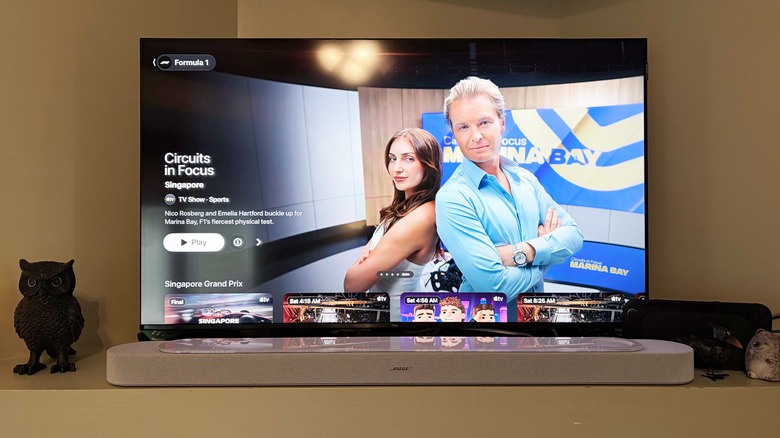
The speaker is short and wide, just like you'd expect, but the textured, knit-fabric grille elevates the overall aesthetic. This is more apparent on the white colorway than the black, and luckily the lighter color is exactly what was sent to me for review. Bose also opted for a glass top where the competition typically uses a plastic panel or just buttons. The glass portion doesn't extend all the way to the edges though, so there's room for the up-firing drivers to do their thing.
Another excellent design choice was the volume controls. Bose installed a touch-enabled, circular panel that allows you to spin your finger clockwise and counterclockwise to raise and lower the volume. You can also just tap the "+" or "-" if you'd rather. There's an area in the middle of the circle that you can tap to play, pause or skip tracks, as well as touch-based controls for Bluetooth, disabling the soundbar's microphone and summoning Alexa. All of that is positioned on the right side of the glass panel.
Inside, Bose arranged a collection of nine drivers for the Lifestyle Ultra Soundbar's acoustic architecture. There are six full-range drivers, two of which are up-firing and the other four are front facing. Additionally, a center-mounted tweeter assists with dialogue clarity, while two so-called PhaseGuide drivers spread sound horizontally. To calibrate all of that for your living room, Bose's CustomTune feature uses the microphone in your Android or iOS device to analyze the space (speaker layout, surfaces and seating) and optimize the soundbar's output.
Like most soundbars these days, the Lifestyle Ultra only has a single HDMI eARC input. This isn't a problem per se, but if you need HDMI 2.0 passthrough for things like game consoles, just note that it's not available here.
In-use: Movies and music on the Lifestyle Ultra Soundbar
Billy Steele for Engadget
The Lifestyle Ultra Soundbar is very much a plug-and-play device. Once you connect it to power and your TV, it's ready to go. However, you'll want to download the Bose app and run the CustomTune audio calibration ASAP to tailor the soundbar's output to the acoustics of your living room or home theater space. Of course, if you add either the Lifestyle Ultra Subwoofer or Lifestyle Ultra Speakers to the soundbar, you'll need to repeat the CustomTune process.
Once all of that is complete, the Lifestyle Ultra Soundbar provides a solid boost to your TV audio. The up-firing and PhaseGuide drivers offer a pleasant level of immersion and dimensional audio, which is apparent on shows like Drive to Survive and Masters of the Air. The bass output is the most impressive thing about this soundbar, though. It's enough that users in small to medium spaces likely won't immediately feel the need to add a subwoofer. Even after several weeks of testing, I'm still baffled by the low-end performance when a sound effect demands that portion of the frequency range.
This bass is abundantly apparent for music, too. Sylvan Esso's "Flood Season" has ample lows for the bass guitar riffs and kick drum, while more bass-heavy tracks, like Russian Circles' "Empath," maintain the tonal depth without getting muddy. I also appreciate how the center tweeter allows vocals to consistently float on top of the mix. This makes albums like Hayley Williams' Ego Death At A Bachelorette Party particularly enjoyable.
As I already mentioned, Bose allows you to expand your home theater system with the Lifestyle Ultra Subwoofer and Lifestyle Ultra Speakers. Unless you have a larger space, or just crave the extra immersion that rear speakers can provide when watching movies or TV shows, I don't think either are absolutely necessary here.
The speakers are $349 each and the sub comes in at $899, but if you opt for the Home Theater Set or Surround Sound Set (Lifestyle Ultra bundles), you can save a few hundred dollars. (Oddly, Bose doesn't offer savings on the Extra Bass Set, which is the soundbar and subwoofer).
I tested the add-ons one at a time. First, I added the Lifestyle Ultra Subwoofer to the soundbar — perhaps the most likely additional purchase for most people. This achieves the obvious result of adding more bass, which could be preferential if you plan for the Lifestyle Ultra gear to pull double duty as your main music setup. But even in my living room, which is open to the main dining area and kitchen, the soundbar alone was still adequate for music.
I then added two Lifestyle Ultra Speakers as rear units, which I quickly discovered would be my preferred way to bolster the soundbar's performance. Since the Lifestyle Ultra Soundbar holds its own in the bass department, its only true deficiency is directional audio and overall immersion. Add those two speakers to the rear and that weakness is fixed, and disabling the subwoofer doesn't result in much sacrifice to overall output. I only really noticed a big difference in certain scenes with really booming effects, like certain parts of the first episode of Masters of the Air (no spoilers from me).
AirPlay, Google Cast and Spotify Connect are all available on the Lifestyle Ultra Soundbar for quick and easy music streaming. You can also opt for Bluetooth, if you prefer, but I find the three methods I mentioned are more convenient for getting audio from a phone or laptop to a soundbar.
The competition

Billy Steele for Engadget
The Lifestyle Ultra Soundbar does well enough on its own that Bose's primary competition is other companies that claim they've built all-in-one TV speakers that don't need a separate subwoofer. My top pick in that category is Samsung's QS90H, which costs $99 less at full price. This 7.1.2-channel soundbar not only provides adequate bass without a sub, but it has Samsung's Convertible Fit tech that allows you to place it flat or mounted upright. Sensors in the soundbar then reconfigure the output based on how it's sitting. Samsung included lots of other features, but some of them, like Q-Symphony, require a recent Samsung TV to use.
Another excellent option for a true all-in-one soundbar is the Sonos Arc Ultra. The company's flagship model is equipped with Sound Motion technology that handles the bass in a 9.1.4-channel setup. That last number indicates two additional height channels compared to the Lifestyle Ultra Soundbar and the QS90H. The Arc Ultra not only has more channels overall, but it also contains more drivers than either the Bose or Samsung options, with 14 of those total. At full price, the Arc Ultra costs the same as the Lifestyle Ultra, but Sonos currently has it on sale for $899.
Editor's note: Bose is offering a $200 discount on the Lifestyle Ultra Soundbar through October 11.
Wrap-up
Perhaps Bose's hesitance to label the Lifestyle Ultra Soundbar as an all-in-one unit comes down to sales. I'm sure the company would prefer for you to buy the pricey subwoofer for a speaker combo that's common to living rooms. I'd recommend spending extra money on a pair of Lifestyle Ultra Speakers instead, and configure your home theater for better immersion rather than overly booming bass.
No matter what you choose, it won't change the fact that the Lifestyle Ultra Soundbar can function as a standalone option to boost your TV sound. Plus, it's more than capable of double duty for music and the company offers all the standard features you'd expect in a flagship soundbar these days. Bose has built a worthy competitor to the likes of Samsung, Sonos and Sony here, so the only real question is which company's mix of hardware and features you prefer.
KioskNews shows a cleaned-up reading view extracted from the publisher’s page — the original always lives on their site, not ours.