The 10 Best Closing Lines in Book History, Ranked

Jeremy has more than 2800 published articles on Collider to his name, and has been writing for the site since February 2022. He's an omnivore when it comes to his movie-watching diet, so will gladly watch and write about almost anything, from old Godzilla films to gangster flicks to samurai movies to classic musicals to the French New Wave to the MCU... well, maybe not the Disney+ shows.
His favorite directors include Martin Scorsese, Sergio Leone, Akira Kurosawa, Quentin Tarantino, Werner Herzog, John Woo, Bob Fosse, Fritz Lang, Guillermo del Toro, and Yoji Yamada. He's also very proud of the fact that he's seen every single Nicolas Cage movie released before 2022, even though doing so often felt like a tremendous waste of time. He's plagued by the question of whether or not The Room is genuinely terrible or some kind of accidental masterpiece, and has been for more than 12 years (and a similar number of viewings).
When he's not writing lists - and the occasional feature article - for Collider, he also likes to upload film reviews to his Letterboxd profile (username: Jeremy Urquhart) and Instagram account.
He has achieved his 2025 goal of reading all 13,467 novels written by Stephen King, and plans to spend the next year or two getting through the author's 82,756 short stories and 105,433 novellas.
Sign in to your Collider account
You'd think it would be simple to rank off some of the best closing lines in book history, but it’s necessary to set up some rules regarding what counts as a closing line. And this is before getting to the difficulty involved with not being able to read everything, and also the struggle of likely spoiling some books by doing a ranking like this, but oh well.
The main thing to stress is what counts as a final line. It’s the last line of the last chapter or, if the book has an epilogue, it’s the last line of the epilogue (and that rule is why Blood Meridian isn't here, so don’t complain that the final pre-epilogue line isn't here, even if it is a great quote). Also, appendices or endnotes are being considered different from epilogues, and that’s why you will find The Lord of the Rings here, despite all that extra material that’s worth reading in the appendices the book has.
10 'House of Leaves' (2000)

The opening line of House of Leaves is also fantastic, for what it’s worth, kicking off with the line “This is not for you,” which works on multiple fronts. Lots happens after that first line, with this being an intense and strange post-modern horror (plus some other genres) novel, and then it’s structured in a way where there are pages after this “final line,” but they're in the form of appendices you'll probably read earlier.
So, the true final line describes a particular shot from the in-universe The Navidson Record: “Letting the parade pass from sight, he focuses on the empty road beyond, a pale curve vanishing into the woods where nothing moves and a street lamp flickers on and off until at last it flickers out and darkness sweeps in like a hand.” It sounds a bit pretentious in isolation, maybe, but really works in the context of the overall novel (one that’s a lot of work to get through, but nonetheless certainly worth the effort).
9 'Libra' (1988)

Libra is more or less a thriller, and an example of historical fiction, being about Lee Harvey Oswald and an overall larger series of events that lead to the assassination of John F. Kennedy. That does sound like a bit of a neutral way to describe things, but Libra is about uncertainty and people getting wrapped up in an overall plot (and they're part of a plot in a book sense, too) that none of them really understand.
The very last note is a sad one, more than an anxious one, because it involves Oswald’s mother reflecting at her son’s burial.
It’s inevitable who’ll end up dead by the end: Kennedy and Oswald, and the people still standing don’t really know what to make of all the messiness they’ve created, perhaps inadvertently. The very last note is a sad one, more than an anxious one, because it involves Oswald’s mother reflecting at her son’s burial: “No matter what happened, how hard they schemed against her, this was the one thing they could not take away – the true and lasting power of his name. It belonged to her now, and to history.” It’s an undeniably powerful note to end an overall very powerful novel on.
8 'Lolita' (1955)
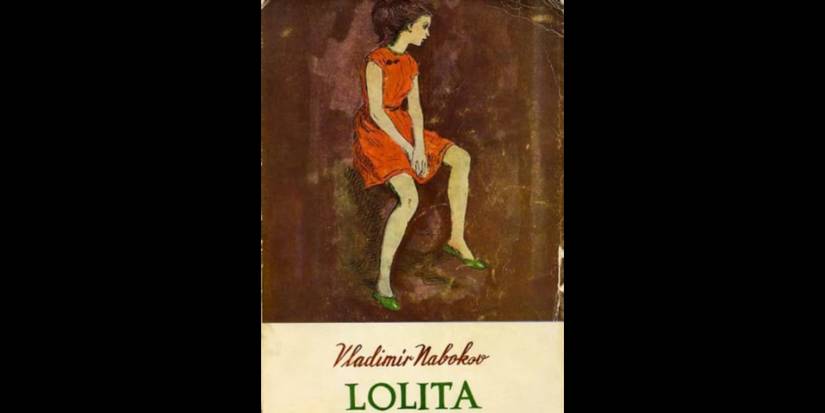
While reading Lolita, it’s inevitable that you're going to feel confronted, because it’s told from the point of view of a vile individual who also has a way with words. The prose of Lolita is excellent, and the book itself is also great, because Vladimir Nabokov did manage to write it all without running the risk of making that narrator, “Humbert Humbert,” seem in any way heroic.
Humbert himself believes in all he’s done, though, so getting into his mind and reading how he justifies and romanticizes his actions is confronting, on top of the already confronting subject matter. The end of the novel sees Dolores (who Humbert calls “Lolita”) dead, and Humbert soon to follow, but of the recounting of the whole story, Humbert says: “And this is the only immortality you and I may share, my Lolita.” You get to the end of it, and might well feel conflicted in having the whole sordid affair live on, at least in your mind, for however long your life might be.
7 'Nineteen Eighty-Four' (1949)

It’s not surprising that Nineteen Eighty-Four ends on a bleak note, given how famously bleak the entirety of the novel is. The central character here is someone who is wrapped up in a conflict against a dystopian state, but he and his allies are well and truly crushed, by the novel’s end, and he’s psychologically broken, hammered home with: “But it was all right, everything was all right, the struggle was finished. He had won the victory over himself. He loved Big Brother.”
The struggle’s over because he’s lost, and he imagines it as a positive thing (loving Big Brother and all, apparently), which makes the whole thing even more depressing. Again, it’s Nineteen Eighty-Four, so could it really end in any other way and feel right? An honorable mention should also go out to the final line in George Orwell’s Animal Farm, about not being able to tell man from pig.
6 'Gravity's Rainbow' (1973)

Gravity’s Rainbow isn't the most comprehensible of books, to put it way too mildly. It takes place during the Second World War and has a large number of characters who are all wrapped up in some kind of obscenity, or madness, or a bit of both, with Europe being the setting, and the closest thing to a plot being the way a fair few characters are looking for some sort of famed/mysterious V-2 rocket.
As things wind down, they don’t really wind down. The closest thing Gravity’s Rainbow has to a protagonist kind of vanishes, and then the book itself falls apart, or gets blown up by a missile. You get to go out singing, because there are lots of made-up songs throughout Gravity’s Rainbow, and then one more at the very end, like the musicians on the Titanic. Probably. Now, it’s important to note how the final words, “Now, everybody–”
5 'The Lord of the Rings' (1954–1955)

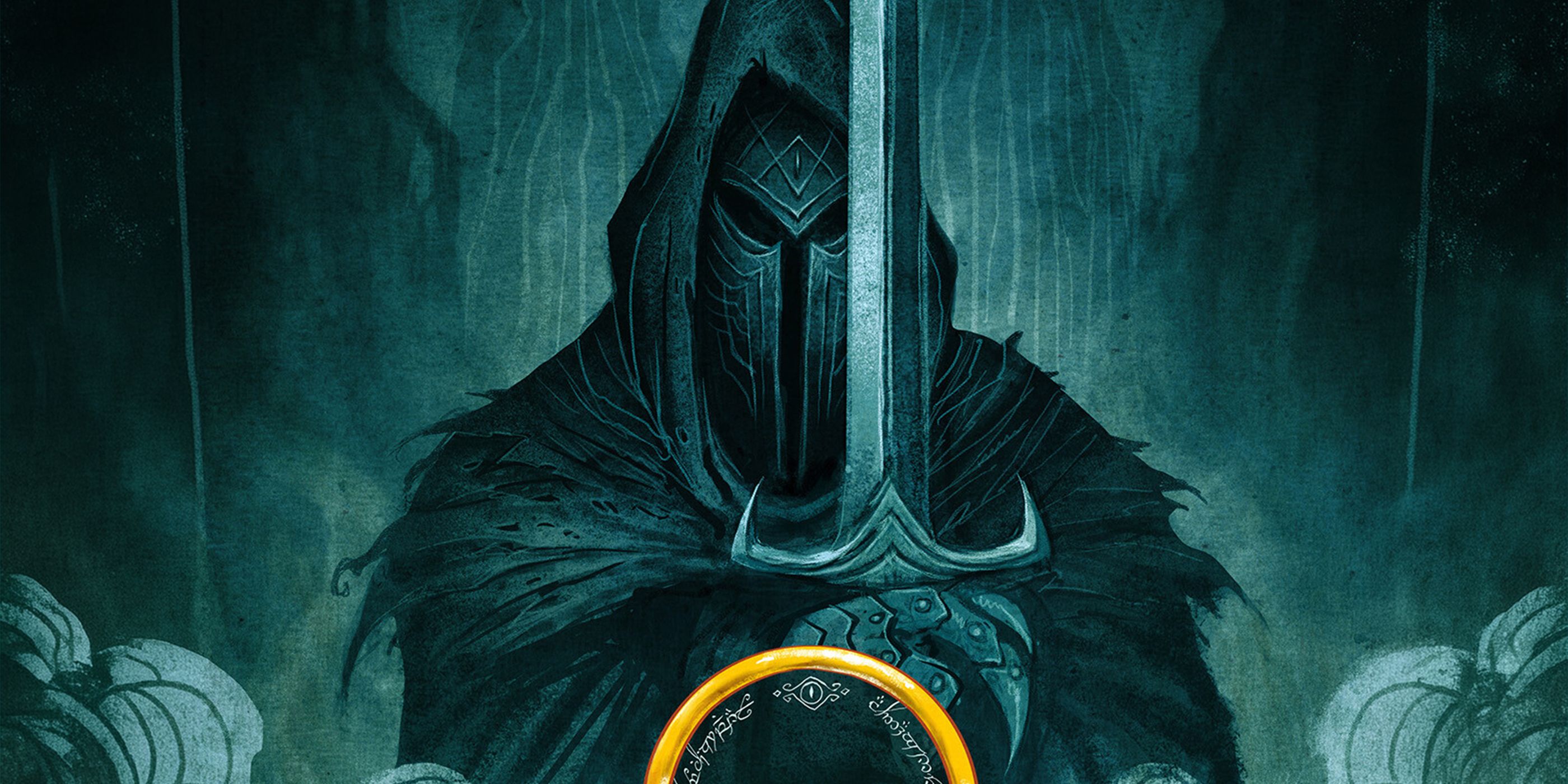
As mentioned before, The Lord of the Rings has a good deal of stuff beyond the final chapter, and maybe that’s kind of in line with how the final movie in the trilogy adaptation, The Return of the King, also has “a few” endings (or at least some complaints have been made expressing such sentiments). Movie and book alike end on the same note, though, albeit not in exactly the same way.
Sam doesn’t speak in the final shot of the movie, but in both instances, he arrives home and feels at peace, even after all the hardships and the bittersweet feelings of bidding Frodo farewell. “He drew a deep breath. ‘Well, I’m back,’ he said,” is how the book specifically ends, and it might sound almost too simple, but it does really work after the epic that you’ve just gotten through. The appendices shouldn’t be skipped, though, even if it’s a bit harder to single out where the exact final line is, if you count the appendices.
4 'The Dark Tower VII: The Dark Tower' (2004)
It’s easy to single out the best closing line Stephen King ever wrote, because it happens to be the same as the best opening line he ever wrote. Elaborating further might lead to some spoilers, but anyway, The Dark Tower: The Gunslinger is the first book in King’s The Dark Tower series, and so that whole series begins with the iconic: “The man in black fled across the desert, and the gunslinger followed.”
The final line of the seventh and final book in the series (an interquel did come later, and was set during books #4 and #5) is the same line, word for word. The context is very different, and there is some hope that things aren’t going to repeat 100%, but that circular nature of the whole series does feel hard to shake. Some might call it anticlimactic, but it works alongside much of what the series was going for thematically, especially throughout the last several books of said series.
3 'Frankenstein' (1818)

The way Frankenstein concludes is: “He sprang from the cabin window as he said this, upon the ice raft which lay close to the vessel. He was soon borne away by the waves and lost in darkness and distance.” There’s probably not much more that has to be said. The words speak for themselves, but if you want some context, it’s describing the final known actions of the creature.
He’s reflected on his mortality at this point, has mourned the passing of Victor Frankenstein, and has acknowledged how both suffered, and lots of other people died, all in a needless and classically tragic way. The creature is also ready to die, and sets out intending to perish, as those words above describe. Bleak, yes, but very fitting for how dark the story got, and it definitely leaves an impact, not to mention it feels obviously/incredibly conclusive.
2 'Stoner' (1965)

There’s more death to be found at the end of Stoner, because the whole book here is about how one man named William Stoner lived for a while and then died. It’s the obvious endpoint of any life, and one that Stoner as a novel is always headed toward, and Stoner as a character is always headed toward. But Stoner is about how a life is lived, and then at the end, it’s about how a person dies.
It is all that simple, on paper, but not on the paper that the book is printed on, because that paper’s a little more special. Returning to the “how” rather than the “what,” it’s the way the death is described – and the relative peacefulness of it – that works: “The fingers loosened, and the book they had held moved slowly and then swiftly across the still body and fell into the silence of the room.” And it incorporates a book, which you're also reading, so it gets you confronting your own death, too; the day when you won’t be able to read a great novel like Stoner anymore (sorry).
1 'The Great Gatsby' (1925)
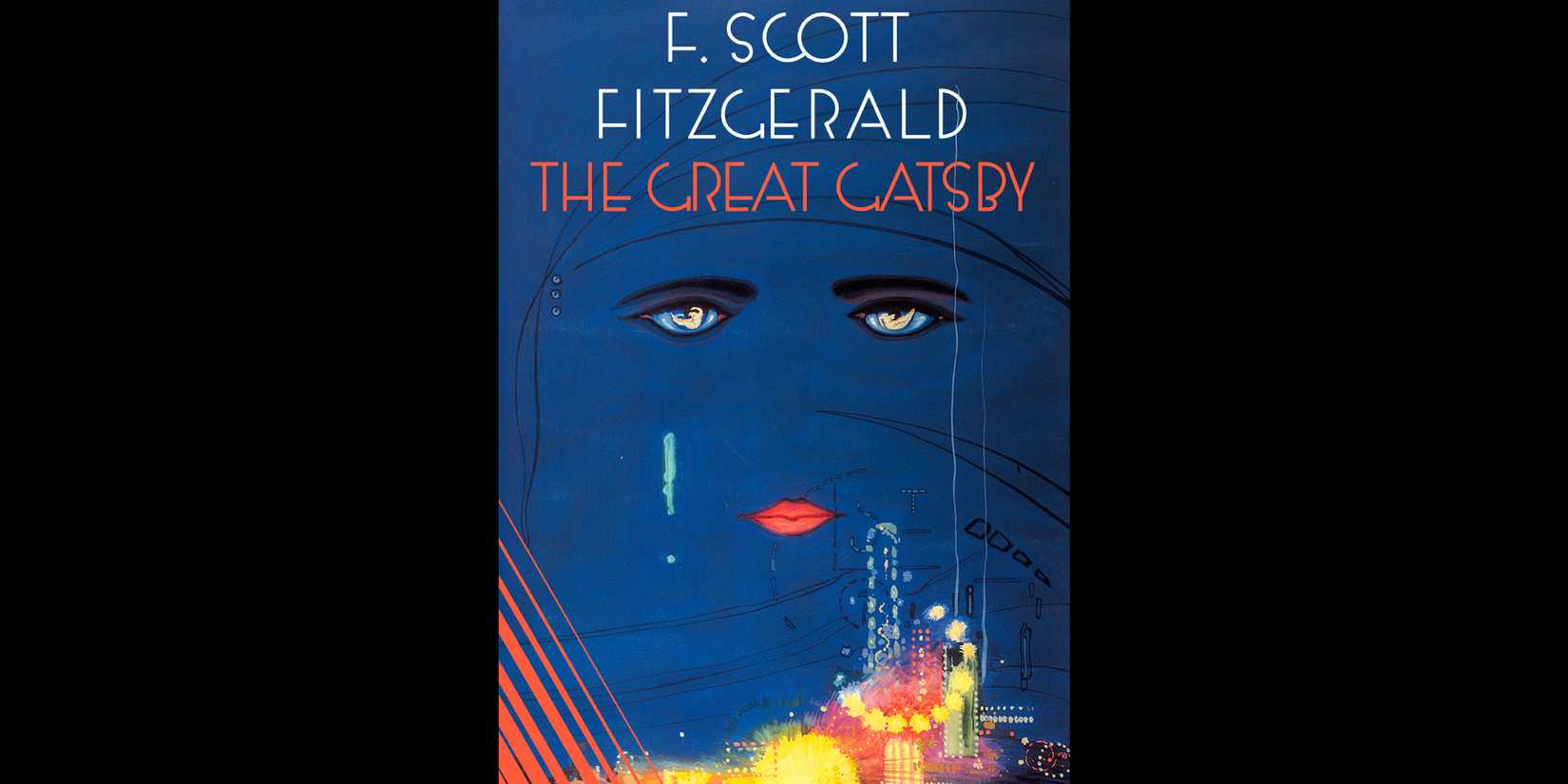
Come on, what else could it be? Maybe this whole topic was thought of because, uh, someone was thinking about the final line of The Great Gatsby, which led to that same someone thinking about nine other memorable closing lines from other books. The Great Gatsby was always going to be #1, though, with its final line, of course, being: “So we beat on, boats against the current, borne back ceaselessly into the past.”
Call it pretentious or overrated if you really want, and you probably won’t be alone, but that is just an incredible way to end a novel that is also pretty incredible overall (yeah, yeah, you can also call The Great Gatsby, in general, overrated if you feel so inclined). The expert finality of the line overall is supported by it being what F. Scott Fitzgerald has on his tombstone, so it’s got that going for it, too.

The Great Gatsby
- Release Date
- May 10, 2013
- Runtime
- 143 minutes
- Director
- Baz Luhrmann
- Writers
- Baz Luhrmann, F. Scott Fitzgerald, Craig Pearce
-

Jay Gatsby
-

Nick Carraway
-
Carey Mulligan
Daisy Buchanan
-
Tom Buchanan
KioskNews shows a cleaned-up reading view extracted from the publisher’s page — the original always lives on their site, not ours.