Finance Minister Nirmala Sitharaman: ‘Whatever policy we formulate, we must trust business, industry and the taxpayer. That will remain our charter’
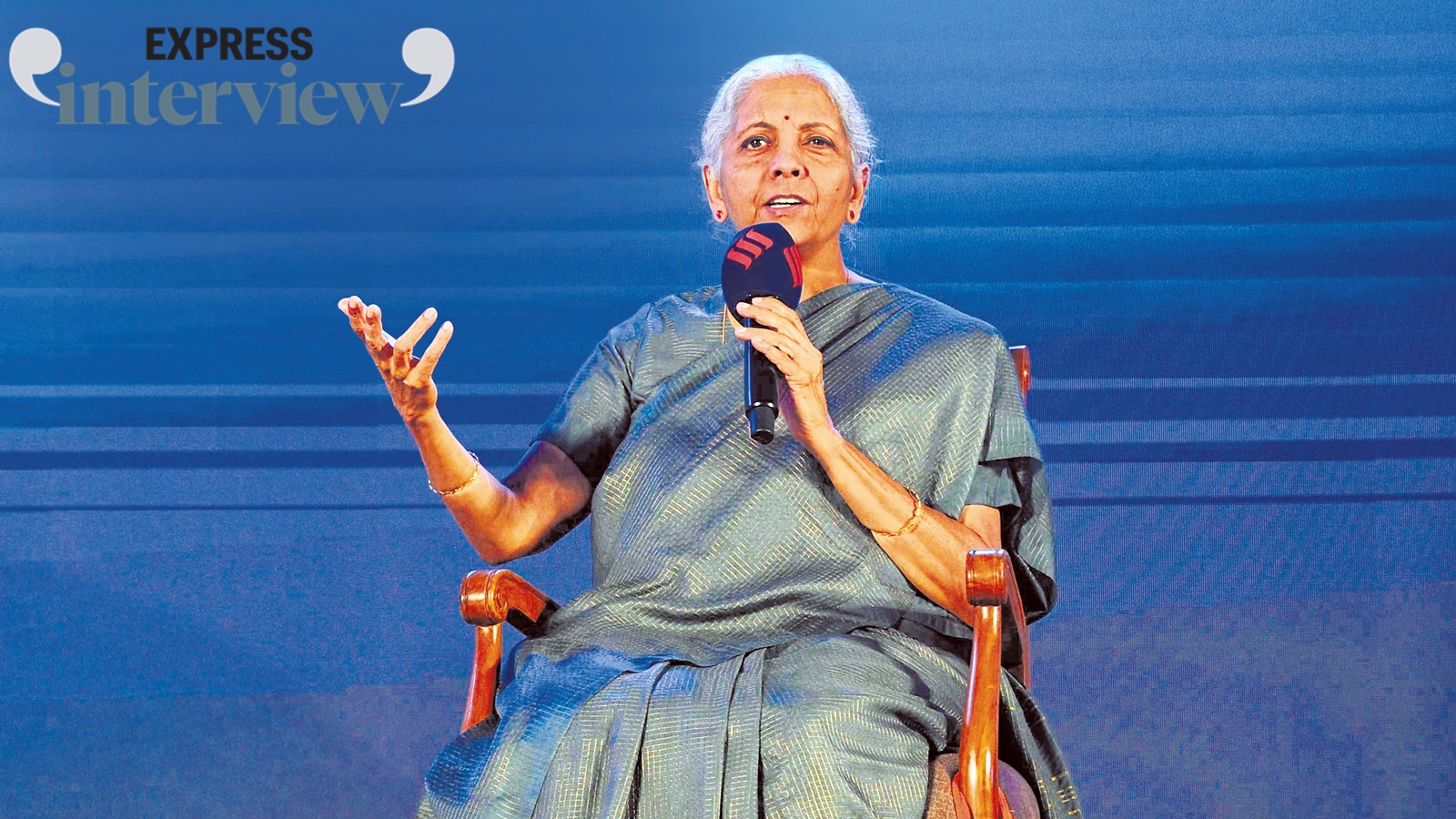
Finance Minister Nirmala Sitharaman, in a fireside chat with Shyamal Majumdar at the FE Leadership Awards on Monday, discussed the challenges facing the economy, the need to attract foreign capital, job creation, skill gap, and the consumption outlook. She also responded to concerns over corporate concentration, regulatory arbitrage and the pace of private investment. Excerpts from the conversation:
You’ve presented nine consecutive Budgets and are about to present your 10th. When you look back at the person who presented her first Budget, how different is the person who is going to present her 10th?
It’s always an overwhelming feeling of responsibility to deliver a proper Budget, which means a lot to the people, supports growth and addresses challenges. Since July 2019, when I presented my first Budget, every year has brought new challenges.
I’m grateful for the policies we have come up with every year. The people of India have responded beautifully. They’ve understood the policy direction and embraced it. Despite the odds, the stability provided by the Prime Minister’s leadership has been recognised. Consistency has been his virtue. He listens to people and acts on suggestions. The Budget is prepared with considerable input; it is not just the pre-Budget consultation. A lot of work happens at different levels.
The responsibility to deliver something that makes a difference to people’s lives is always foremost in my mind. The experiences from 2019 to today have enriched me. The messages I receive during and after the Budget, and the way the year unfolds, have been immense lessons. Each Budget benefits from the experience I’ve gained.
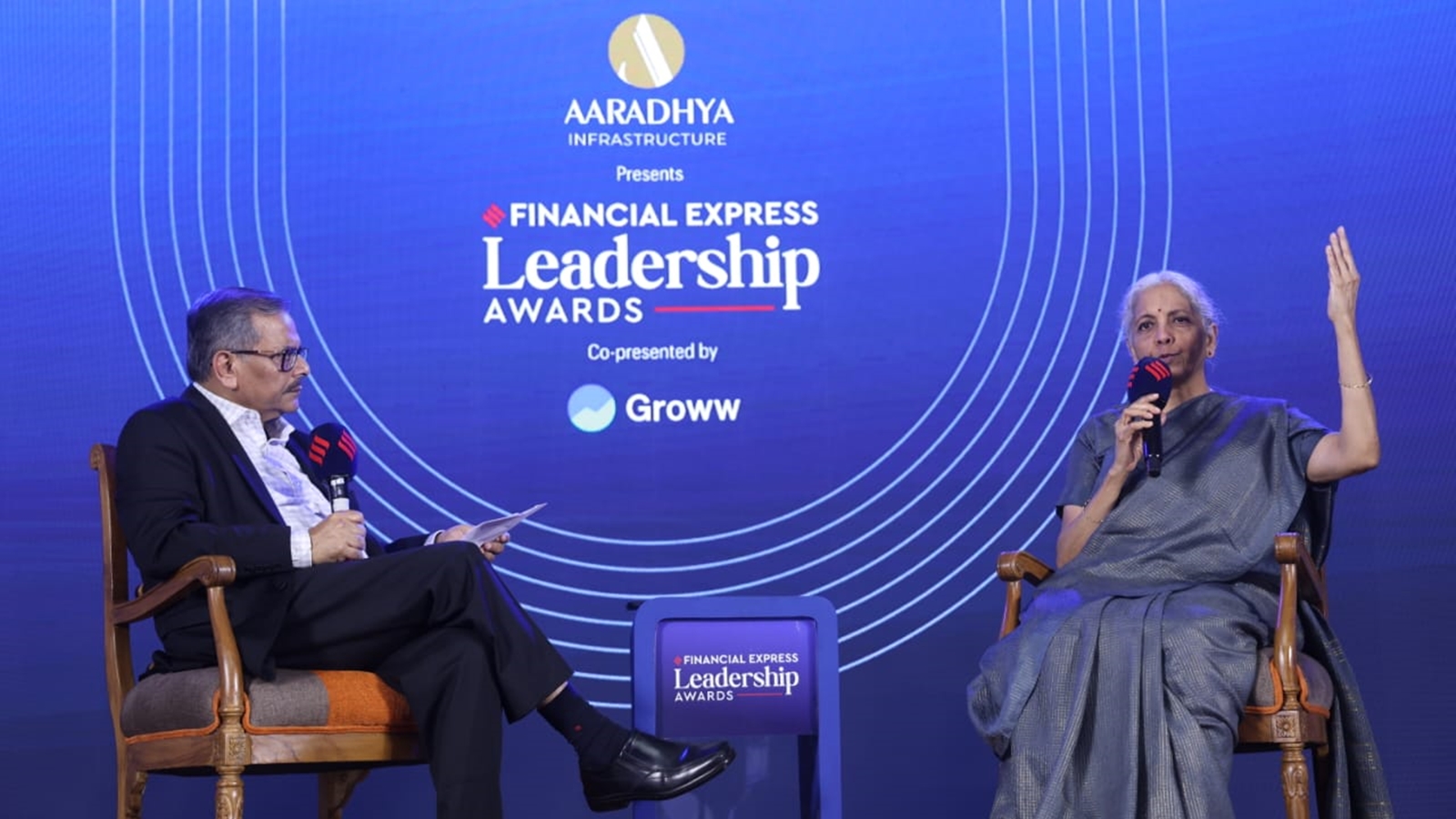 Union Finance Minister Nirmala Sitharaman at the Financial Express Leadership Awards in Mumbai, Monday. (Express photo by Amit Chakravarty)
The Opposition has made several allegations and we have seen a series of protests, including over the right to vote, the Tata issue and IDBI Bank privatisation. Would these developments put the government on the defensive?
Unfortunately for the Opposition, it picks up issues that it does not want to pursue beyond a point. When you take issues through the judicial process, right up to the Supreme Court, and simultaneously take them to the streets, the resonance of your position among the public has to be constantly measured.
Story continues below this ad
I find that the Congress, in particular, goes all out both in the courts and on the streets. Even when the Supreme Court says it is unfortunate that matters have reached this point and that an apology may be warranted, they don’t learn lessons.
It is absolutely right for the Opposition to put the government on the mat and demand answers. I’m not against that. I would, however, want more of it to happen in Parliament rather than in mock parliaments outside. Here is an Opposition party with about 100 MPs. They don’t sit through debates. They make allegations, but when people stand up to answer, they walk away. When the government responds, they shout it down.
I recognise the Tata brand’s global standing and the Parsi community’s contribution to building it. The Tatas are critical to the Indian economy. Given the maturity expected of their leadership, such issues should not enter the public domain.” Nirmala Sitharaman, Finance Minister
People have voted for you to come to Parliament and perform that function. What’s the point of doing it through a mock parliament outside?
Your (Congress party’s) statements periodically place greater emphasis on street protests than parliamentary debate. This gives the impression that you want regime change. Regime change happens every five years through the electoral process. Don’t you believe in that process? How, then, did governments in Karnataka, Telangana and Himachal Pradesh get elected?
Story continues below this ad
The illogicality and inconsistency with which the Opposition is being led are questionable in the eyes of the people. There is no conviction. Above all, projecting an image of chaos in India undermines the people who are struggling and contributing to the economy’s growth. You are undermining them by sending messages of instability.
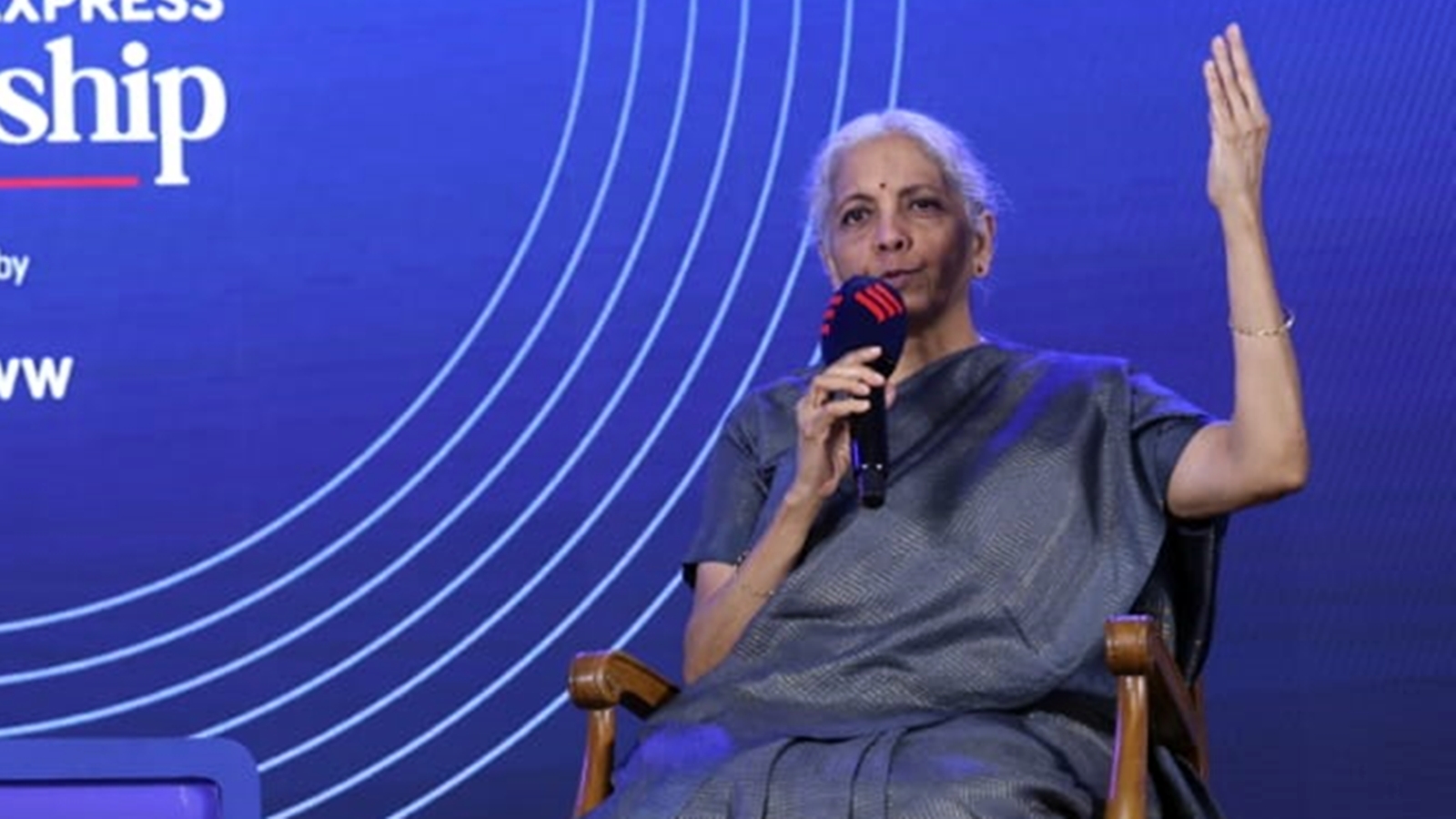 Union Finance Minister Nirmala Sitharaman at the Financial Express Leadership Awards in Mumbai, Monday. (Express photo by Amit Chakravarty)
On the friction within the Tata Group, Rahul Gandhi has made some serious allegations. Does the government need to intervene in the matter?
These are very delicate matters, requiring considerable commercial and business acumen, as well as cordiality. I would not readily say there is a need for intervention, however serious the issue may be.
The PLIs are a positive way of extending support. They have shown success, although some sectors haven’t performed as well. We will have to examine what went wrong there
I know the brand value of Tata and the contribution of the Parsi community in making it a huge global brand. I also know the range of activities in which the Tatas are invested. This is a very critical component of the Indian economy, and therefore, the matter must be settled amicably among the parties. They should talk it out and ensure a return to normalcy quickly. It cannot spill out into the public domain like this. Given the maturity expected of that leadership, we would like to see the issue settled soon.
Story continues below this ad
Could you bring the two sides to the table to work out a compromise?
That’s why I said it is a sensitive issue. It is not something I would want to comment on hastily.

The frustration among the youth boils down to one word: jobs. There are concerns not just about the availability of jobs but also their quality. Corporate profits have risen, but wage growth has not kept pace. Could India’s consumption story take a hit?
I still think India’s consumption story will remain intact. You saw the GST figures for October, (when the mop-up grew 23% year-on-year). The government will also do a great deal to promote skilling and bridge the gap between the expectations of entrepreneurs, businesses and industry, and the capabilities of young people entering the job market.
Story continues below this ad
I’ve repeatedly heard industry leaders say that the skill sets with which people graduate from colleges are insufficient. As a result, companies may have to spend six to eight months providing additional training before deploying them in jobs.
We want to train young people and equip them with the skills that make them job-ready. We have already started doing this over the last two Budgets. More needs to be done, and we will continue with these efforts.
It is also important to realise that, while we need AI in industry to improve productivity across large companies and MSMEs, we also need people who can work with AI. Our schools, colleges and professional curricula need that additional input to ensure that young people enter the workforce job-ready.
 Union Finance Minister Nirmala Sitharaman. (Express photo by Amit Chakravarty)
India needs capital and foreign investment. Will the Budget roll out the red carpet for the dollar and FPIs? Taxation is only one part of the issue. Is there a concerted effort to address their concerns?
Story continues below this ad
Thank you for saying that taxation is only one part of it. I appreciate and recognise the sensitivity and anxiety among retail investors and equity market participants.
But the taxation structure was the same in 2023-24, when we saw good investment inflows into the country. That year recorded the highest inflows. Nothing different was done to attract investments, but the situation is very different now. Circumstances have changed, challenges have grown and net FII outflows have increased. They have, however, started coming back now.
I appreciate that voices of concern are louder. I will consider all these issues because growth is very important. We need to sustain growth of over 7%. To maintain that momentum, we need capital and equity, particularly at this stage.
The last few years have seen considerable emphasis on the bond market, deepening and widening it. Now we also have voices saying that equity needs similar support. I wouldn’t want to say more at this stage, but I recognise the concern.
Story continues below this ad
Can we say that the Budget is going to roll out a red carpet for the dollar?
If you say the finance minister has promised a red carpet for the dollar, Indian investors might feel there is already a bias towards foreign investors. You didn’t want a red carpet for the Indian rupee…
With US Treasuries offering risk-free returns of over 5%, how do you bring FPIs back to India? The way the rupee is behaving is also creating a serious problem.
Listening to all stakeholders is what the government can do, and we will do that. First, we will hear them and then see what action we can take.
Industry may be selective, choosing particular sectors rather than investing in areas where it is already present. But I am seeing private investment picking up
Story continues below this ad
We celebrate our national champions, but there are concerns in some sectors that India is developing an economy dominated by a relatively small number of very large business groups. How do you respond?
That may have been the case a decade or two ago. Even today, there are a small number of large companies, no doubt. I’m happy for them; they should be there and grow.
But that is not the complete picture. MSMEs are flourishing today. We wanted micro enterprises not to remain dwarfs, but to grow into small enterprises, small into medium, and medium into large. That is why the change in the definition of MSMEs has been appreciated: it allows them to grow while continuing to enjoy the benefits.
Growth is happening across companies of all sizes. India is not an economy with just a few large companies; there are many small and medium-sized enterprises as well. Forty per cent of the country’s exports come from the MSME sector. Industries are emerging at different levels. Startups have demonstrated that small, innovative companies can enter the market, make a splash and establish themselves. The pace at which billionaire companies and unicorns have emerged from startups is spectacular in India’s economic history.
The Economic Survey 2025-26 talks about regulatory arbitrage, firm-specific accommodations and a corporate sector operating in an environment where rents are available, enforcement is uneven and political mediation substitutes for market discipline. How do we tackle this?
Efforts are being made. I must speak for both the Centre and the states on these issues.
I’m happy to say that the Economic Survey’s observations are being taken very seriously by policymakers, both at the Centre and in the states. As a result, action is being taken during the year to address the issues raised by the Survey. Several states have openly engaged with the Centre on how best to tackle them.
The Department of Expenditure, which frames procurement rules and the terms and conditions of tenders, periodically reviews them to ensure greater transparency, make them more industry-friendly and prevent them from tying industry in knots. Many issues that were once pain points for industry have been addressed. Tenders have been simplified and made more user-friendly, and the discretion enjoyed by the issuing authority has been considerably reduced.
India is not an economy with just a few large companies. Industries are emerging at different levels. Startups have shown that small, innovative companies can make a splash and establish themselves
Several rules governing project execution, bank guarantees and individual guarantees have also changed. These were introduced during COVID, but many of the business-friendly provisions have been retained.
Allowing annual general meetings through video conference was particularly relevant during COVID, but we have not withdrawn the facility since. We have said that a physical meeting must be held once in three years. Until then, companies can choose between a video conference and a hybrid meeting. Many such changes have improved the ease of doing business.
The Indian private corporate sector may have strong balance sheets, but broad-based investment is still not happening, except in select sectors. Don’t you feel frustrated that industry keeps asking for reforms but does not open its purse strings?
I would have said yes a couple of years ago. But I’m not going to say that now because I’m seeing industry come forward and invest. It may be selective, choosing particular sectors rather than investing in areas where it is already present. But I am seeing private investment picking up.
I think the GST 2.0 reforms, unveiled in September 2025, have made consumption and demand more visible. Industry now has the confidence that it can see demand in the market, invest, produce and expand to the level it wants to reach. That, I believe, has been triggered by the next-generation GST reforms.
Some people have argued that the increase in consumption is entirely on the back of imports. But they must examine the nature of those imports. A major part comprises imports meant for export production. Raw materials are being brought in because we need them and do not produce them domestically.
The recovery in consumption has provided clear visibility on demand, and that is why I’m seeing private-sector investment happening.
The finance ministry has projected GDP growth of 7.3% for this financial year. Macroeconomic management has been creditable. For the next leap, what should the government and India Inc. do differently?
I think we have started doing things differently, and we should continue. What is that difference? We explicitly trust the people, businesses, farmers and the people of India. Everything we do is based on that premise: that we trust people.
Our policies on GST, income tax and other matters have all been framed on the principle that we trust the taxpayer. That is how the Prime Minister wants all of us to work. Whatever policy we formulate, we must trust business, industry and the taxpayer. That will remain our charter.
Several East Asian economies have provided support and protection to industry, but have also demanded performance and international competitiveness in return. Do you think the government in India has been somewhat lacking in demanding accountability from industry?
No. Our approach has been through the production-linked incentive (PLI) scheme. Companies need to demonstrate additional marginal production to qualify for incentives.
That is a positive way of extending support. The incentives are intended not just to help companies meet domestic demand but also to promote exports. PLI has shown success, although some sectors have not performed as well. We will have to examine what went wrong there.
What is the one thing you would like industry to do without asking the government for something?
They are welcome to ask the government for anything they want. I don’t think I should be wary of any demand they make. But I would also want them to remain engaged with us and tell us whether they are moving forward.
After the corporate tax rate was cut in 2019, I had very few interactions with industry. I did not know whether the reduction had helped them. The corporate tax rate came down, but industry is welcome to make demands. This government, particularly under Prime Minister Narendra Modi’s leadership, has always welcomed suggestions from industry.
Industry is welcome to ask and demand something from the government, but it should also remain engaged and tell us whether it is making progress. That interaction should be active and continuous.
The government and businesses are in this together, and we have to take India towards Viksit Bharat. We have reached an inflection point. We should not fail ourselves at this juncture.
KioskNews shows a cleaned-up reading view extracted from the publisher’s page — the original always lives on their site, not ours.